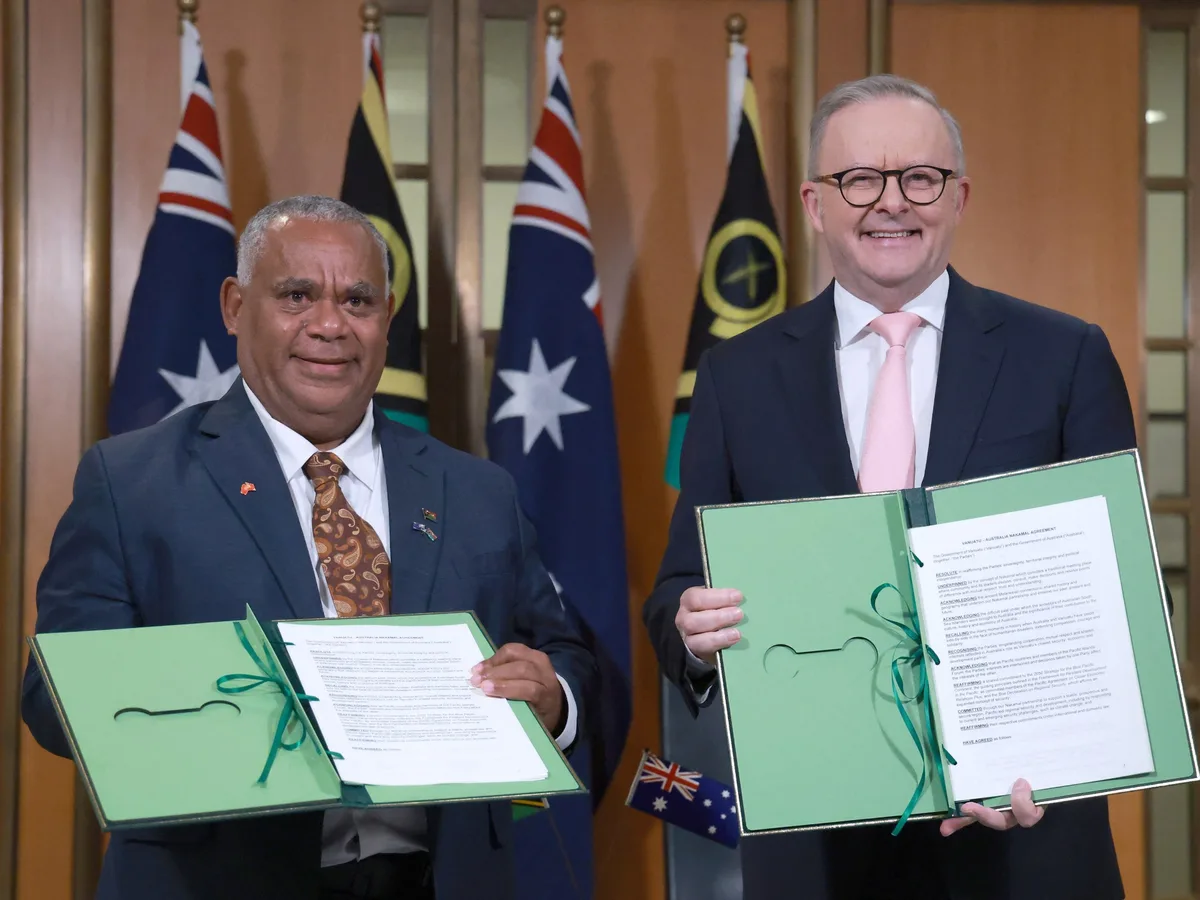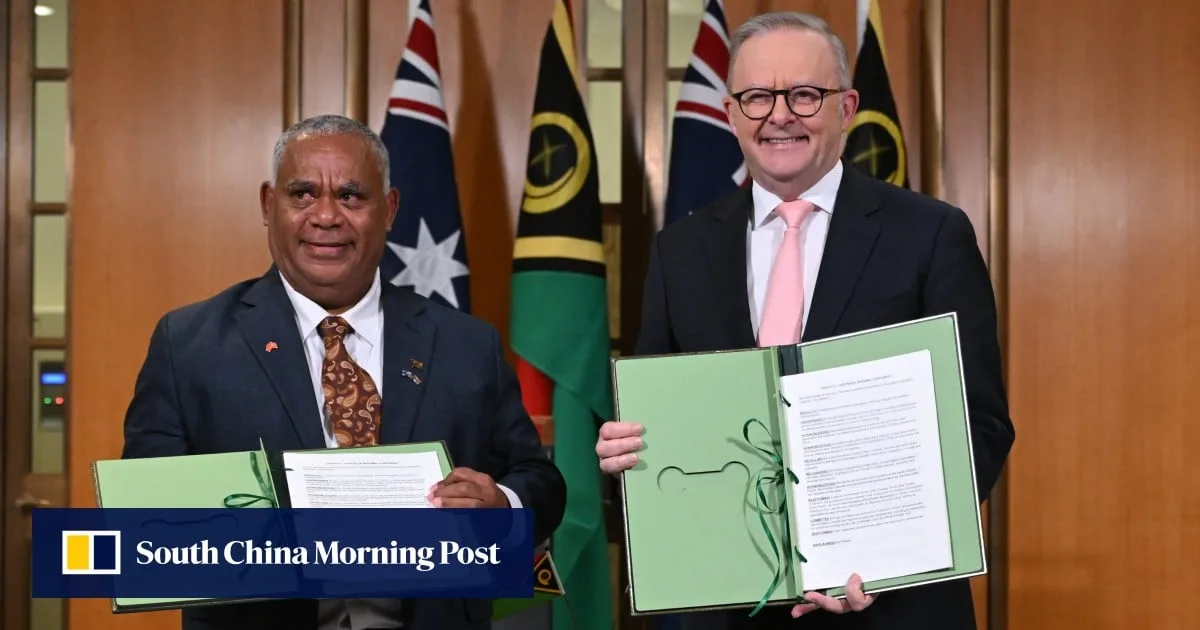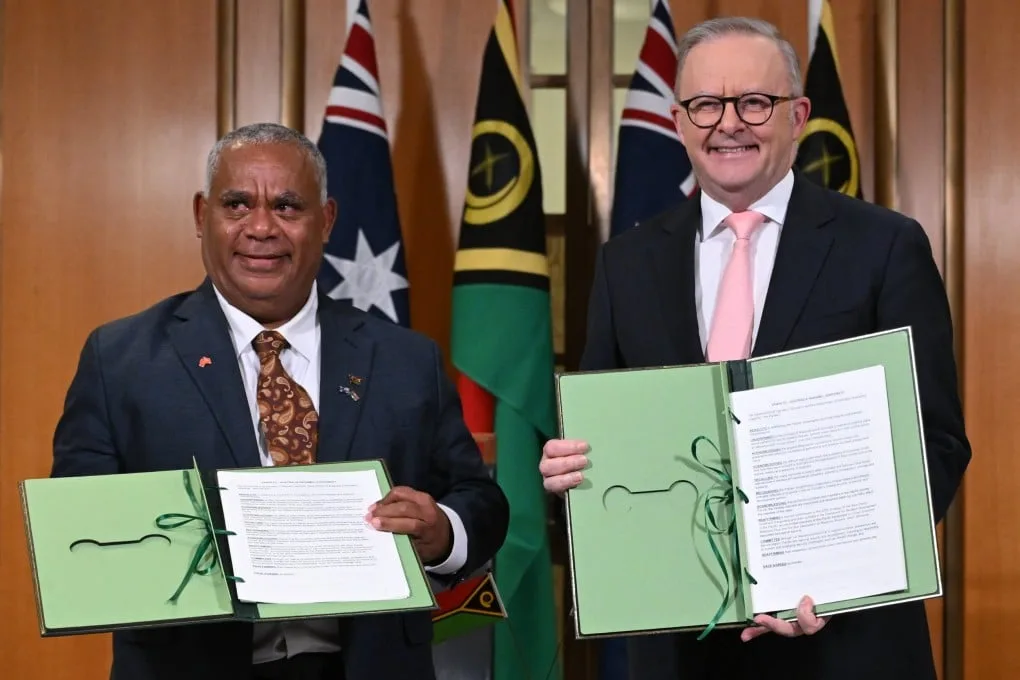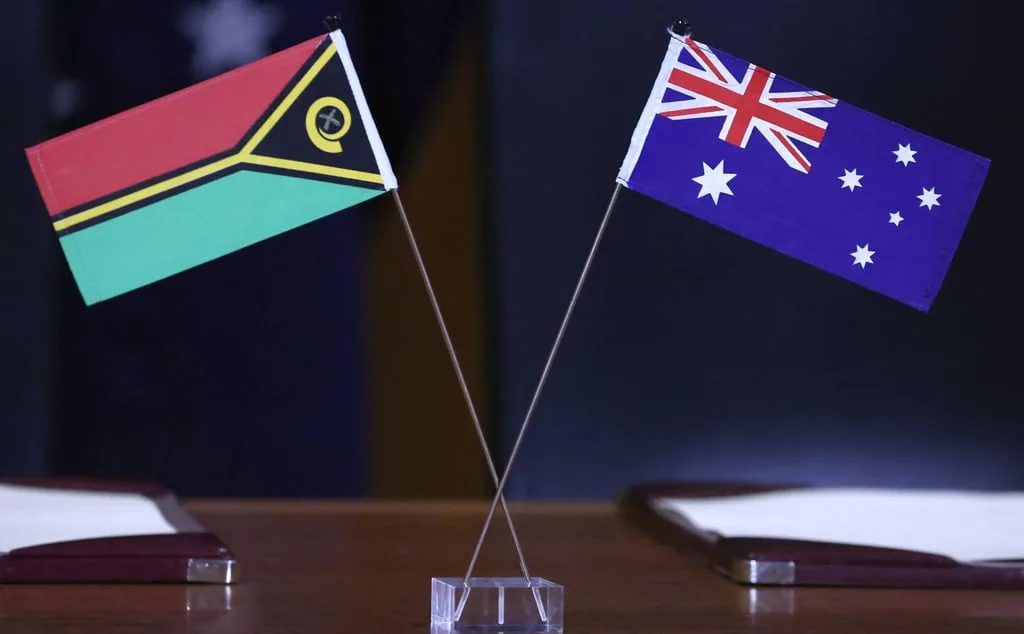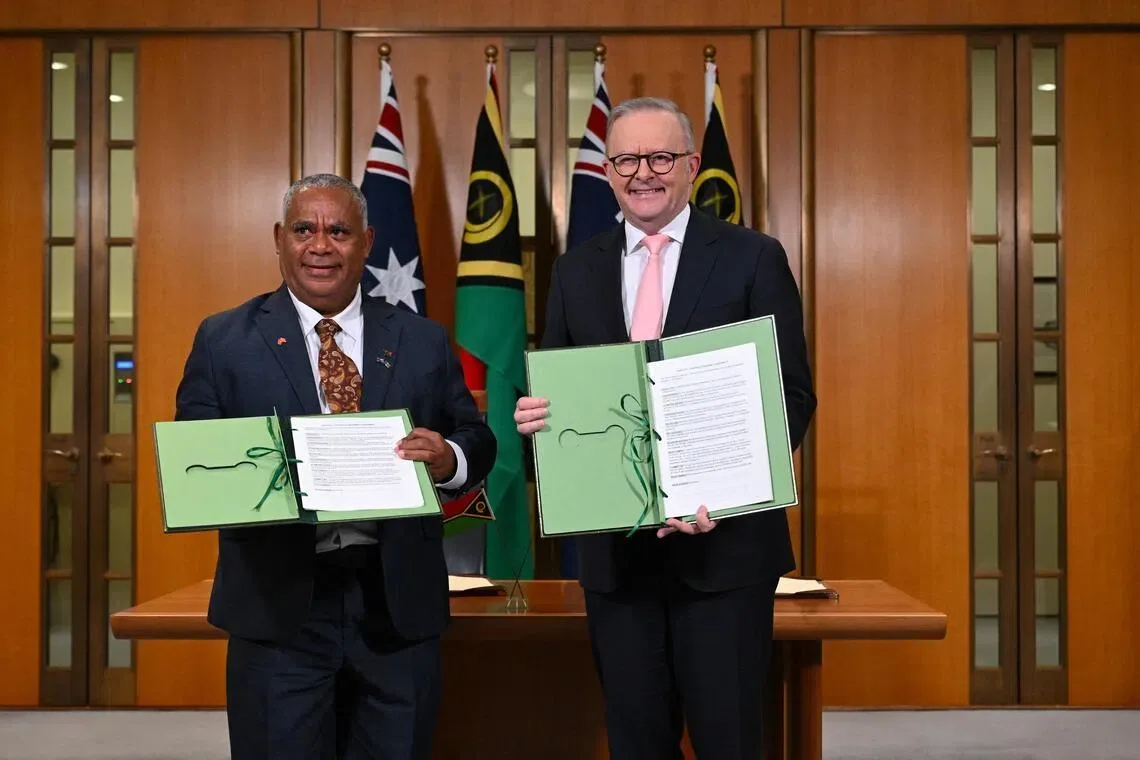
Australia and Vanuatu signed the Nakamal Agreement in Canberra on June 29, 2026, formally barring the establishment of any foreign military base on Vanuatu’s territory [1, 2, 3]. The agreement also commits Australia to provide greater economic support to Vanuatu, whose largest external creditor is China [1, 2, 3].
The pact includes a parliamentary act passed by Vanuatu to prevent militarization of its critical infrastructure [1, 3]. Vanuatu Prime Minister Jotham Napat said, "As a country, we have in fact passed an act in Parliament not to allow any militarisation to actually be used for our critical infrastructure" [1].
The deal recognizes Australia as Vanuatu’s longstanding primary policing partner and covers cooperation on police training, maritime security, cybersecurity, intelligence, and infrastructure [1]. It also states that Vanuatu will not permit its territory to be used for any foreign military base or infrastructure [1, 3].
China has made repeated naval port calls to Vanuatu and funded the expansion of a wharf in Luganville, a site of a former US military base [1, 2]. In September 2025, Vanuatu rejected an earlier version of the security deal over concerns that it limited infrastructure investment [3]. The current agreement no longer gives Australia veto power over Vanuatu’s third-party critical infrastructure projects, but Vanuatu will consult Australia on such investments [3].
Prime Minister Anthony Albanese said, "What this does do is to provide certainty for Australia that there will be no foreign military base. We have concluded a balanced agreement that will protect our collective and individual security and our sovereignty" [1]. Napat added that the pact "reaffirmed a shared commitment to continuing and strengthening the comprehensive partnership between our two countries, founded on mutual respect, trust and our common vision for a peaceful, stable and prosperous Pacific" [3].
China expressed concern the deal targets it and called for Pacific cooperation without geopolitical rivalry. Spokesperson Guo Jiakun said, "We hope that cooperation between relevant countries and Pacific Island countries will contribute to the development and stability of the island region, not target any third party or be used as a tool for geopolitical rivalry" [3].
Australia’s previous offer under the earlier draft deal included 500 million Australian dollars in financial support over 10 years [3]. The Nakamal Agreement marks a concrete step in Australia’s efforts to strengthen ties with Vanuatu amid rising regional competition.
Vanuatu’s new parliamentary act barring militarization and the formal signing today solidify the deal’s framework. Consultations between Australia and Vanuatu on third-party infrastructure investments are expected to begin soon.