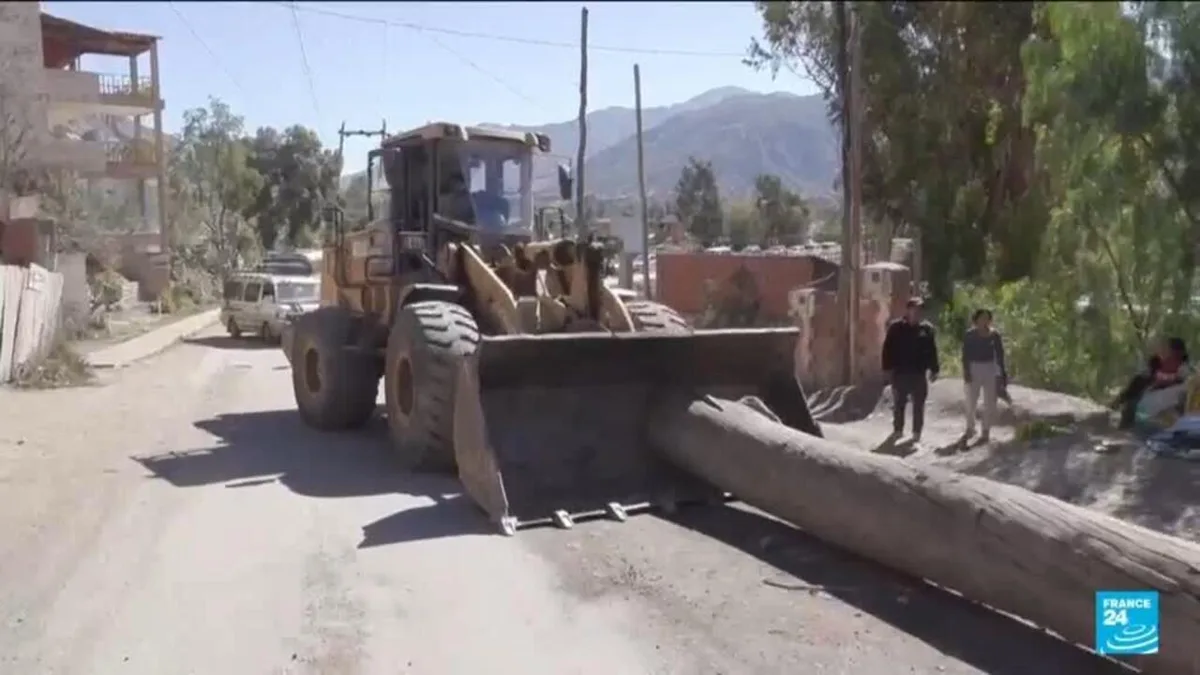
Protests in Bolivia have persisted for about one month, with roughly 100 road blockades nationwide causing severe shortages of food and medicine in major cities [1, 2, 3, 4]. Protesters are calling for the resignation of President Rodrigo Paz, a center-right, pro-business leader who took office in November 2025 [1, 2, 3, 4, 5].
On June 6, police attempted to clear blockades set up by rural workers near the town of San Julian in the Santa Cruz region. The operation triggered violent clashes involving tear gas, armored vehicles, stones, burning tires, and gunfire [1, 2, 3, 4]. Six police officers were injured during the confrontation, including four wounded by gunfire, according to Colonel David Gomez, Santa Cruz Police Chief, who said, "共有 6 名警員在衝突中受傷,其中 4 人遭到槍擊" [1, 2, 3, 4]. At least 14 civilians were also reported injured.
The authorities were only able to partially clear the blockades before protesters reinstated them [1, 2, 3, 4]. President Paz has declared plans to propose a state of emergency law that would authorize military deployment to end the roadblocks. The Bolivian Congress began debating the bill on June 7 [1, 2, 4, 5].
Paz blamed former socialist President Evo Morales for instigating the unrest, though Morales remains in hiding due to unrelated legal issues [2, 3, 5]. Paz harshly criticized the protesters as "narcoterrorists," warning, "毒梟恐怖份子操控動亂,他們的日子不多了。" The government has received support from the United States and the "Shield of the Americas" coalition led by President Donald Trump [3, 5].
The nationwide unrest has caused soaring prices and shortages of essential goods, crippling Bolivia's economy and daily life [3, 5]. Protests began around May 2026 after Paz took office promising to tackle the economic crisis [1, 2, 3, 4]. Police efforts to clear blockades on June 6 mark the latest attempt to restore order amid ongoing disruption [1, 2, 3, 4].
As of June 7, Congress continues debating the emergency state law, which could allow military forces to intervene directly to end the protests.