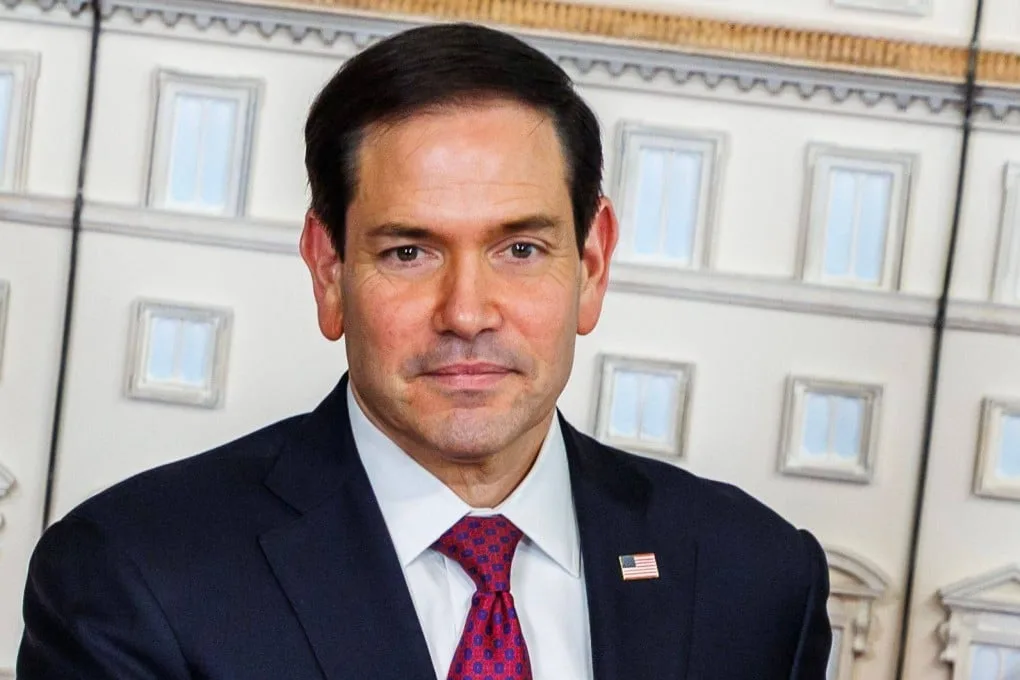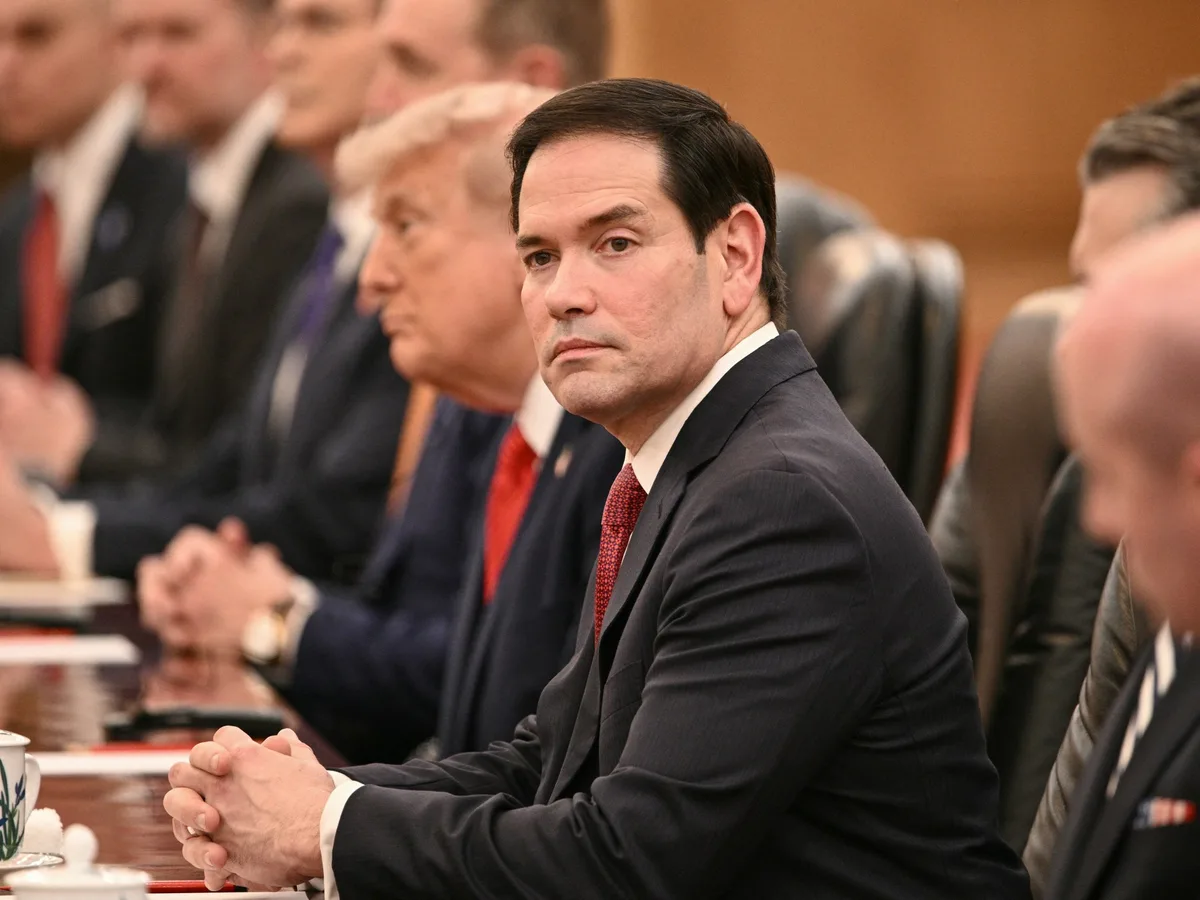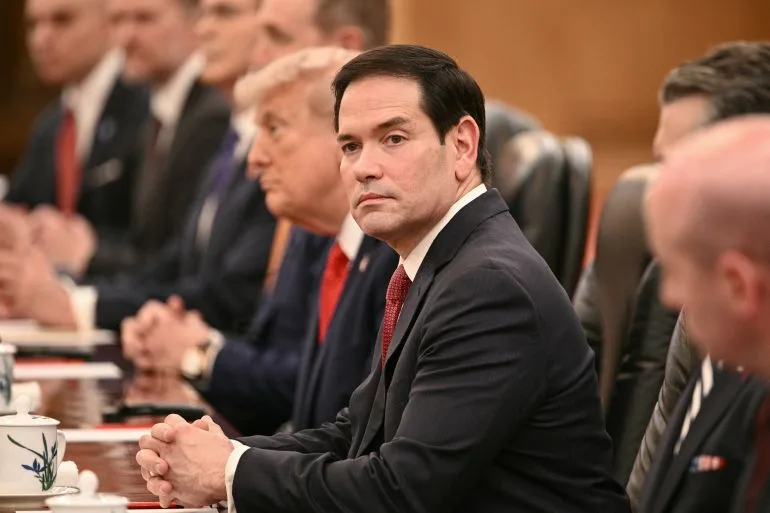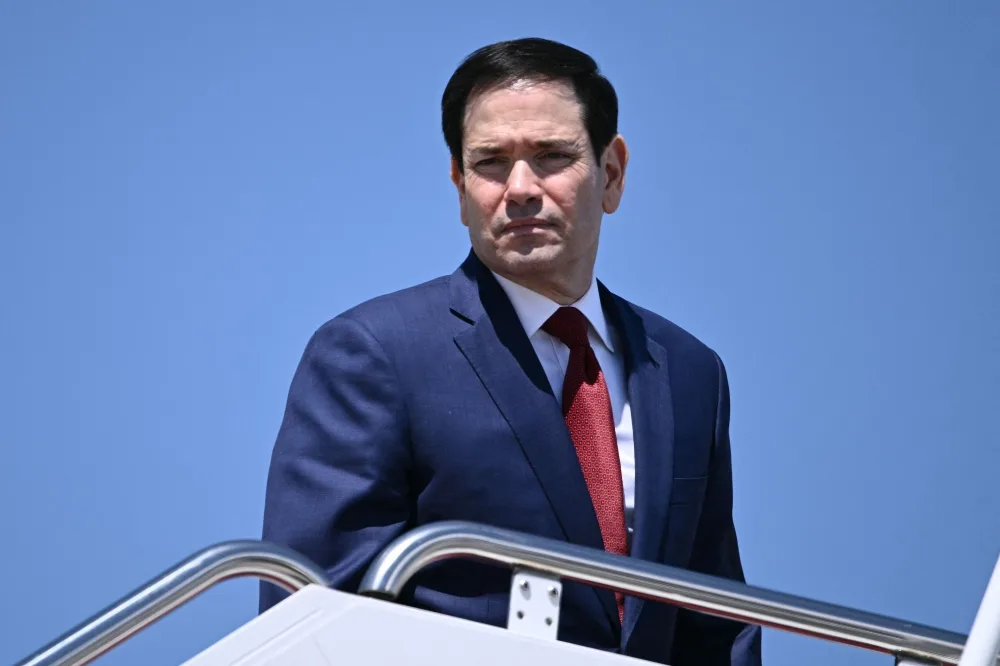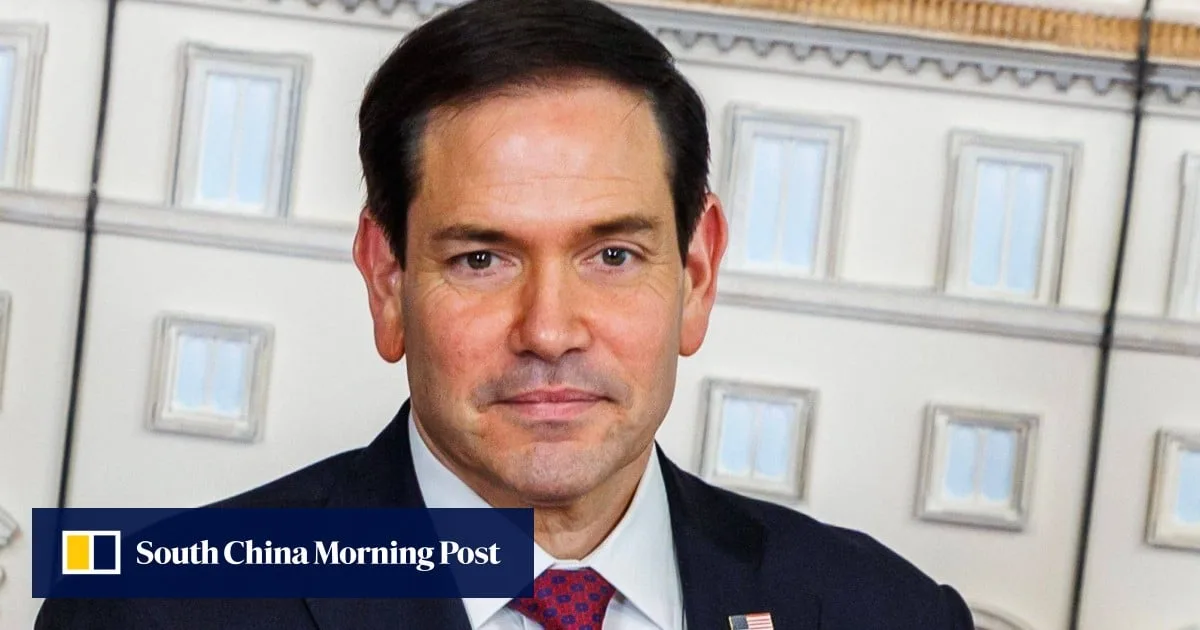
Marco Rubio traveled to China on May 13-14, 2026, accompanying US President Donald Trump for a summit, marking Rubio’s first visit as US Secretary of State at age 54 [1, 2, 3]. Rubio was confirmed as Secretary of State in January 2025 [2, 3].
Rubio was sanctioned twice by China in 2020 when he was a US senator for his outspoken criticism of China’s policies in Hong Kong and Xinjiang [1, 2, 3]. The sanctions included an entry ban under the Chinese transliteration of his name used at the time [2, 3]. China imposed the sanctions "aimed at Mr Rubio’s words and deeds concerning China during his tenure in the United States Senate," said Lin Jian, spokesperson for the Chinese Foreign Ministry [2].
Shortly before Rubio took office as Secretary of State, Chinese official media began using a different Chinese character to transliterate the first syllable of his surname from the original one to a character pronounced "lu." This change allowed Rubio to enter China without officially lifting the sanctions imposed on him under the earlier transliteration [2, 3].
On March 16, 2026, the Chinese Foreign Ministry indicated it would allow a relaxation of sanctions if Rubio traveled with President Trump for the summit [2]. Rubio’s visit proceeded using the revised transliteration, effectively bypassing the entry ban while sanctions remained in place [1, 2, 3].
Rubio is a vocal critic of China and a leading Republican candidate for the 2028 US presidential election [1, 3]. He authored the Uyghur Forced Labor Prevention Act, which targets forced labor practices in Xinjiang [2, 3].
The use of a different Chinese character in official documents to allow his travel is a rare diplomatic workaround amid ongoing US-China tensions. Rubio’s trip with Trump marks a notable moment as he engages directly with Chinese officials despite his past sanctions.
The summit involving Rubio and President Trump in China concluded on May 14, 2026, with no official lifting of sanctions but accommodation made via the transliteration change [1, 2, 3].