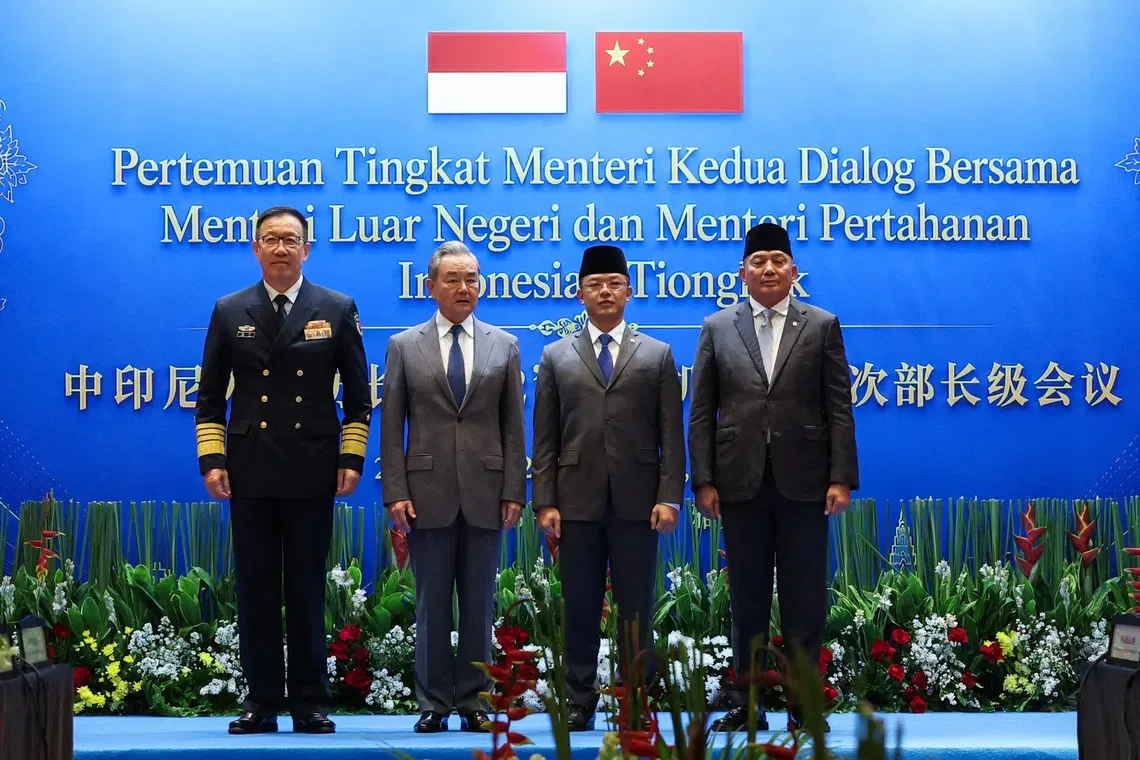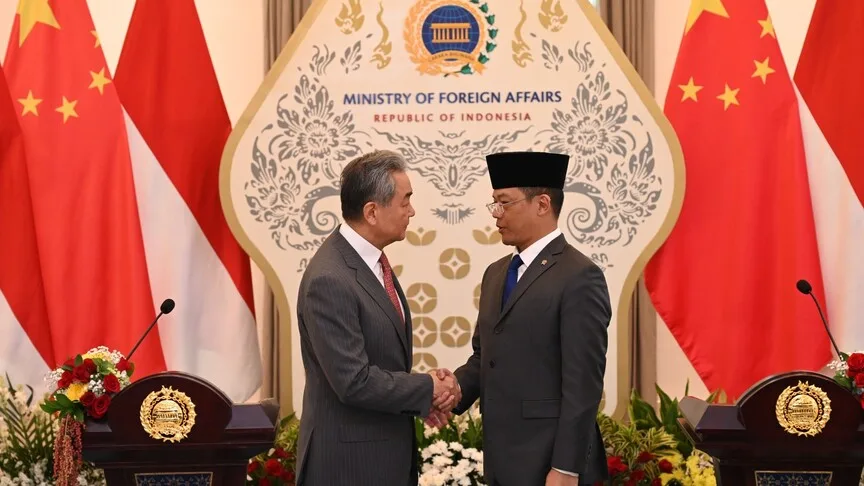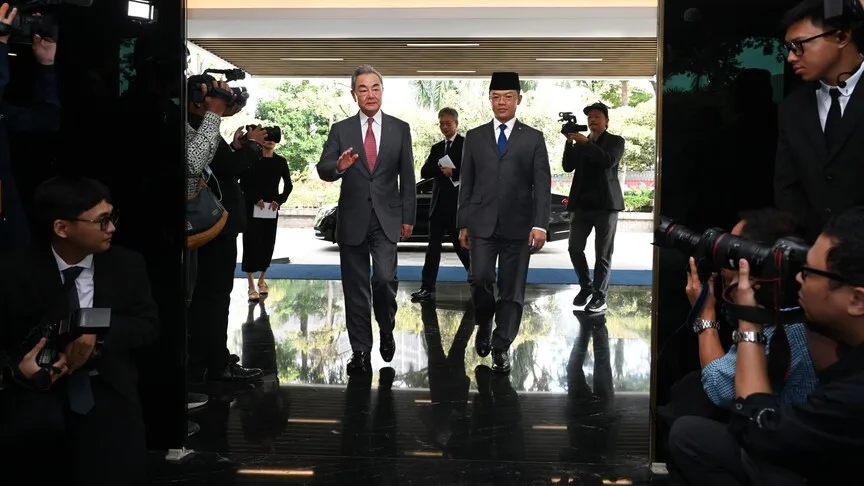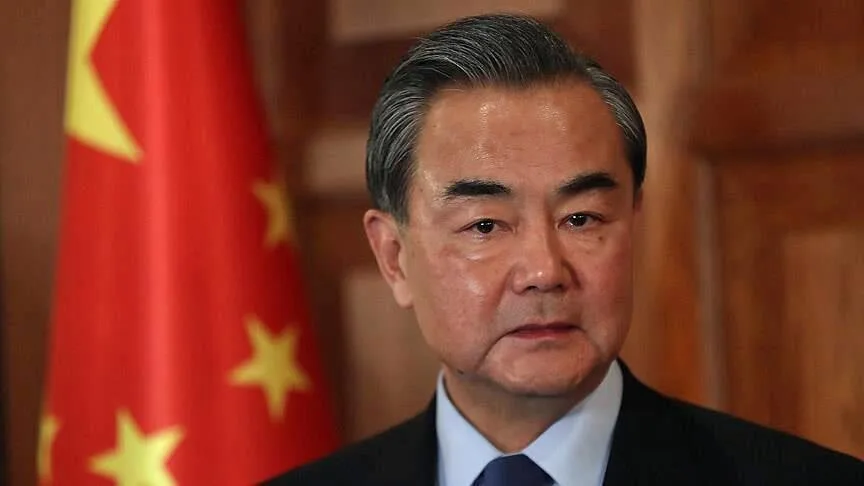
Chinese Foreign Minister Wang Yi and Indonesian Foreign Minister Sugiono convened the first meeting of the China-Indonesia Comprehensive Strategic Dialogue Mechanism in Jakarta on August 21, 2026 [1, 2, 3, 4, 5, 6]. The talks aim to deepen cooperation in political, economic, maritime, people-to-people, and security fields, with Sugiono calling it "a forward-looking strategic platform, guiding our bilateral partnership across all five pillars" [1].
The meeting included China’s Defense Minister Dong Jun and Indonesia’s Defense Minister Sjafrie Sjamsoeddin, who participated in the second "2+2" Foreign and Defense Ministerial Dialogue held alongside the strategic talks [1, 7, 5]. Both sides agreed to enhance defense and military ties through joint drills, personnel exchanges, and defense industry collaboration. Dong Jun said, "We will join hands to accelerate the modernization of national defense and build a robust security bulwark for our respective development" [5].
Earlier in August 2026, the two maritime nations conducted their first joint naval exercise east of Taiwan, which Indonesia described as routine maritime diplomacy [1, 5]. Bilateral trade between China and Indonesia reached about US$167.4 billion in 2025, with Chinese foreign direct investment hitting US$3.9 billion in the first half of 2026, ranking China among Indonesia’s top three foreign investors [2, 3, 4, 5]. Indonesian officials welcomed China’s continued investment, with Sugiono noting, "We also appreciate China’s continued commitment to investment in Indonesia" [2]. One major project is the Jakarta-Bandung high-speed rail "Whoosh," operated by a joint Indonesian-Chinese state consortium. Officials acknowledged challenges such as low ridership and rising costs and agreed to find ways to boost usage [2, 3, 4].
During the dialogue, both countries pledged to uphold strategic autonomy and coordinate development strategies. They discussed cooperation in energy, minerals, artificial intelligence, poverty reduction, fisheries, and maritime development [6]. Indonesia reaffirmed adherence to the one-China policy and support for Chinese reunification [6]. Wang Yi criticized "unilateralism" and "hegemonism," saying, "They have dealt a heavy blow to this world as well as to the global development agenda" [1, 5, 6].
The two governments agreed to work toward an early conclusion of the South China Sea Code of Conduct based on the Declaration on the Conduct of Parties [6]. They also plan to draft a China-Indonesia five-year Action Plan for 2027-2031 to guide future cooperation [6].