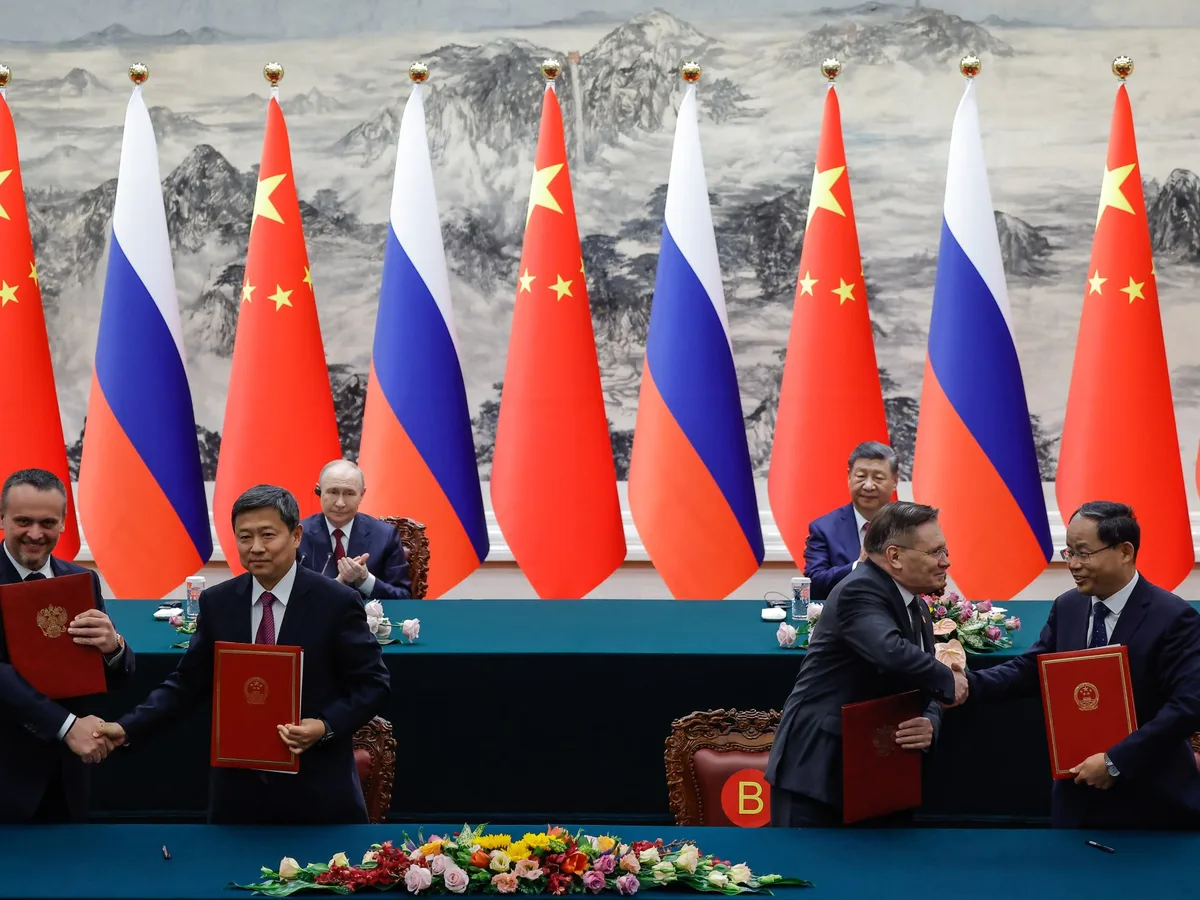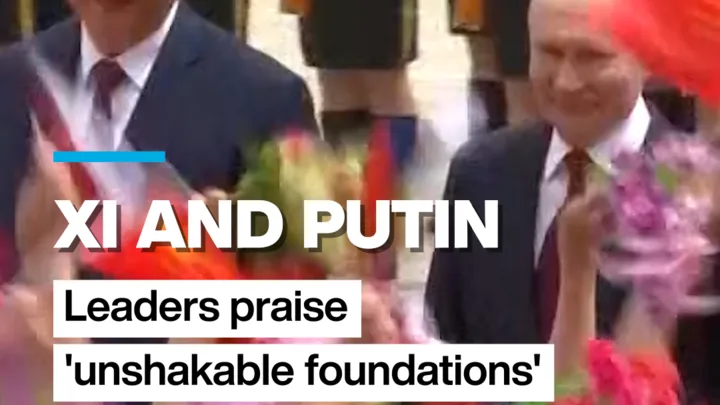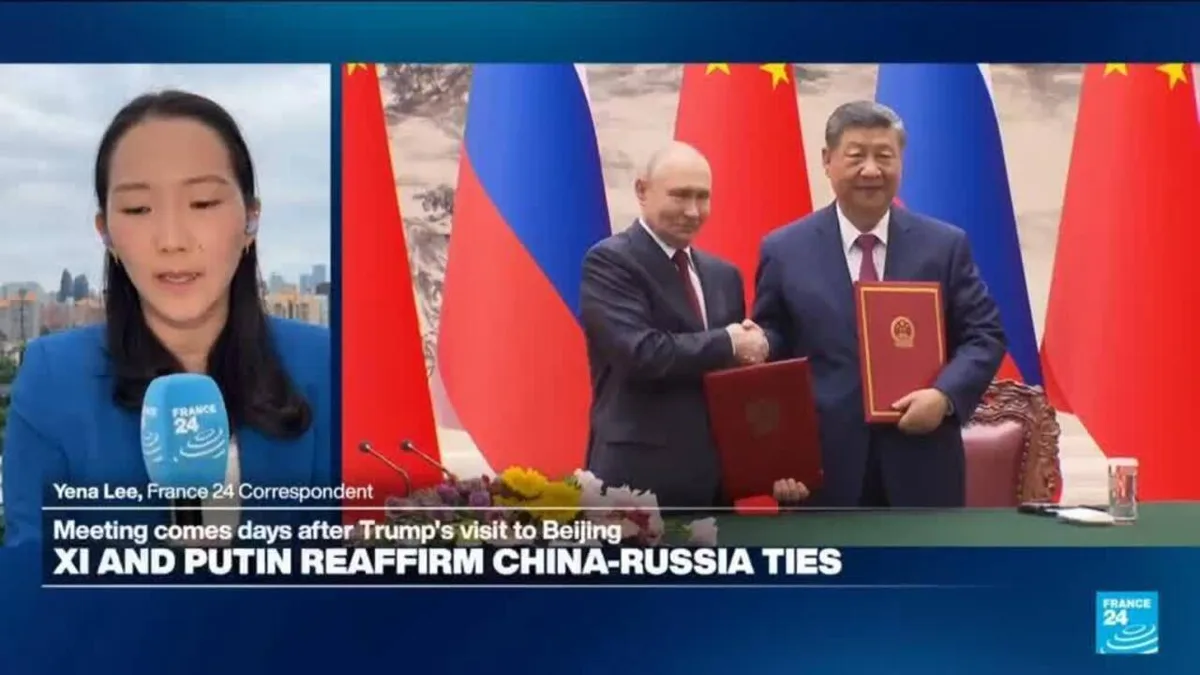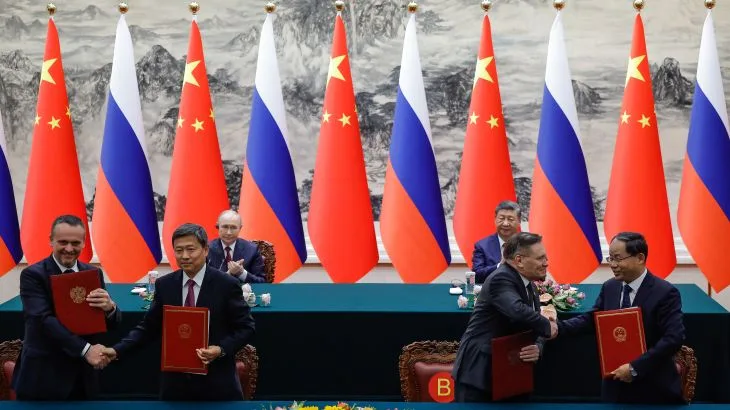
Chinese President Xi Jinping and Russian President Vladimir Putin met at the Great Hall of the People in Beijing on May 20, 2026, for extensive talks and a formal signing ceremony [1, 2, 3, 4, 5]. The leaders jointly issued a substantial 47-page declaration advocating for a multipolar global order and a new type of international relations, explicitly opposing dominance by any single or dual power [3, 6, 4, 5]. The Chinese Foreign Ministry said, "The two countries will also issue a joint statement on advocating for a multipolar world and a new type of international relations" [3].
The declaration outlines "the main avenues for the development of the entire complex of our multifaceted bilateral relations, a clear common vision of pressing issues on the global agenda, and the key formats for interaction in global affairs," according to Russian presidential aide Yury Ushakov [6]. Putin declared, "The era of the unipolar world order is nearing its end," while Xi criticized the "tide of unilateral hegemony running rampant" [3].
During the summit, the two leaders signed more than 20 cooperation agreements across diverse areas including energy, trade, science, technology, sport, education, media, nuclear energy, cinema, transport, and innovation [2, 3, 6, 4, 5]. The signing ceremony in Beijing was notable for an unusual practice where four officials signed two agreements simultaneously [4, 5]. The Russian delegation included 39 officials in expanded talks [6].
The summit followed shortly after U.S. President Donald Trump's meeting with Xi Jinping in China, signaling intensifying diplomatic activity by global powers in the region [3].
On May 18, Russian aide Ushakov announced Putin's upcoming visit and the planned declaration [6]. Putin arrived in Beijing on May 19 and attended official welcoming ceremonies and a dinner [6].
The leaders pledged to deepen ties and pursue global cooperation under the framework set in the joint declaration and agreements signed on May 20 [1, 2, 3, 4, 5].