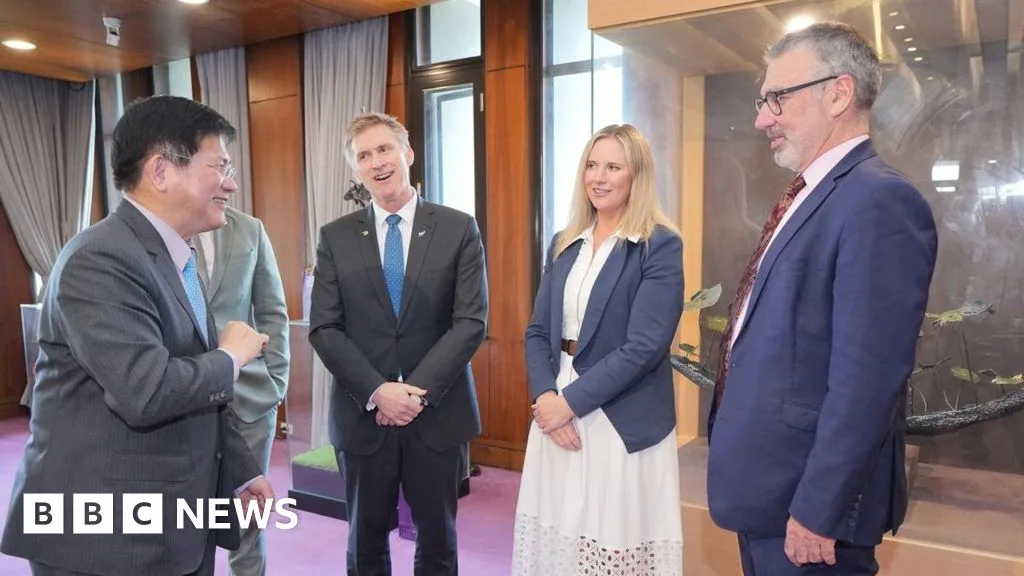
China has banned four New Zealand Members of Parliament from entering mainland China, Hong Kong, and Macau for one year following their visit to Taiwan from May 4 to May 8, 2026 [1, 2, 3]. The MPs are Laura McClure, David Wilson, Maureen Pugh from the ruling coalition parties, and Duncan Webb from the opposition Labour Party [1, 2, 4]. This is the first time China has imposed travel restrictions on New Zealand lawmakers over visits to Taiwan, representing a shift from decades of visits without issue [1, 3, 5].
China's embassy in New Zealand said the MPs' visit violated the One China principle, interfered in China's internal affairs, and sent a wrong signal to "Taiwan independence" forces [1, 4]. The embassy added the ban could be reduced or waived if the MPs apologise for their visit [1, 2]. It stated, "China has consistently opposed visits to China's Taiwan region by members of the legislatures of countries that have established diplomatic relations with China, including New Zealand, and this case is no exception. The New Zealand side should not be surprised" [3].
New Zealand's Foreign Minister Winston Peters and Prime Minister Christopher Luxon expressed surprise and concern over the ban. Peters’ spokesperson noted, "New Zealand MPs have visited Taiwan for decades and such visits are not inconsistent with New Zealand's One China policy. The minister was surprised China has taken a decision to impose travel bans on New Zealand MPs as a result of travel to Taiwan" [1]. Luxon said, "The backbenchers did not represent the executive government in Taiwan and should be free to see who they want to see. We think it’s entirely inappropriate, the reaction that we’ve seen from the Chinese. We will raise that with them ourselves" [6].
The MPs involved rejected calls to apologise. Laura McClure called the ban "a type of foreign interference" and said, "I am not going to apologise for visiting Taiwan. New Zealand MPs have the right to travel freely around the globe. That is part of living in a free democracy" [1]. Duncan Webb said, "As a parliamentarian, I have the independence and obligation to be accountable to my electorate... If the price is being excluded from China for a year, I am willing to pay that price" [7].
Taiwan’s Foreign Ministry condemned China's sanctions as retaliatory and interference, stating, "Parliamentary diplomacy is a normal practice among democratic nations. We urge China to stop pressuring and interfering with elected legislators from other countries who engage in exchanges with Taiwan" [3, 4]. The New Zealand delegation had met Taiwanese officials including Vice President Hsiao Bi-khim and Foreign Minister Lin Chia-lung during the visit [8, 9].
New Zealand and Australia plan to lodge formal protests with China over the travel ban [10, 8, 11, 6]. New Zealand maintains a One China policy that recognizes Beijing as the sole legal government but supports unofficial economic, cultural, and parliamentary exchanges with Taiwan [1, 3, 4]. The MPs' Taiwan visit was organized by New Zealand's cross-party Taiwan friendship group and was the group's third since its 2023 founding [8, 9].
China officially notified the New Zealand Parliament of the ban on June 3, 2026, and New Zealand confirmed it publicly the following day [2, 4]. Prime Minister Luxon and Foreign Minister Peters said they would raise the issue directly with China, while Australia also planned protests [11, 6, 9].