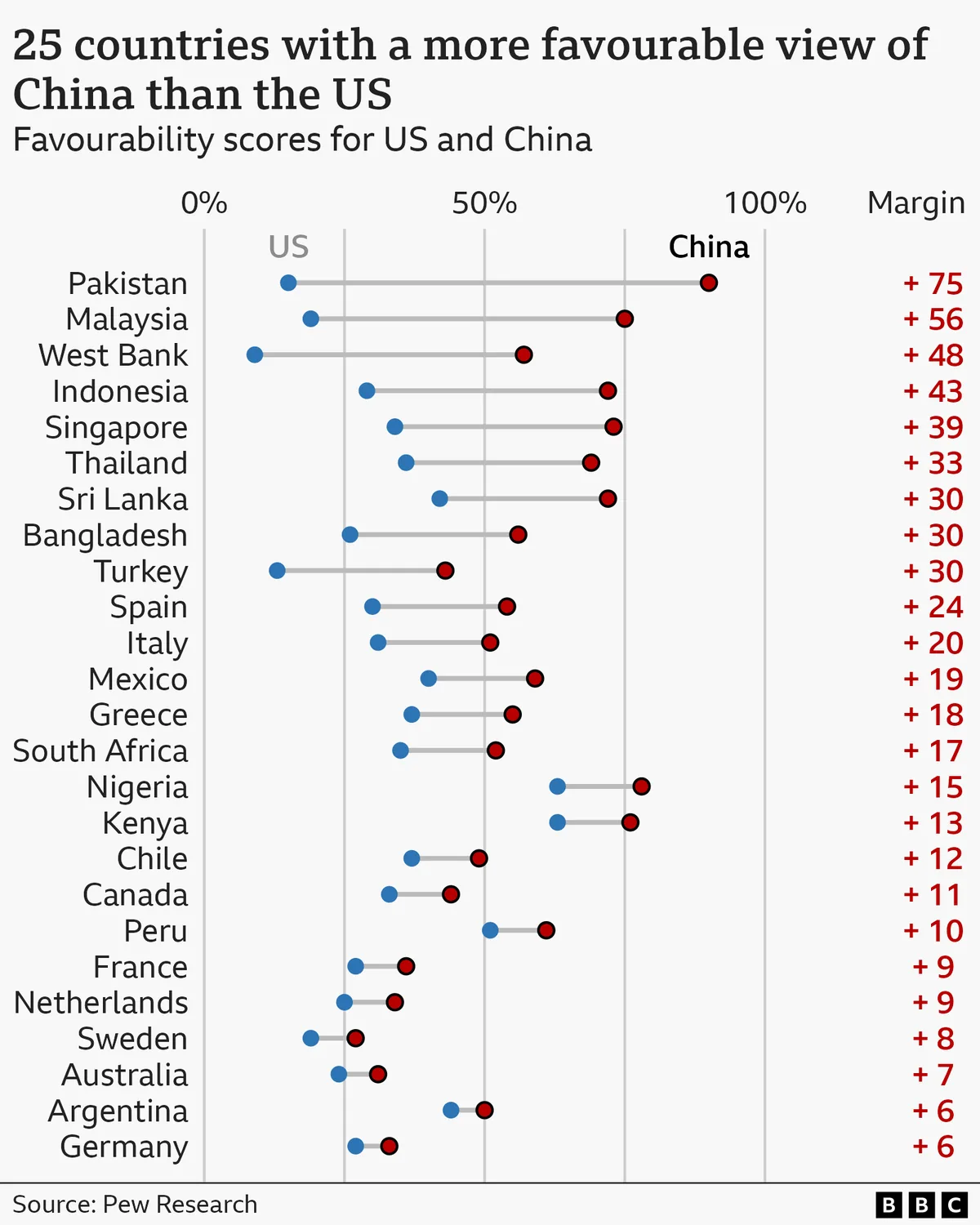
A Pew Research Center survey conducted between February and May 2026 across 36 to 37 countries found that in 25 countries, more people viewed China favourably than the United States, a first since 2002, according to Pew researcher Jonathan Schulman [1, 2, 3, 4, 5, 6, 7].
The survey polled over 42,000 respondents worldwide, offering broad insight into global attitudes toward the two powers [1, 2, 3, 4, 5, 6, 8]. In 20 countries with comparable data since 2023, China's favourability rating rose from 32% to 46%, while US favourability fell sharply from 58% to 36% [2, 9, 3, 4, 10, 6, 8].
Only six countries, including Poland, the Philippines, South Korea, India, Japan, and Israel, still viewed the US more positively than China [1, 11, 3, 4, 5, 7, 8]. Many US allies such as Canada, Australia, France, Germany, Mexico, and the UK shifted to favour China [2, 9, 11, 3, 4, 10, 7, 8].
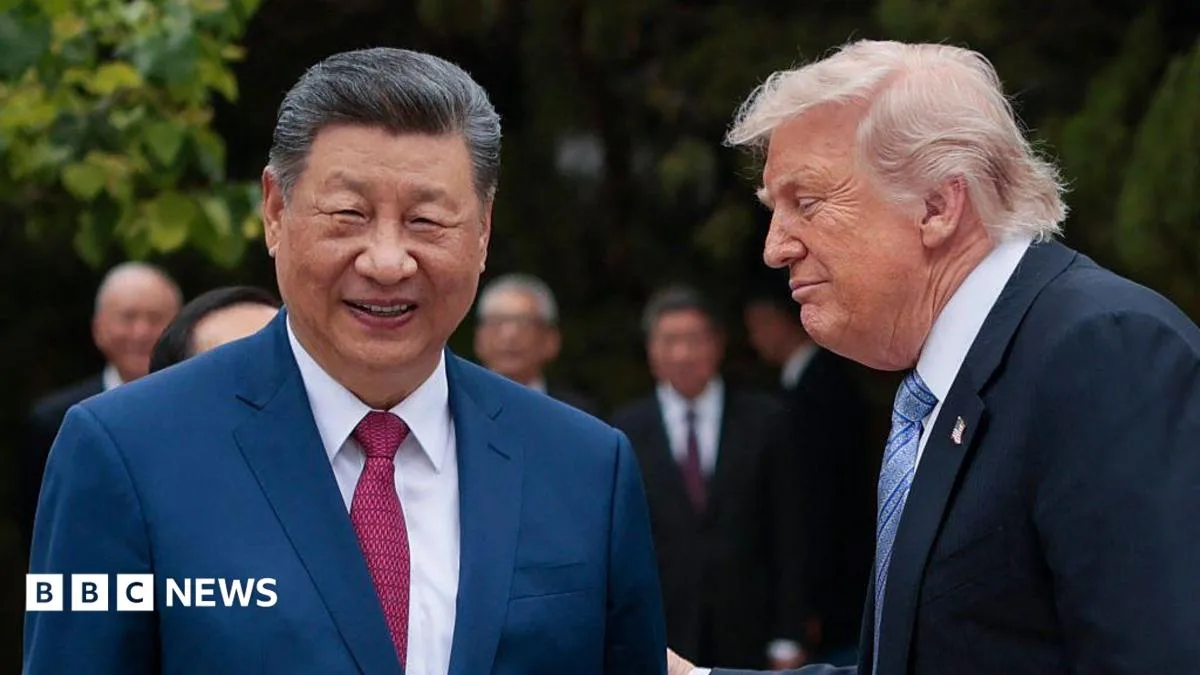
Favourable views of Chinese leader Xi Jinping exceeded those of US President Donald Trump in 22 of 36 countries surveyed, including major Western nations, although overall confidence in both leaders remained low [1, 11, 5, 10, 7, 8]. Pew's Laura Silver linked declining confidence in Trump to the ongoing US-led war in Iran and related geopolitical tensions, noting, "There was just an actual relationship between the outbreak of the war and the sense that the US is just not contributing to peace and stability and that people have less confidence in Donald Trump" [7].
Despite the shift, the US still is seen as respecting personal freedoms more than China, though the gap is narrowing. Many respondents also perceive the US as interfering more in other countries’ affairs [1, 2, 3, 4, 5, 8].
China’s favourability is strongest in Asia-Pacific and Middle Eastern countries, with record-high positive views reported in Italy, Spain, Mexico, Indonesia, Malaysia, Nigeria, and Turkey [1, 2, 9, 3, 4, 5, 8]. Independent researcher Susan Banton said the findings "confirm a collapse in America's soft power under President Trump caused by his government's resort to force and economic coercion" [10]. Carnegie China scholar Zhuang Jiaying added that "The US's unpredictable policies and use of force have made many people uneasy; China now appears to be a more predictable actor especially in developing countries" [5].
Jonathan Schulman stressed the significance of the decline in US perceptions, stating, "Views of the US have declined in many places, and the share of people saying that the US is a reliable partner to their country has similarly fallen sharply" [6]. Meanwhile, China is increasingly viewed as a more reliable partner contributing to global peace and stability [11, 3, 5, 8].
Pew Research Center publicly released the survey findings on July 15, 2026, confirming China's rise in global favourability [2, 9, 4, 7].