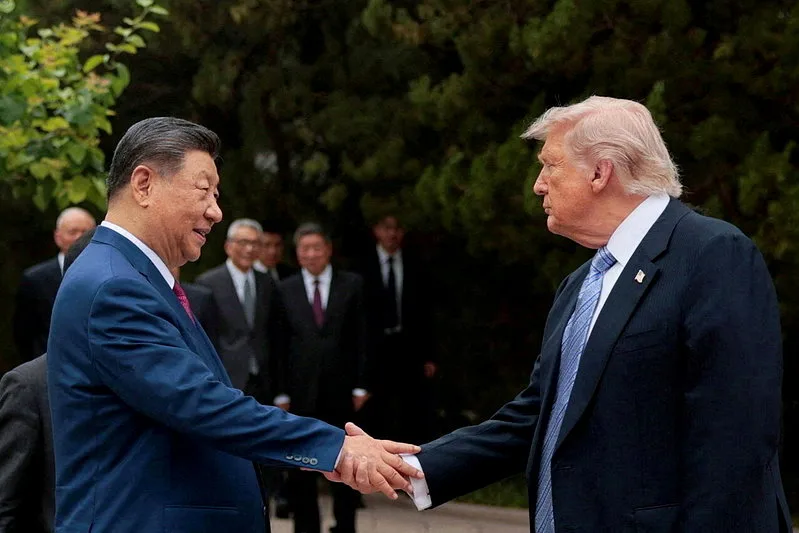
China and the United States are set to extend their trade truce agreement for about one more year, according to multiple sources. The original truce was reached in October 2025 in Busan, South Korea [1, 2, 3].
Chinese President Xi Jinping plans to visit the US on September 24, 2026, for a summit with US President Donald Trump [4, 1, 5, 2, 3]. Discussions are ongoing on whether Chinese business leaders will join Xi's delegation for the visit. Reports differ on who proposed the business delegation, with some saying Beijing hopes to bring business leaders while others claim Washington requested it. The details remain under negotiation [4, 1, 2, 3].
The trade truce extension aims to maintain stability and advance constructive economic cooperation. It builds on trade and investment committees established after Xi's May 2026 visit to China with US business executives accompanying Trump [1, 2, 3]. These committees focus on industries and products outside sensitive areas, with a trade volume cap of $30 billion per side eligible for tariff reductions [1, 2, 3].
Beijing hopes to extend the truce until the end of Trump's term for longer-term stability, while Washington prefers a one-year extension and has been secretive about timing [1, 2, 3]. Despite some recent retaliatory measures, both sides want to avoid escalation and maintain relative calm ahead of the summit [1, 2, 3].
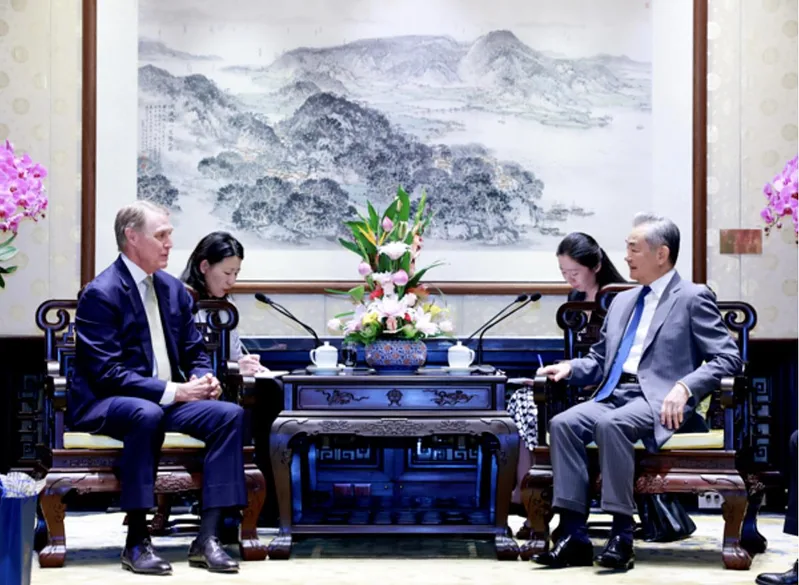
Chinese Foreign Minister Wang Yi met US Ambassador David Perdue in Beijing on August 26 to discuss preparations for Xi's visit. Wang said, “中美关系仍面临各种风险挑战,双方应聚焦积极议程,妥善管控分歧,为两国高层交往排除干扰,” stressing the need to focus on positive agendas and manage differences constructively [5]. Perdue described the talks as "productive" and focused on arrangements for Xi's state visit [5].
Both nations want to build a constructive and stable strategic relationship based on fairness and equality. Notably, contentious issues such as Taiwan, cyberattack accusations, and plans for new US tariffs on Chinese industrial overcapacity were not emphasized in recent diplomacy [5].
Xi Jinping's arrival in Washington on September 24 remains the central event, with the trade truce extension and business delegation negotiations likely to be key topics during the summit [4, 1, 5, 2, 3].