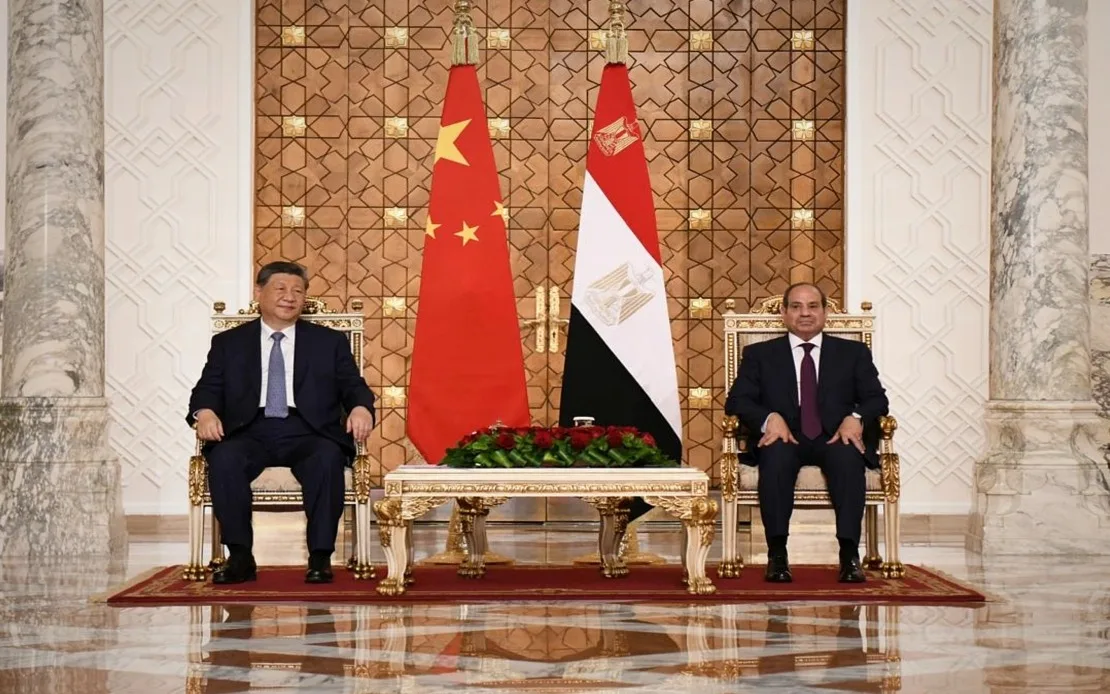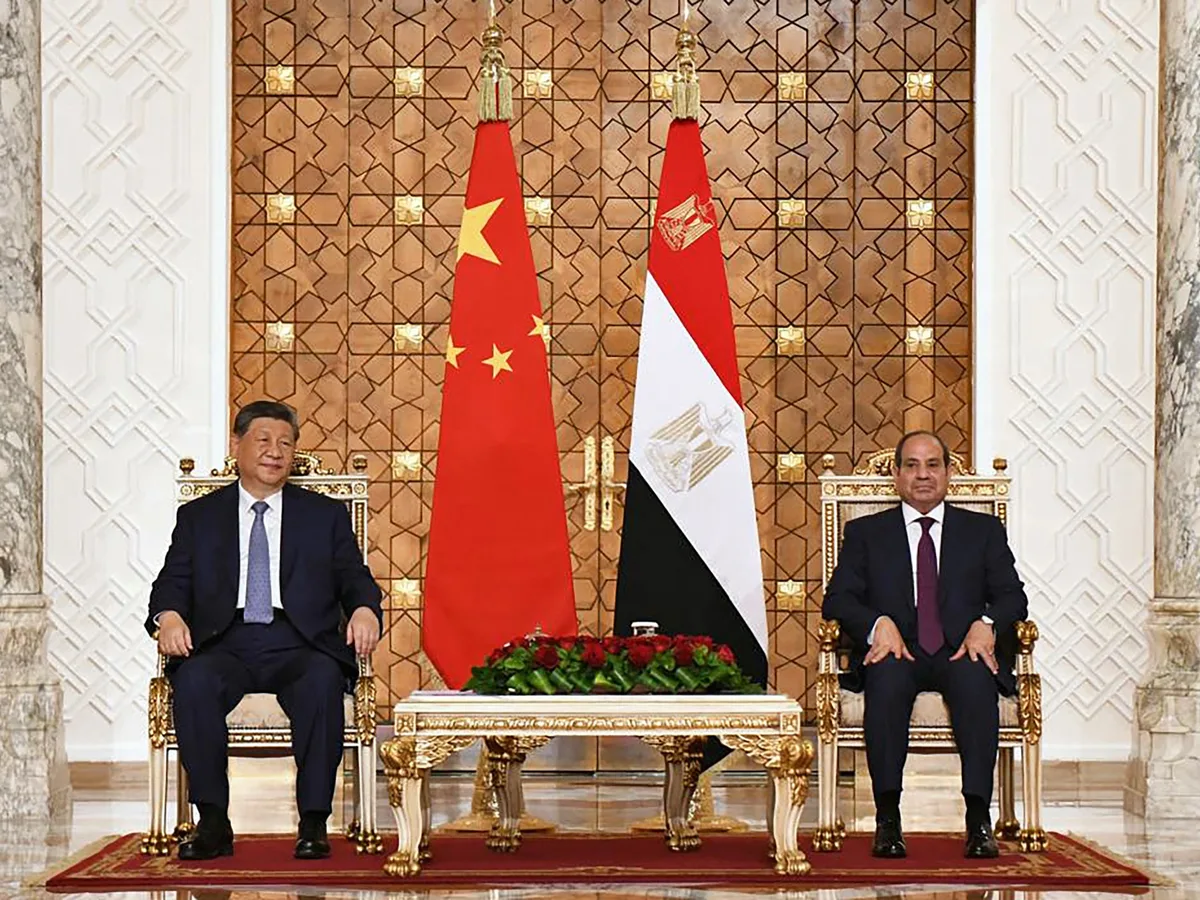
Chinese President Xi Jinping met with Egyptian President Abdel Fattah al-Sisi in Cairo on September 2, 2026, to discuss Middle East security and bilateral cooperation amid ongoing US-Iran and US-Israel conflicts [1, 2, 3, 4]. Xi urged Middle Eastern countries to be the "masters of their own affairs" and oppose external interference. "We must uphold the principle that the people of the Middle East are the masters of their own affairs, oppose external interference [and] support regional countries in strengthening dialogue on peace and security," he said [1]. He emphasized that the Palestinian issue remains the core of the Middle East question and should not be marginalized or overlooked [2]. Xi called on regional nations to cooperate in building a new security architecture for West Asia to promote stability [2].
Xi stressed China's readiness to collaborate with Middle Eastern countries in safeguarding international shipping lanes, particularly amid tensions in the Strait of Hormuz and Bab al-Mandeb Strait. "China stands ready to work with countries in the region to safeguard the security of international shipping lanes, advance development cooperation… and eliminate the breeding grounds for conflict," he said [3].
During the visit, China and Egypt signed agreements launching the third phase of the Egyptian-Chinese industrial zone along the Suez Canal. The zone currently hosts about 200 companies with investments worth approximately $4 billion, reflecting strong economic ties [1, 3]. Xi and al-Sisi also called for diplomatic solutions to the ongoing US-Iran and US-Israel wars [1, 2, 3, 4].
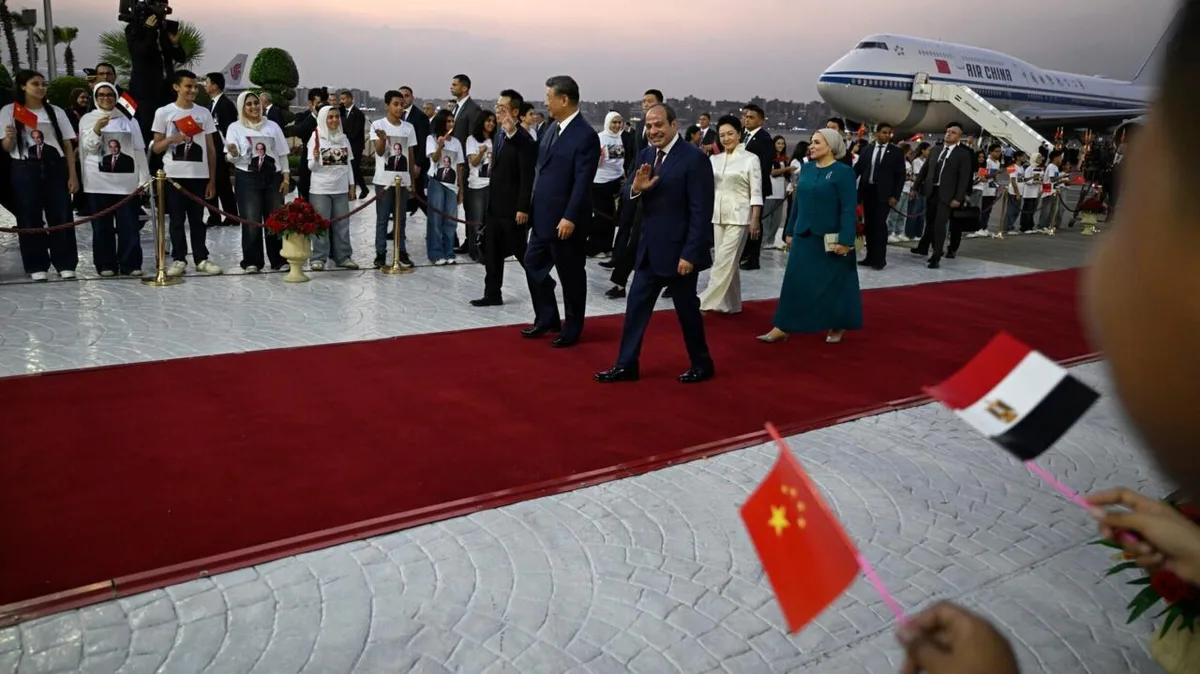
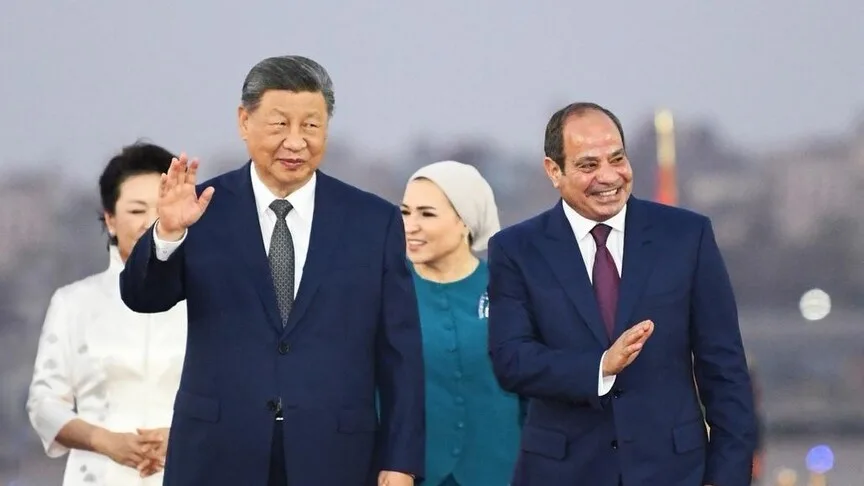
Xi’s arrival in Cairo on September 1 marked his first visit to Egypt in 10 years, reinforcing the strategic partnership established since 1999 and upgraded to a comprehensive strategic partnership in 2014 [2, 4]. He urged both countries to oppose unilateralism and bullying, promoting cooperation in green energy, electric vehicles, aerospace, digital economy, and modern agriculture [2, 4].
Xi’s talks with al-Sisi and related agreements come as part of China’s efforts to expand influence amid regional instability caused by the US-Iran-Israel conflict [1, 3]. The two-day state visit continues through September 2, with additional meetings and cooperation discussions expected.