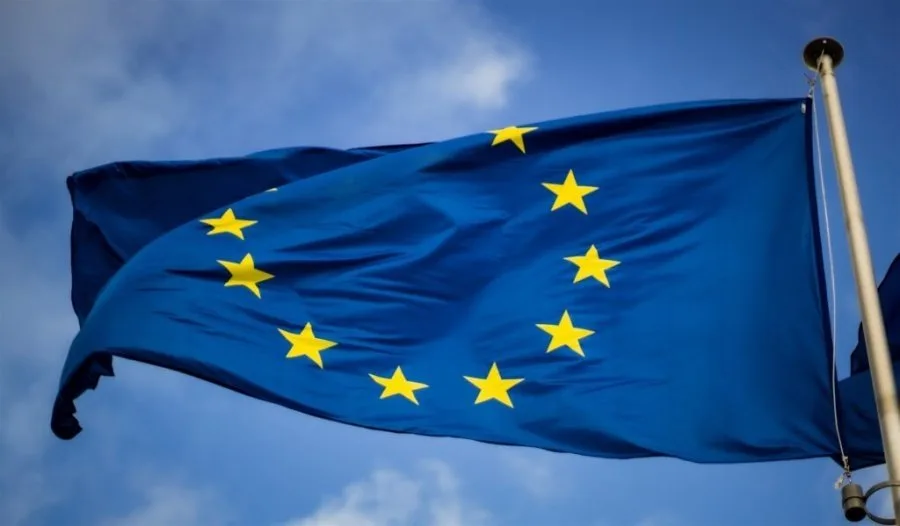
Iceland's parliament approved holding a referendum on August 29, 2026, to decide whether to restart European Union accession talks [1, 2, 3, 4]. The vote in the 63-seat Althingi was 34 in favor, 8 against, with 14 abstentions and 7 absent [1, 2, 3, 4].
The referendum is the first step in a two-stage process. If voters approve reopening negotiations, a second referendum would be held later to approve the final terms of EU membership [1, 2, 3, 4]. Olafur Thordur Hardarson, a political science professor at the University of Iceland, said the two-step plan provides reassurance to the many undecided voters. He explained, "A large proportion has not finally decided if they want to join or not, many want the first referendum because they want to see exactly what terms would be in a potential agreement." [1].
Iceland initially applied to join the EU in 2009 but suspended accession talks in 2013 after a Eurosceptic government took office [1, 2, 3, 4]. Renewed public interest has arisen due to recent living cost increases and geopolitical concerns tied to the Ukraine war [1, 2, 3, 4]. Public polling cited shows 58% support resuming talks, while 48% express opposition, reflecting a divided opinion among Iceland’s roughly 400,000 population [2, 1].
Foreign Minister Thorgerdur Katrin Gunnarsdottir expressed optimism about Iceland joining the EU as early as 2028 if talks restart. She warned fisheries and agriculture would be the toughest negotiation topics [1]. Gunnarsdottir said, "I am optimistic that Iceland could join the EU as early as 2028, though fisheries and agriculture will be the toughest points of negotiation." [1]
If the August referendum passes, Iceland could complete the accession process and formally join the European Union between 2028 and 2030, according to different sources [1, 2, 3, 4]. Iceland's membership would extend EU presence into the North Atlantic with symbolic strategic importance [1, 2, 3, 4].
The August 29 referendum will be the first major public vote on EU accession since talks were frozen in 2013. Depending on the result, negotiation timelines and a second referendum will follow to finalize membership approval.