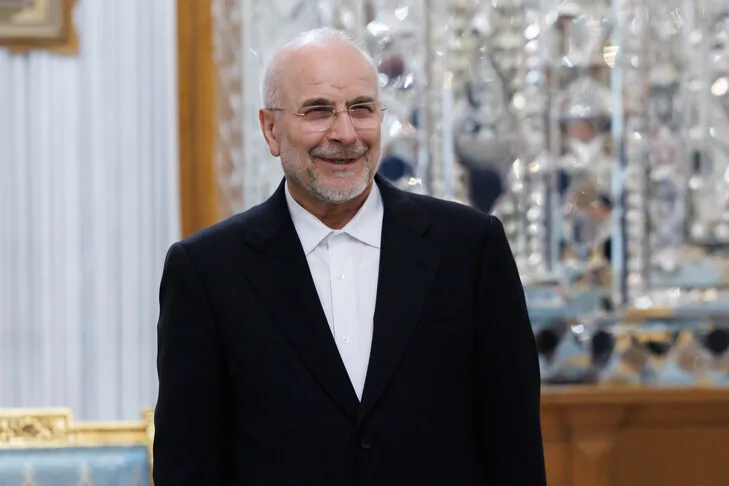
Iran appointed Parliament Speaker Mohammad Bagher Ghalibaf as Tehran's special envoy to China on May 17, 2026, granting him authority to coordinate various national sectors involved in Iran-China relations [1, 2]. The appointment was proposed by Iranian President Masoud Pezeshkian and approved by Supreme Leader Mojtaba Khamenei [1, 2].
Ghalibaf’s mandate reportedly carries a greater level of authority compared to previous envoys, signaling a shift in how Iran manages its relationship with China [2]. Prior to Ghalibaf, Iran's late security chief Ali Larijani had overseen China relations for 25 years until his death in US-Israeli strikes in March 2026 [1].
In April 2026, Ghalibaf emerged as a chief negotiator in talks with the United States, highlighting his rising importance in Iran’s diplomatic efforts [1]. Just weeks before his appointment, Iran allowed several Chinese ships safe passage through the strategic Strait of Hormuz after reaching an agreement on strait management protocols in early May 2026 [1].
Larijani’s previous role was crucial in sustaining Iran-China cooperation over decades. Ghalibaf now steps into a position aimed at strengthening and broadening these ties. His role includes coordinating efforts across various sectors and national bodies related to China.
The appointment comes amid ongoing strategic dialogues and regional security developments. Ghalibaf’s position as special envoy reflects Tehran’s priority on deepening engagement with China. Further developments in bilateral cooperation are expected to follow his operational lead.