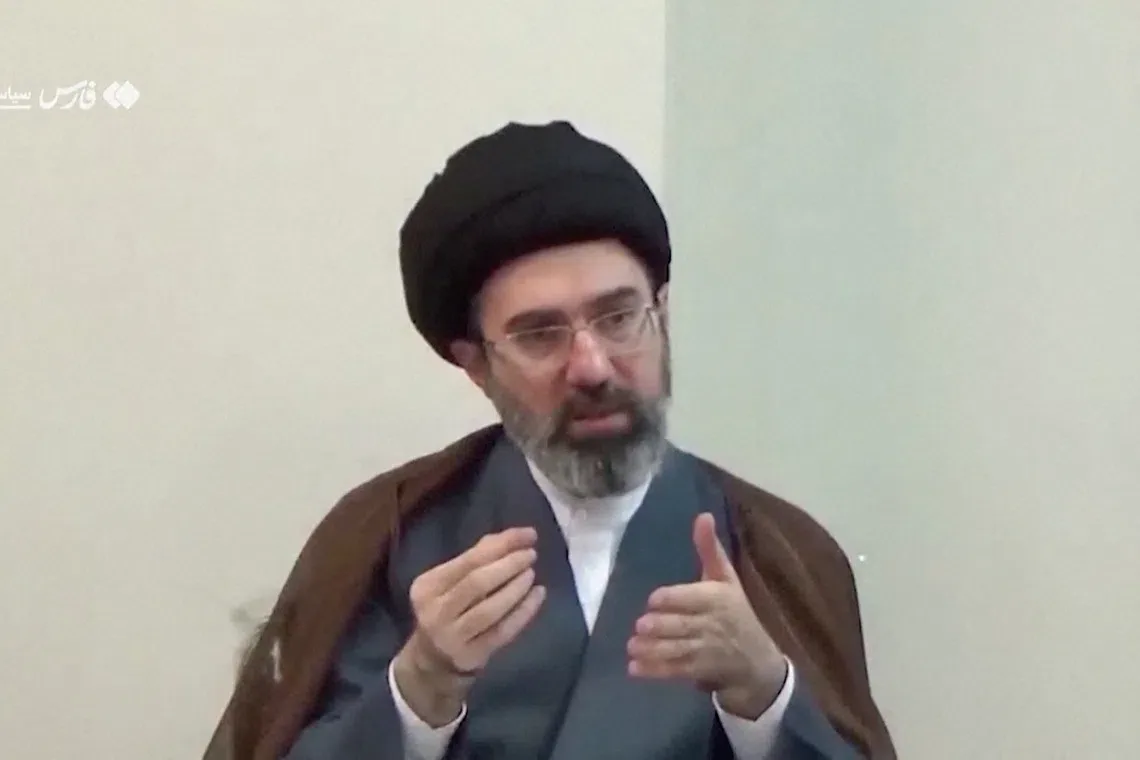
Mojtaba Khamenei has led Iran as supreme leader for six months but remains completely unseen and unheard by the Iranian public, sources report [1, 2, 3, 4]. His appointment came about a week into the war after airstrikes killed his father, former supreme leader Ali Khamenei, and left Mojtaba disfigured [1, 2, 3, 4]. Since then, no photographs, videos, or audio messages of him have been released [1, 2, 3, 4].
Officials confirm Mojtaba holds frequent meetings with top Iranian figures, receives all key reports, and makes final decisions on major issues despite ruling from hiding for security reasons while recovering from his injuries [1, 2, 3, 4]. President Masoud Pezeshkian met with him for seven hours in early August [1].
Mojtaba’s only direct communication has been through a few written statements read aloud by news broadcasters [1, 2, 3, 4]. He notably did not attend the weeklong funeral rites for his father in July, a highly unusual absence [1, 2, 3, 4].
Public skepticism is growing over Mojtaba’s role due to his prolonged invisibility and lack of public appearances. Hardline supporters acknowledge he likely makes decisions but worry his absence damages morale [1, 3, 4]. Some opponents and pro-reform voices openly question whether he is alive or effectively leading. A Tehran businessman said, "How do we know that Mojtaba has not been killed? No sign proves he is alive or participating in decisions; this is illogical" [3]. An anonymous Basij militia member stated, "We need to hear our leader's voice, or see any sign that he is there on top and leading the country to give us more confidence" [1]. Middle East Institute’s Alex Vatanka said, "The question is no longer whether Mojtaba is alive, but whether Iran still has a functioning supreme leader" [1].
The latest reports on August 28 highlight the continuing invisibility of Mojtaba Khamenei and growing public doubts about Iran’s leadership [1, 2, 3, 4].