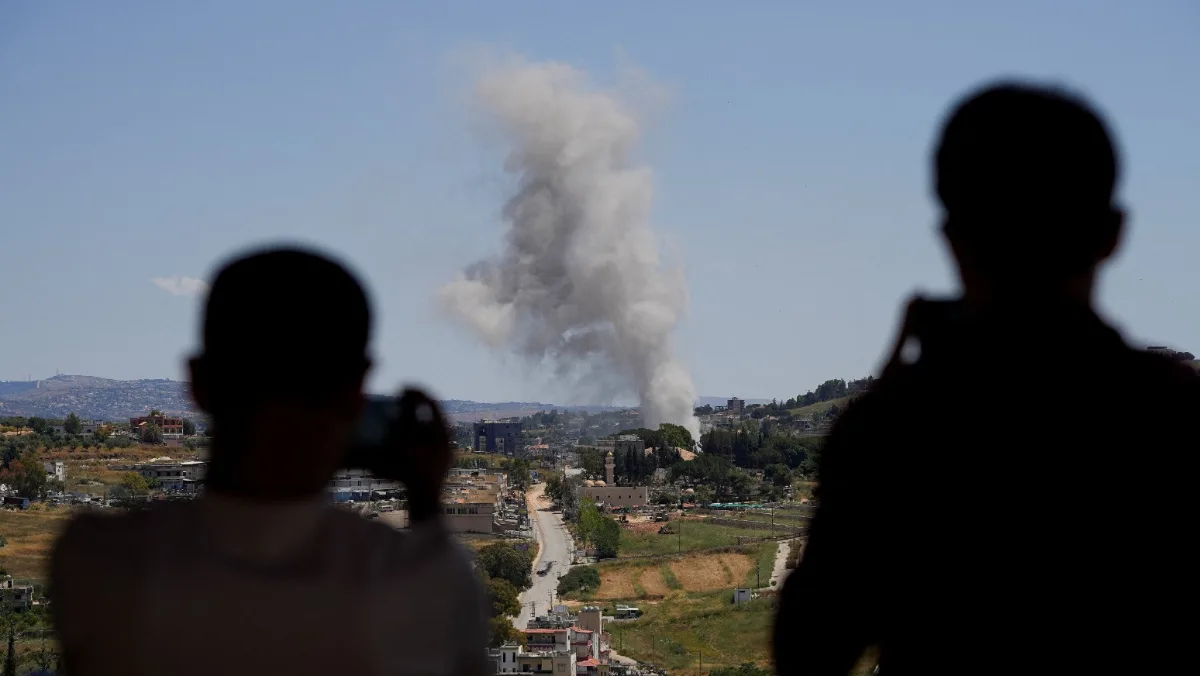
On June 7, the Israeli military intercepted two projectiles that crossed into Israeli territory from Lebanon following sirens in northern areas near Yiftah and Ramot Naftali [1, 2, 3, 4, 5, 6]. The projectiles were fired from Lebanon and were shot down by Israeli air defenses. Authorities reported no casualties or property damage from the incident [1, 2, 3, 4, 5, 6].
There is a conflicting report from AFP citing additional sources that claims three projectiles were intercepted on the same day, but the majority of sources support the figure of two [7, 8].
The incident comes amid ongoing clashes between Israel and Hezbollah, the Lebanon-based militant group. Hezbollah entered the conflict on March 2, 2025, citing retaliation for the killing of Iran's Supreme Leader. Since then, thousands have died and over one million people have been displaced in Lebanon [1, 2, 4, 5, 6].
Despite a US-brokered ceasefire that took effect in November 2024, hostilities have continued. Israel has maintained strikes targeting Hezbollah infrastructure in Lebanon. Hezbollah has repeatedly rejected ceasefire proposals that include disarmament of its forces as a condition for peace [1, 2, 4, 5, 6].
Iran has stated that achieving a ceasefire between Hezbollah and Israel is a prerequisite for any peace deal with the US [1, 2, 4, 5, 6]. Lebanese President Joseph Aoun has criticized Iran for interfering in Lebanon, saying "This (Lebanon) is not your country," and condemning Iran's use of Lebanon as leverage in international negotiations [5, 6].
On June 6, a day before the projectile interception, Israeli forces also intercepted a suspicious aerial object near Eilat, reportedly launched from Yemen, with no injuries reported [9].
The last major diplomatic update came on June 3, when the US State Department announced that Israel and Lebanon had agreed to a ceasefire after mediation [5, 6]. However, Hezbollah rejected ceasefire terms linking disarmament with peace on June 4, and conflict along the border has since persisted [5, 6].
The situation remains volatile, with military exchanges continuing despite diplomatic efforts. The coming days are expected to test whether recent ceasefire agreements can hold amid entrenched opposition and external influences.