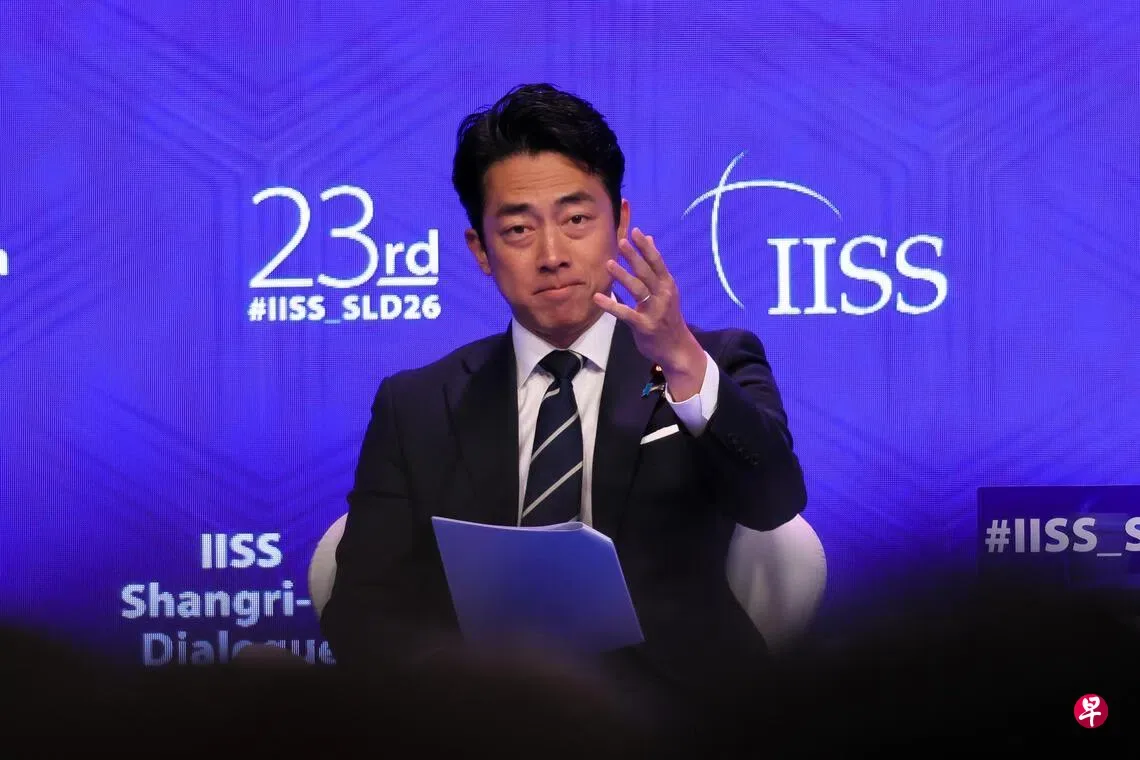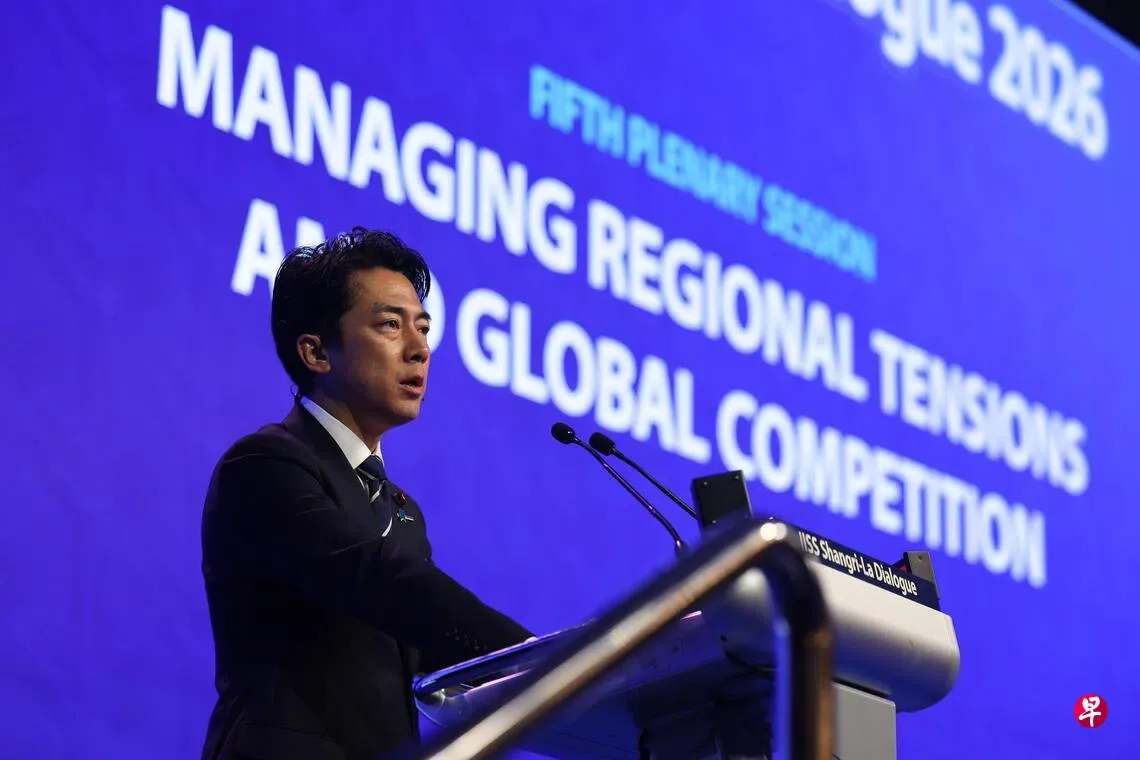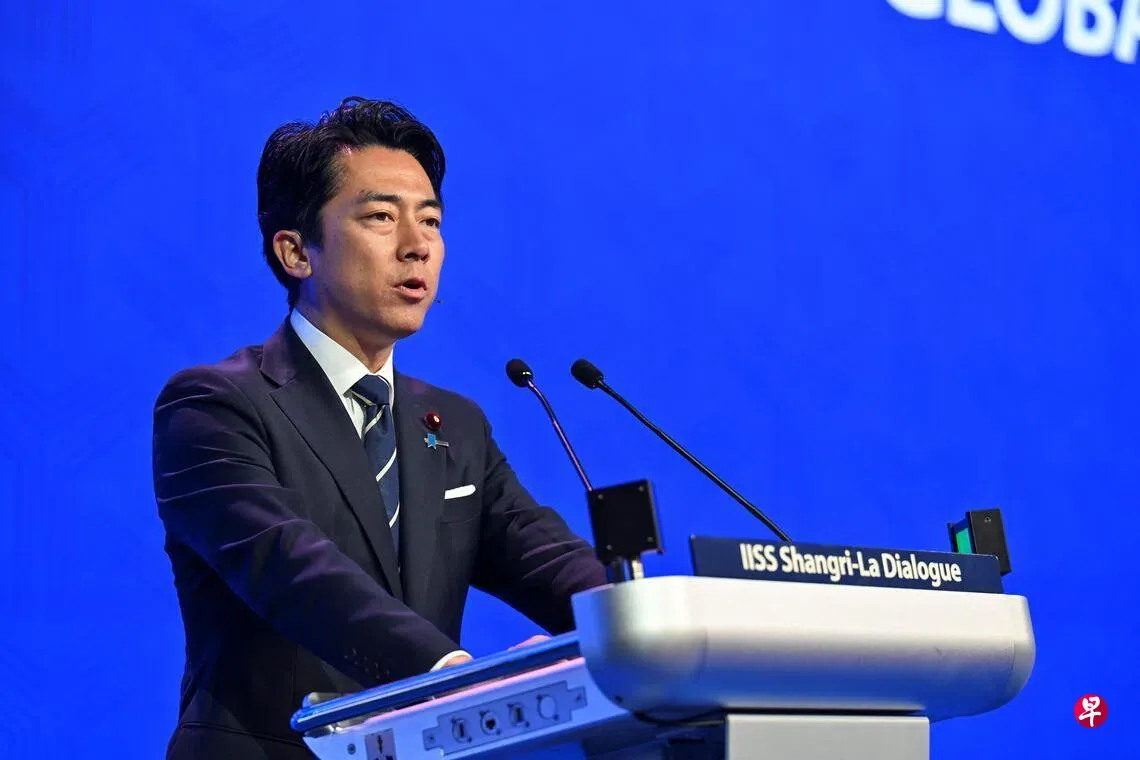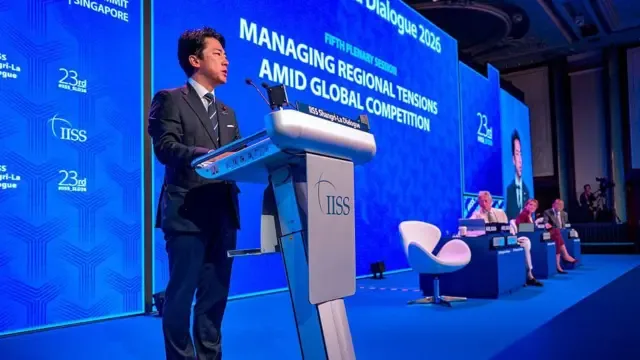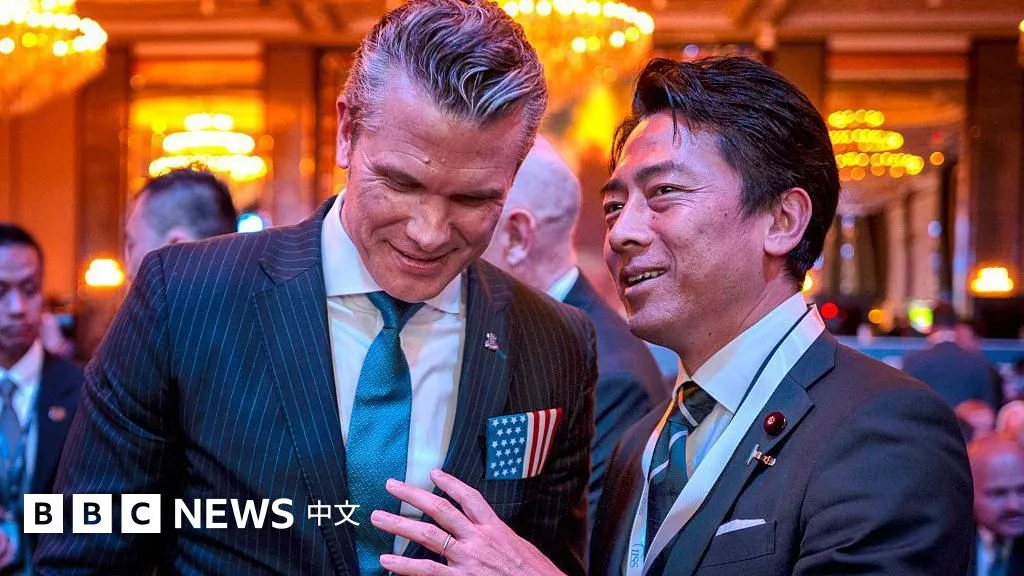
Japanese Defense Minister Koizumi Shinjiro firmly rejected accusations that Japan is pursuing "new militarism" during his keynote speech at the 23rd Shangri-La Dialogue in Singapore on May 31, 2026 [1, 2, 3]. Koizumi said it was "strange" to label Japan—a nation without nuclear weapons or strategic bombers—as militaristic while another country with a large nuclear arsenal remained unnamed but implicitly criticized [1]. "Imagine, some countries possess huge nuclear stockpiles and strategic bombers; Japan has neither, yet is tagged with ‘new militarism.’ Isn’t that strange?" he said [1]. He stressed Japan’s defense policy is not aimed at any particular country or region and denied attempts to revise or whitewash history [1, 2, 4].
Koizumi sharply criticized China’s accelerating military expansion. He said Beijing’s rapid buildup across air, sea, space, and cyber domains, combined with high defense spending lacking transparency, causes serious concern to Japan and the global community [1, 2, 4]. Notably, China did not send a defense minister to the forum for the second year in a row. Instead, a delegation led by National Defense University Professor Meng Xiangqing represented China [1, 3]. Chinese officials, including Meng and Foreign Ministry spokesman Lin Jian, accused Japan of evading historical responsibility and accelerating militarism through increased budgets, offensive weapons, arms exports, and constitutional revisions [4, 5, 6, 7]. Lin said Japan’s "selective ignorance and false claims cannot gain trust among Asian neighbors and the world" [4]. Meng questioned Japan’s qualifications to discuss defense cooperation given unresolved militarism legacies [7].
Koizumi expressed regret there was no opportunity to meet Chinese defense counterparts but affirmed Japan remains open to dialogue and communication [1, 8]. "Japan’s door for dialogue is always open," he said [8].
Japan’s defense budget topped 9 trillion yen (about $570 billion) for the 12th consecutive year, aiming for a 2% GDP spending target with plans to increase towards 3.5% [2, 4]. The government plans new missile and drone development and expanding military exports, including destroyers and aircraft sales to the Philippines and talks with New Zealand and Indonesia [2, 8]. Since Prime Minister Suga’s October 2025 administration took office, Japan has accelerated defense strengthening policies, including revising arms export rules to permit lethal weapons sales and pursuing constitutional changes to allow a more proactive military posture [2, 8, 7]. Public opinion in Japan remains divided, with significant anti-war protests continuing [2].
Koizumi underlined Japan’s compliance with international law and the UN Charter and said the country pursues transparent defense upgrades to maintain a free and open international order [2, 3]. By the end of 2026, Japan plans to revise key security documents and continue expanding defense capabilities, including missile and drone programs, in alignment with its strategic objectives [2, 8].