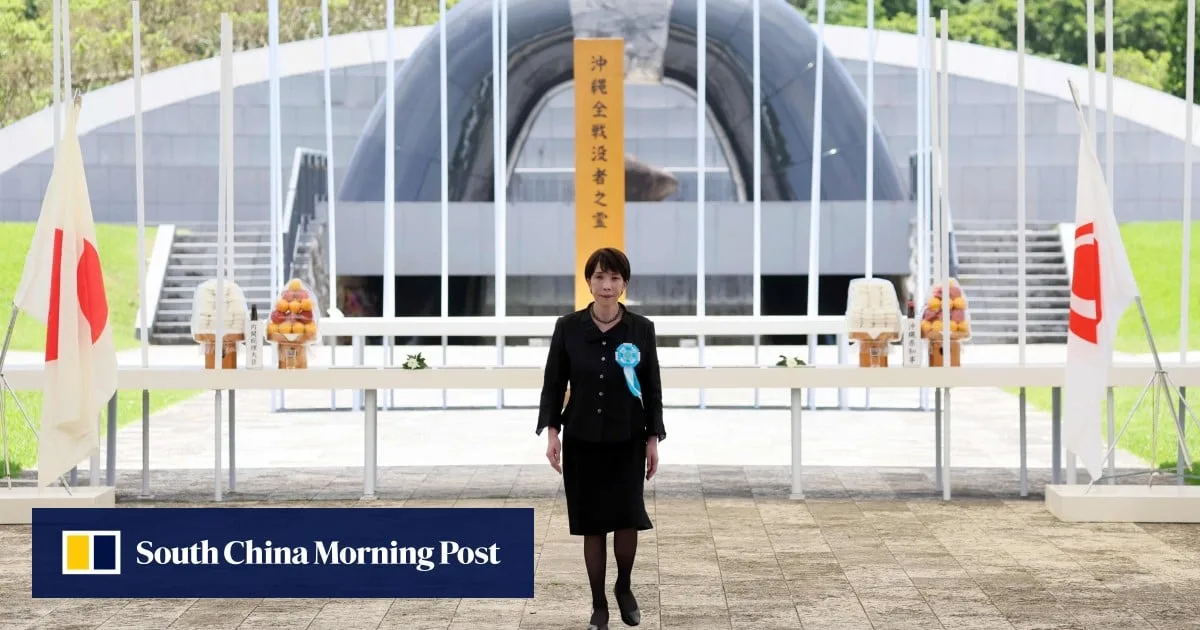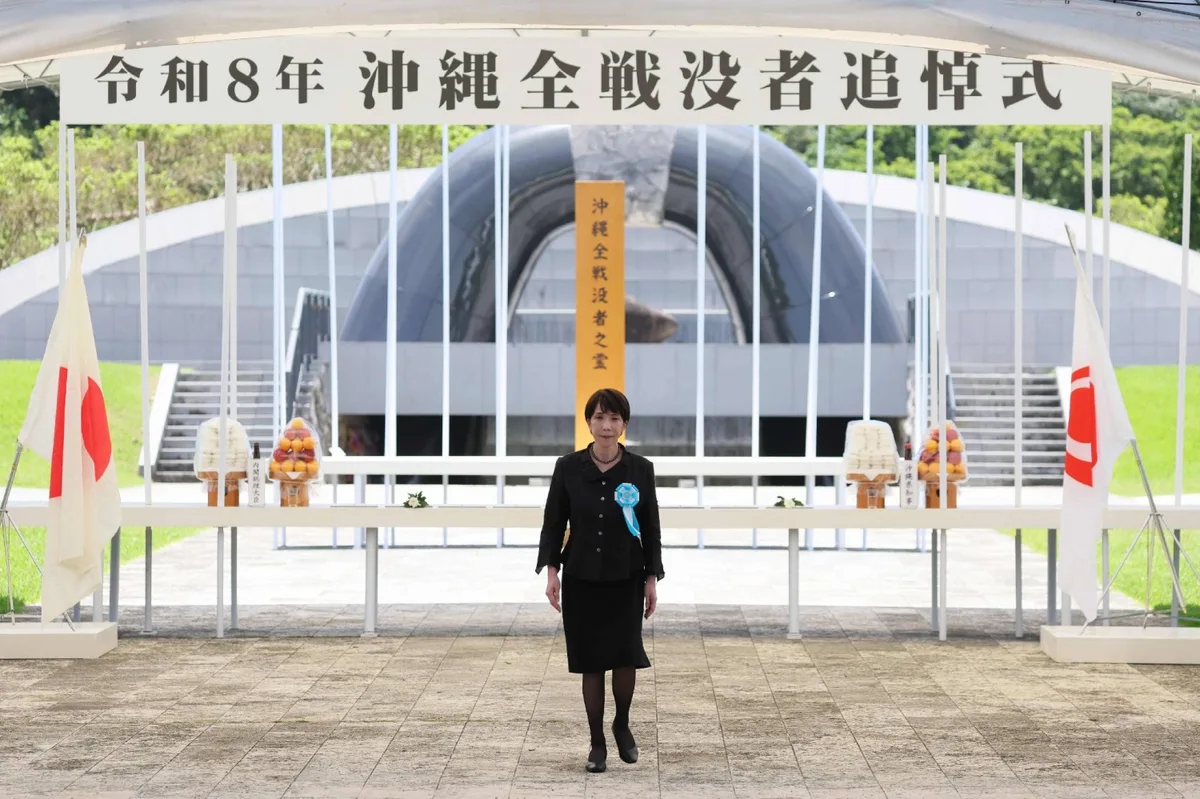
Prime Minister Sanae Takaichi was heckled by protesters while speaking at a World War II memorial event in Okinawa on June 23, marking the 81st anniversary of the 1945 Battle of Okinawa in which about 200,000 Japanese soldiers and civilians died [1, 2, 3]. Protesters shouted slogans such as “No to war!” and “Protect Article 9!”, referring to Japan’s constitutional clause renouncing war [1, 2, 3].
During her speech, Takaichi expressed sorrow for the war dead, saying, "Whenever I reflect upon the regret of all those who perished in the war and the grief of the bereaved families, my heart is filled with profound sorrow," and reaffirmed Japan’s peaceful intentions: "Under our unwavering pledge never again to repeat the devastation of war, Japan has steadfastly moved forward on this path as a nation that places the highest value on peace" [1, 2, 3].
The demonstration underscored tensions over recent shifts in Japan’s defense policy. In April 2026, Japan loosened longstanding restrictions on lethal arms exports, signaling a departure from decades of strict pacifism [2, 3]. Takaichi is seen as a security hawk who has advocated revising Japan’s pacifist constitution and adopting stronger counterstrike capabilities [2, 3]. Japan has also increased military spending and deepened security cooperation with regional partners, including the Philippines [2, 3].
Okinawa hosts a major U.S. military base and remains sensitive as a potential frontline in any future China-Taiwan conflict [2, 3]. The region’s residents often express opposition to militarization and base expansion. Takaichi angered Beijing in November 2025 when she suggested Japan might intervene militarily if China attacked Taiwan [2, 3]. China has criticized Japan’s policy changes as a revival of militarism and imposed trade and travel restrictions in response [2, 3].
The protests at the memorial reflect local unease with these developments and the legacy of war. Takaichi acknowledged the sorrow the conflict caused and reaffirmed Japan's commitment to peace despite security challenges. [1, 2, 3]