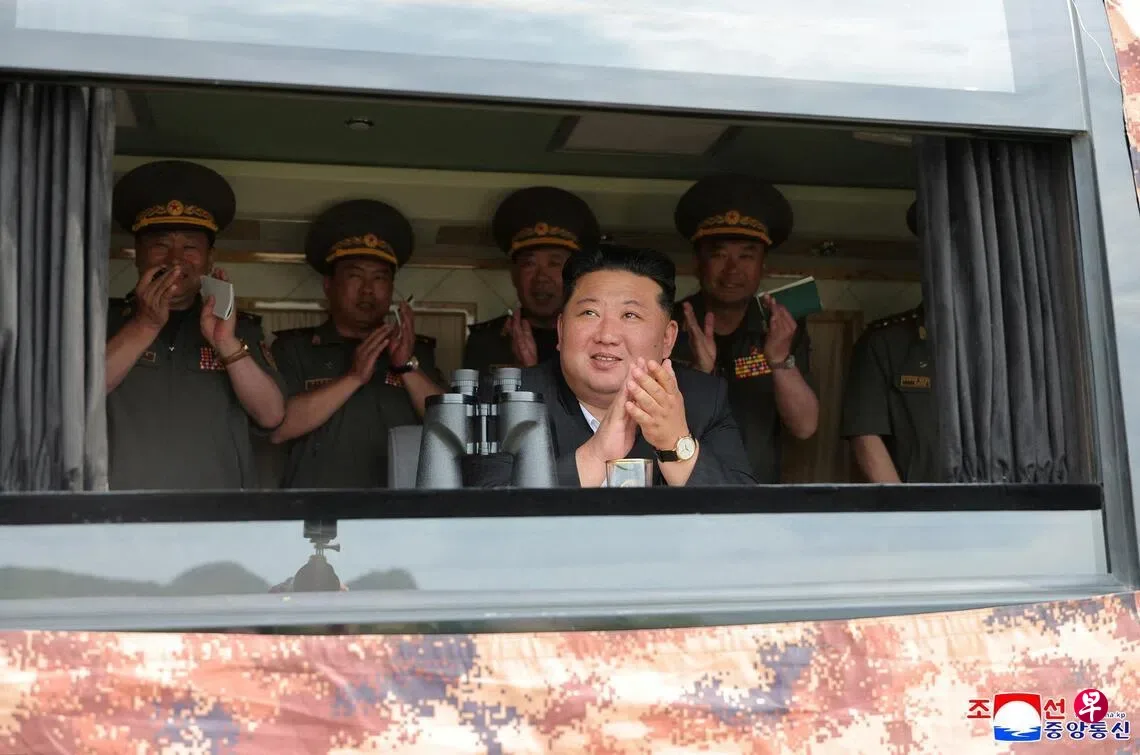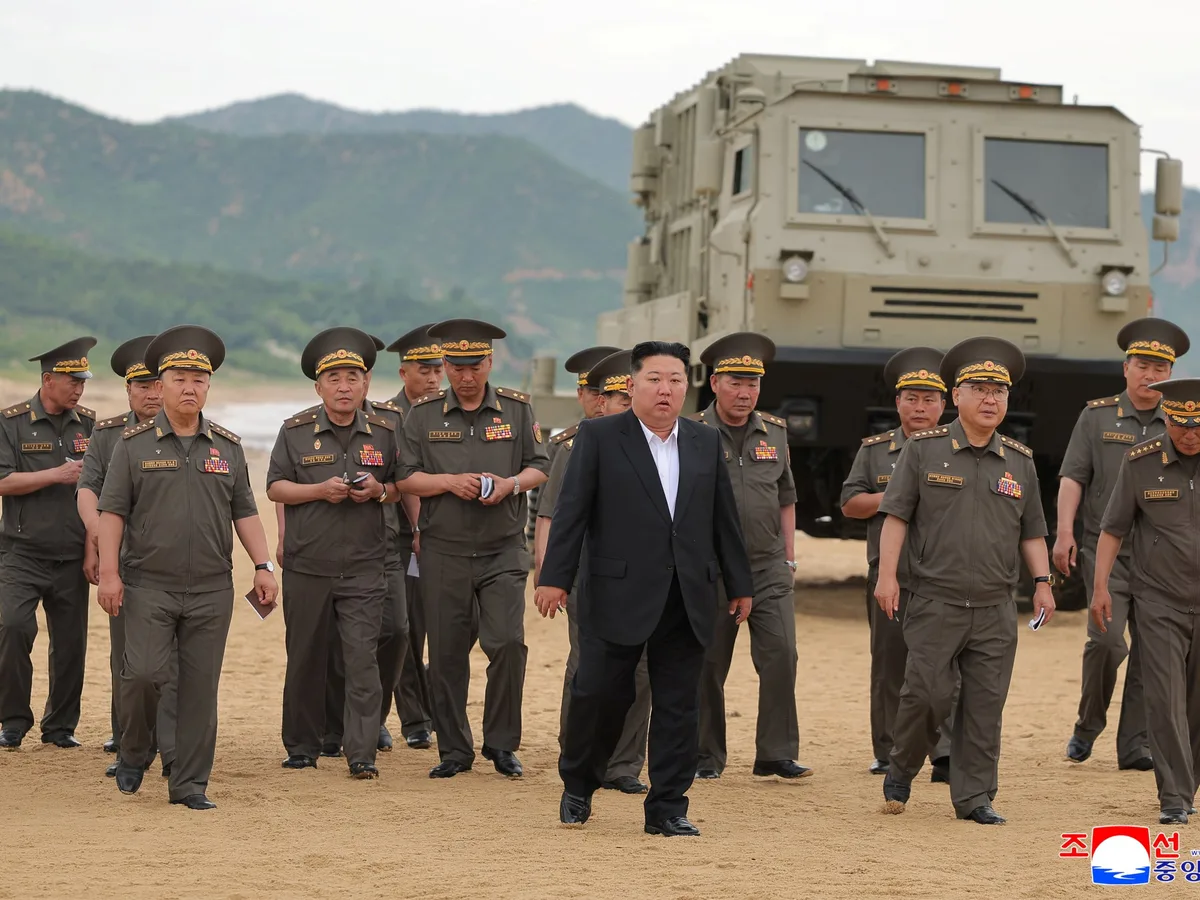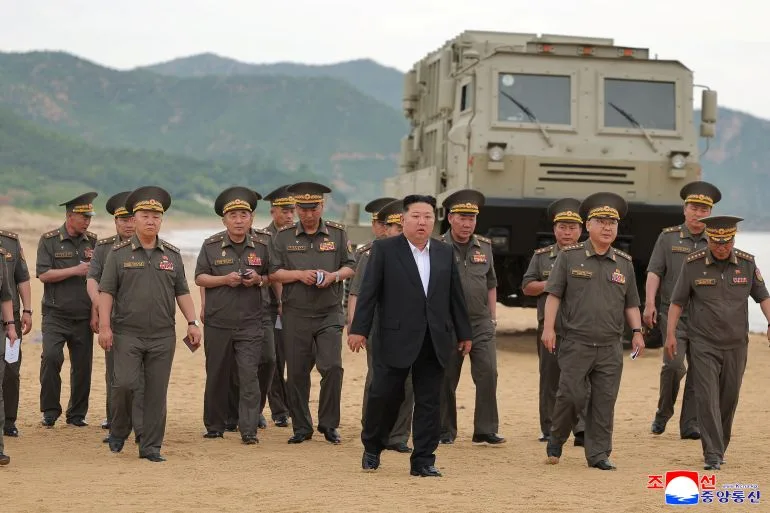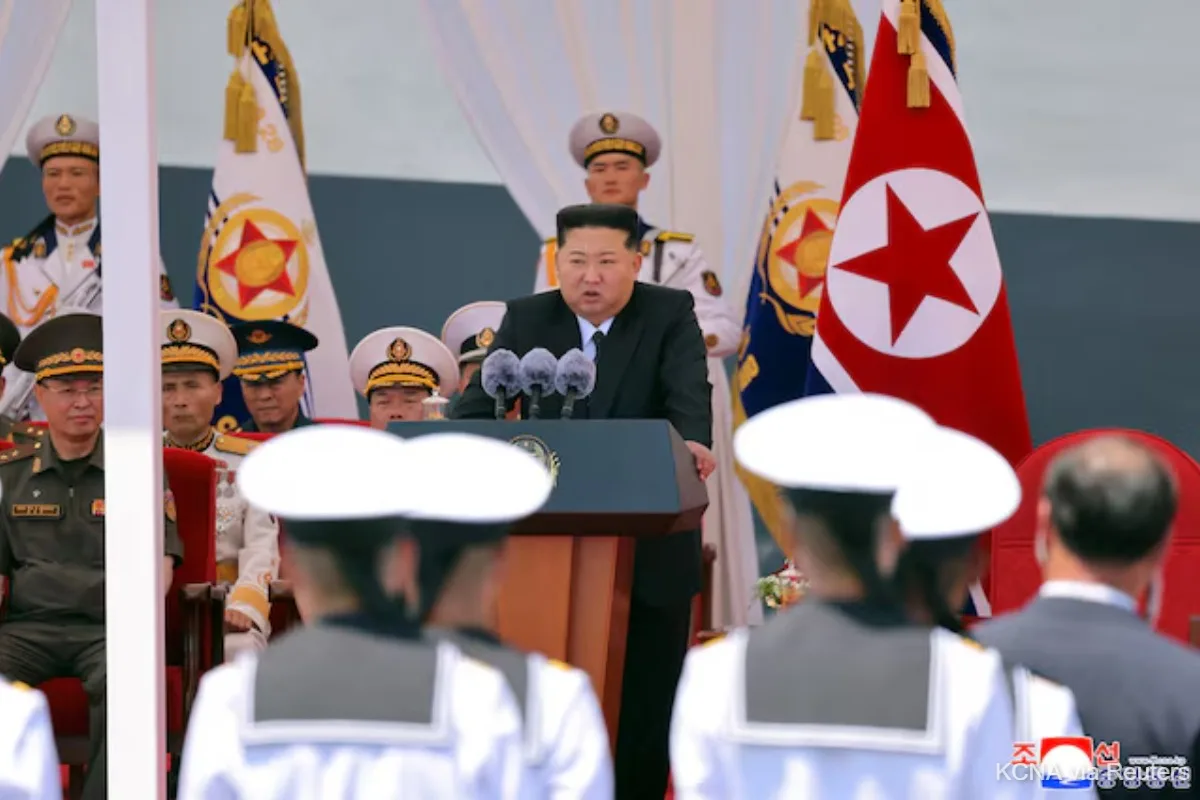
North Korean leader Kim Jong Un supervised tests on June 25 of an upgraded 240mm 24-tube multiple rocket launcher, tactical ballistic missiles with special mission warheads, and 155mm self-propelled howitzers firing extended-range shells near the southern border with South Korea [1, 2, 3, 4, 5, 6, 7, 8].
The multiple rocket launcher’s firing range has been extended to 90 kilometers and includes an autonomous precision guidance system, enhancing its strike accuracy [1, 2, 3, 4, 5, 6, 7, 8]. The self-propelled howitzer shells reached ranges of about 65 kilometers during the tests [6, 7, 8].
The tactical ballistic missiles use special warheads designed to target strategic sites such as enemy airfields, ports, and power facilities, according to North Korean statements [2, 9, 5, 6, 7, 8]. Kim expressed satisfaction with the results and underscored advances in automation, long-range capability, and ultra-precision technology, stating, "We would make the enemies recognize that the long-range strike means of our armed forces have been replaced with upgraded ones in the shortest possible time" [1, 2, 3, 4, 5, 6, 7, 8]. He added that "the present international situation, in which sovereignty can be defended and existence guaranteed only by complete upper-hand in strength, makes it unnecessary to add any rhetoric to explaining why the bolstering up of the defence capabilities is the indispensable first national strategic work" [6].
The tests are part of North Korea’s five-year national defense modernization plan, which aims to strengthen firepower along the southern border with South Korea [1, 4, 6, 7]. Experts say the upgrades target establishing tactical nuclear and precision strike capabilities that put all of South Korea, including Seoul, within striking range. Lim Eul-chul, professor at Kyungnam University’s Institute for Far Eastern Studies, said, "The intent is ultimately to fully establish tactical nuclear and precision strike capabilities in forward units, placing all of South Korea within range" [1].
South Korea confirmed the tests aligned with North Korea’s five-year defense plan and announced plans to expand its own drone warfare capabilities in response [1, 9, 4].
On June 26, South Korea publicly stated its intent to boost drone technology to counter North Korea’s enhanced weapons systems [9].