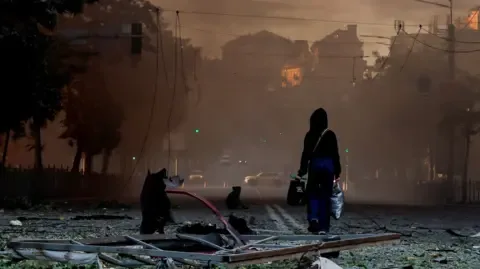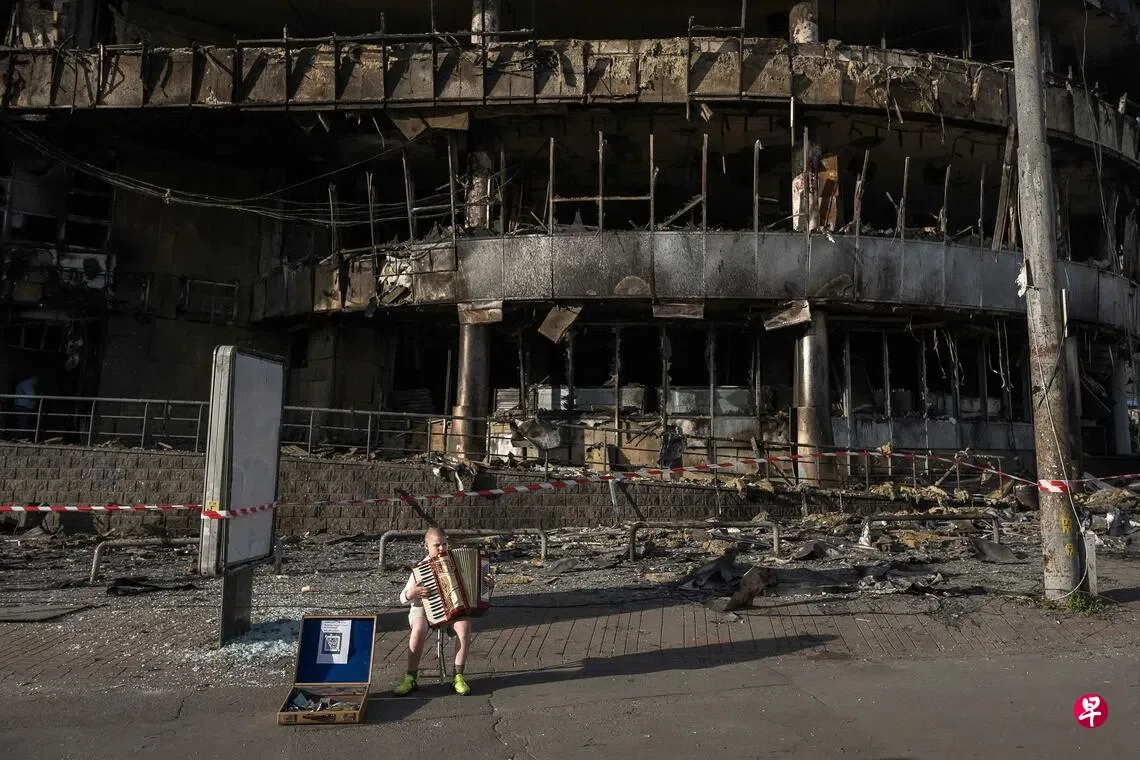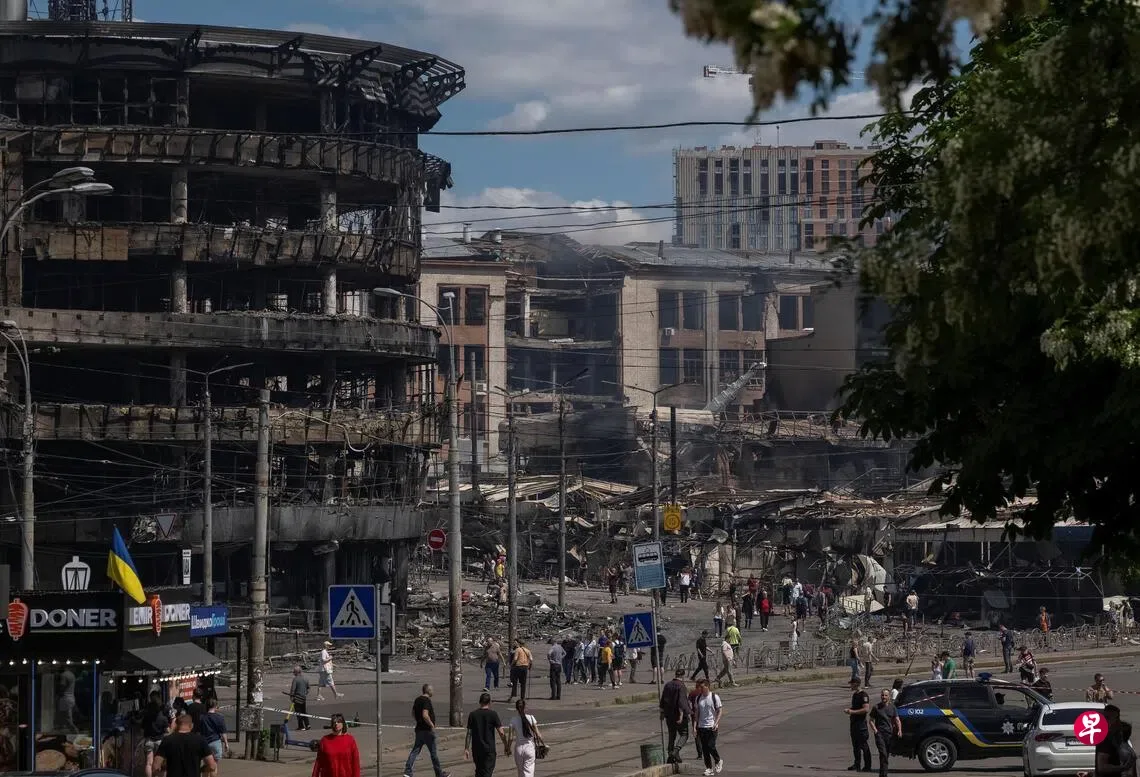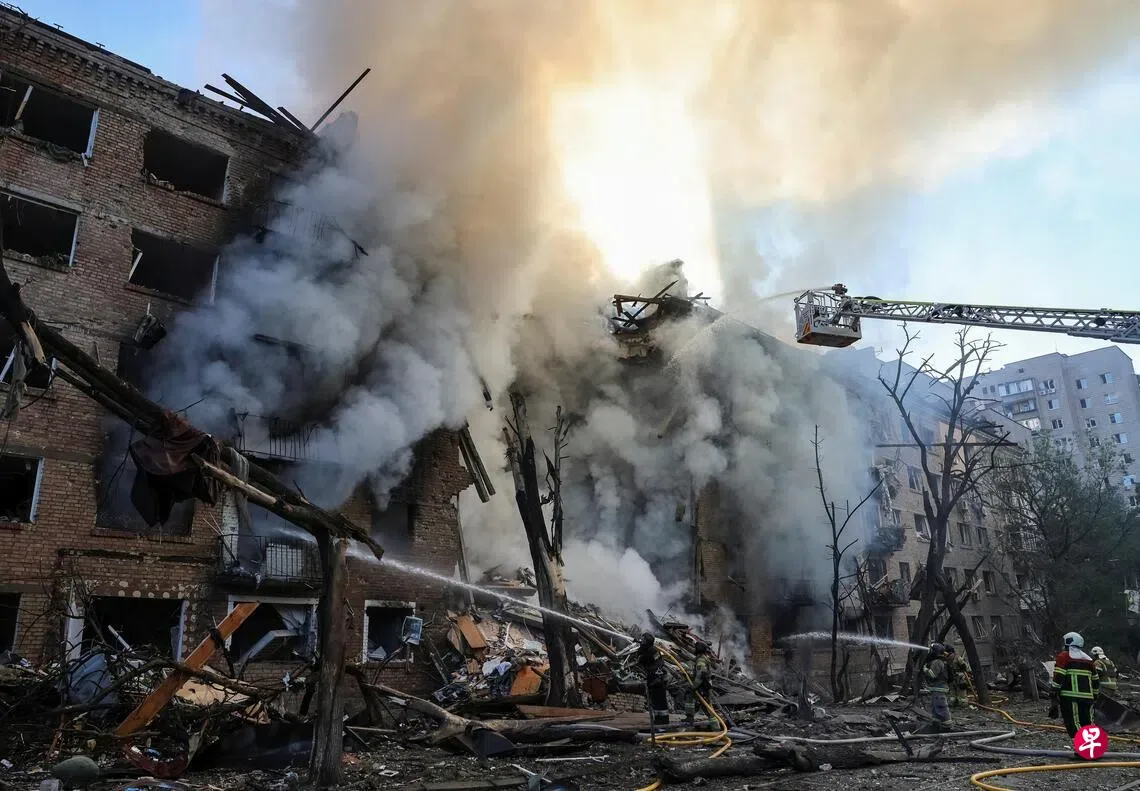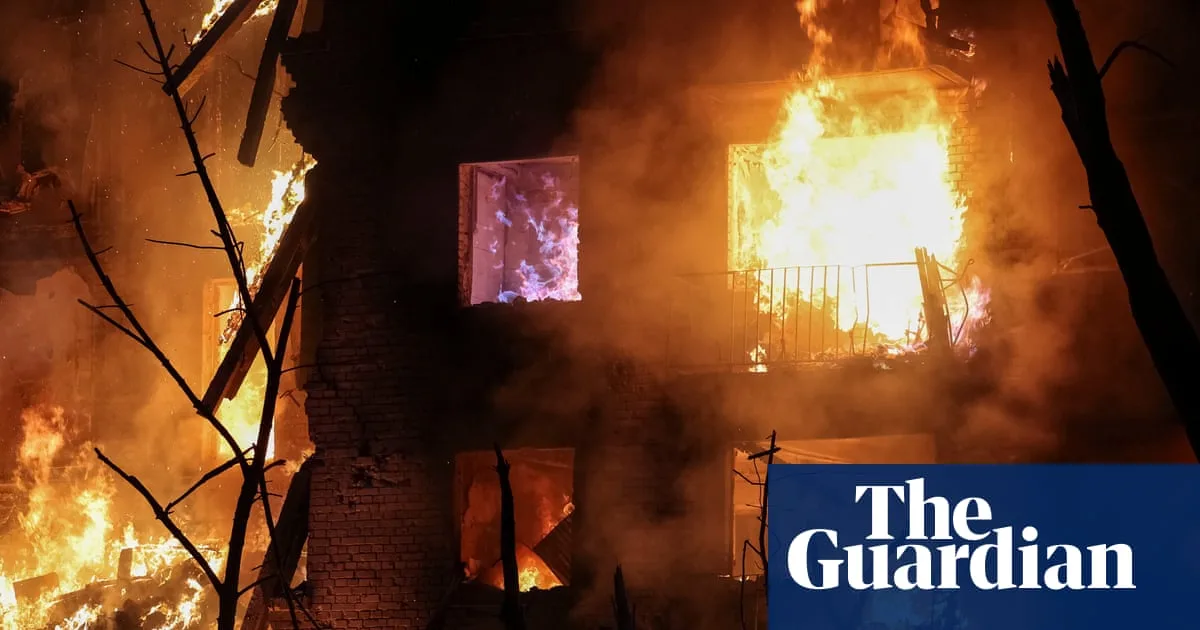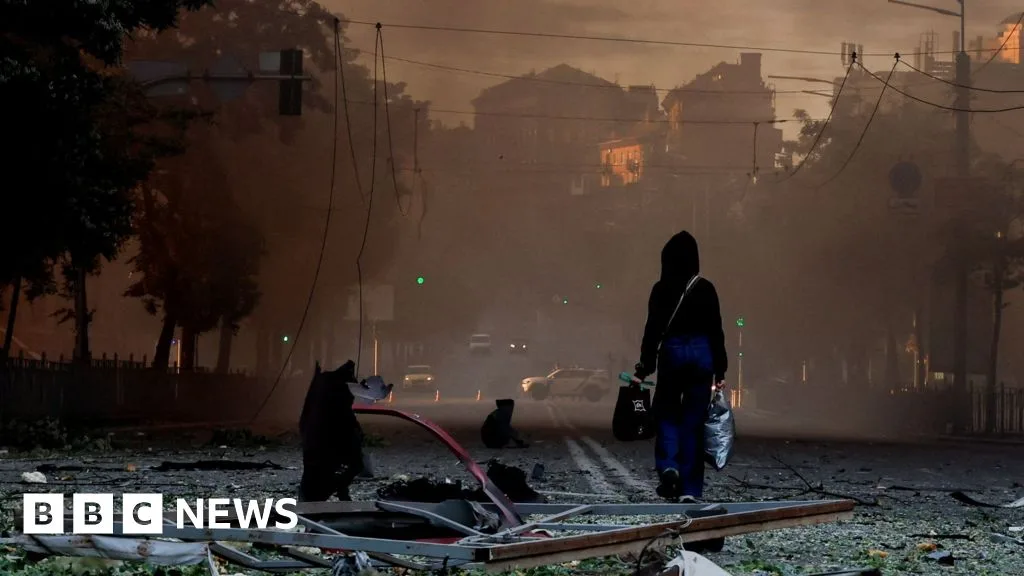
Russia launched a massive wave of missile and drone strikes on Kyiv early May 24, hitting more than 40 locations including residential buildings, schools, and commercial areas, Kyiv officials reported [1, 2, 3]. The attack included the use of the hypersonic Oreshnik ballistic missile, employed by Russia for the third time in the conflict [2, 3, 4]. President Volodymyr Zelensky warned about the impending combined strike and called the Russian actions “genuinely deranged” [1, 3, 4].
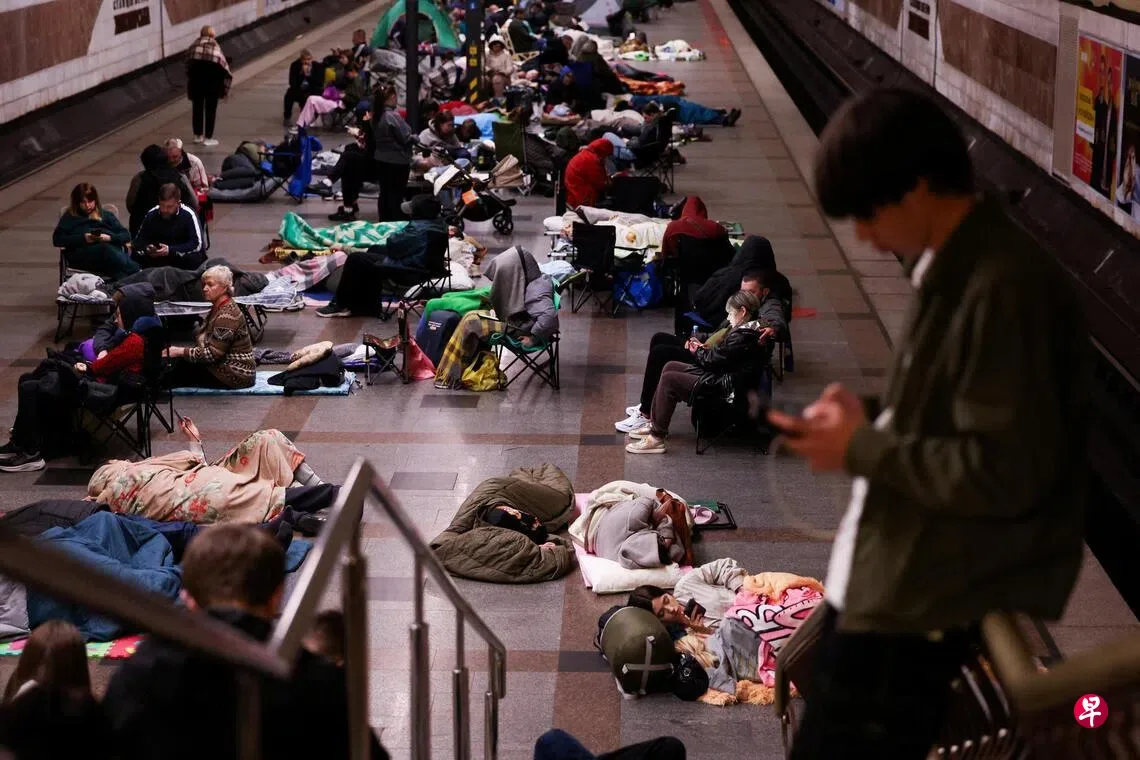
Kyiv Mayor Vitali Klitschko said damage was recorded in every district of the city, with fires burning at schools and residences and some people trapped in shelters amid debris. He stated, “The capital has been subjected to a massive ballistic attack. Further launches are possible” [1, 3]. Kyiv resident Svitlana Onofryichuk described the attack as “a terrible night” unlike anything seen before in the war [3].
Casualty reports vary, with official tallies ranging from one to four dead and injuries reported from 3 up to 83 people [1, 3, 5]. The discrepancies arise from different sources; while some reported about 20 wounded, others counted over 60 or more [1, 3, 5, 6]. Ukrainian air defenses intercepted 549 drones and 55 missiles during the attack [4]. Russia claims a 100 percent hit rate on military targets including command centers, airbases, and military-industrial facilities [3, 4, 5].
The assault was in retaliation for a Ukrainian drone strike two days earlier on May 22 against a student dormitory in Starobilsk in Russian-occupied Luhansk, killing at least 18 people [1, 4, 7]. Ukraine denies targeting civilians in the dorm, stating the strike hit Russian military units or drone command facilities [1, 4, 8]. Russian President Vladimir Putin vowed retaliation following the dorm attack [9, 4].
Russian Foreign Minister Sergey Lavrov urged the U.S. to withdraw its diplomats and citizens from Kyiv ahead of expected further strikes, while Russia advised all foreign nationals and diplomatic missions to leave the city and civilians to avoid military and government sites [10, 8, 7]. The European Union and Ukraine rejected these calls. EU Delegation head Maria Morozova said, “Russia wants to create fear and panic, isolate Ukraine. This is not going to work. The EU will not leave. We stand with Ukraine.” A French Foreign Ministry spokesperson added, “We are used to Putin's threats. Evacuation is impossible” [7]. US Senator Marco Rubio said Washington was ready “to do what it can to help end the war” [7].
The Russian Defense Ministry confirmed the use of multiple missile types including the Oreshnik, Iskander, Kinzhal, and Zircon during the attack [3, 4]. On May 25, Lavrov informed U.S. officials about ongoing strikes and reiterated demands for foreign evacuations [8, 5]. Kyiv authorities remain on high alert for possible further attacks as the situation continues to unfold.