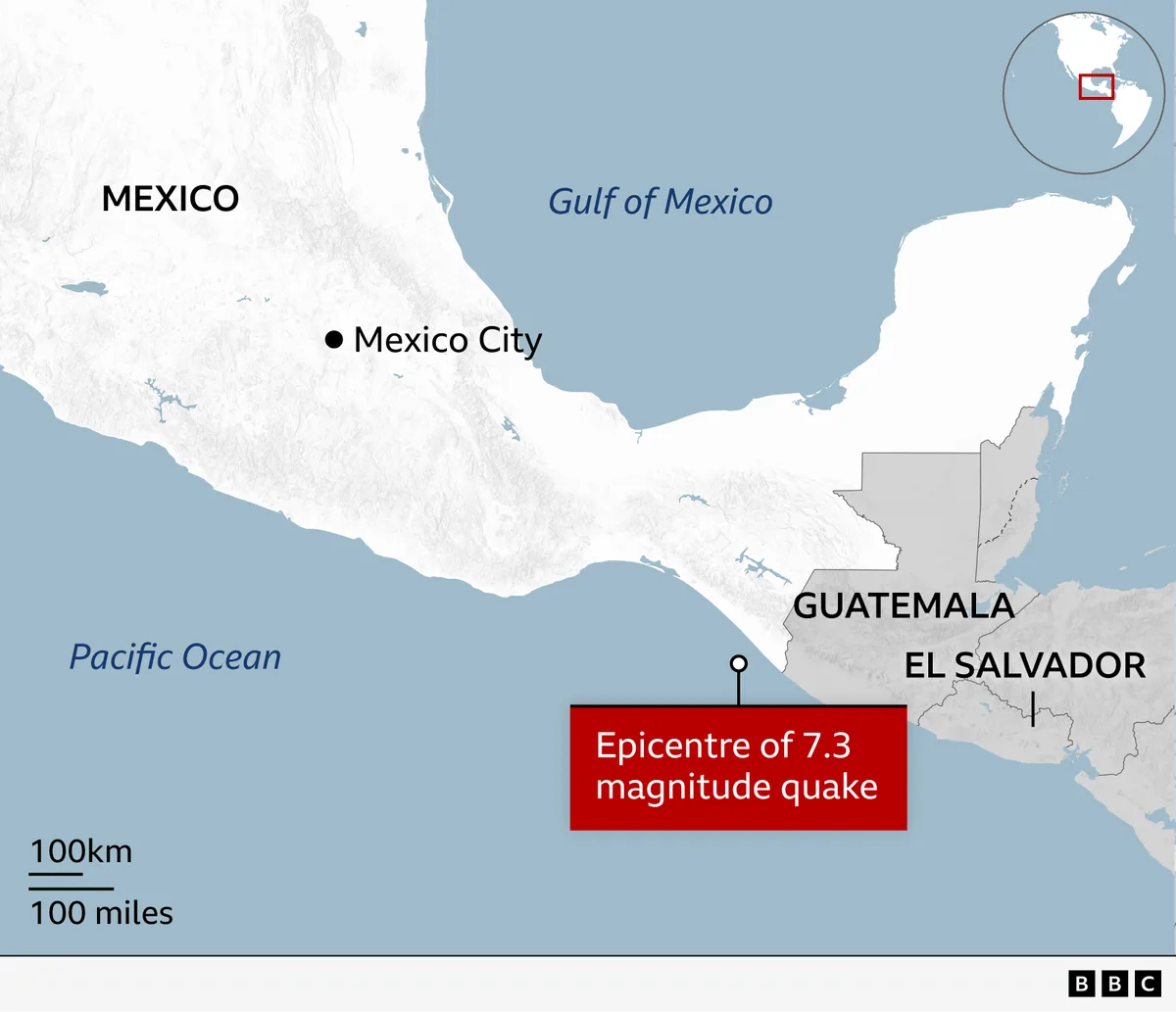
A strong earthquake with a magnitude between 7.3 and 7.4 struck off the coast of southern Mexico near Puerto Madero in Chiapas state on July 17, 2026, at 08:48–08:49 local time (14:48–14:49 GMT) [1, 2, 3, 4, 5]. The US Geological Survey (USGS) located the epicenter offshore with depth estimates ranging from 10 km to 18 km [1, 2, 3, 4, 6, 7, 8, 9, 10]. Some sources placed the epicenter roughly 48 km from Puerto Madero near Aquiles Serdán, while others reported about 71 km offshore south of Puerto Madero [2, 6, 7, 9, 10].
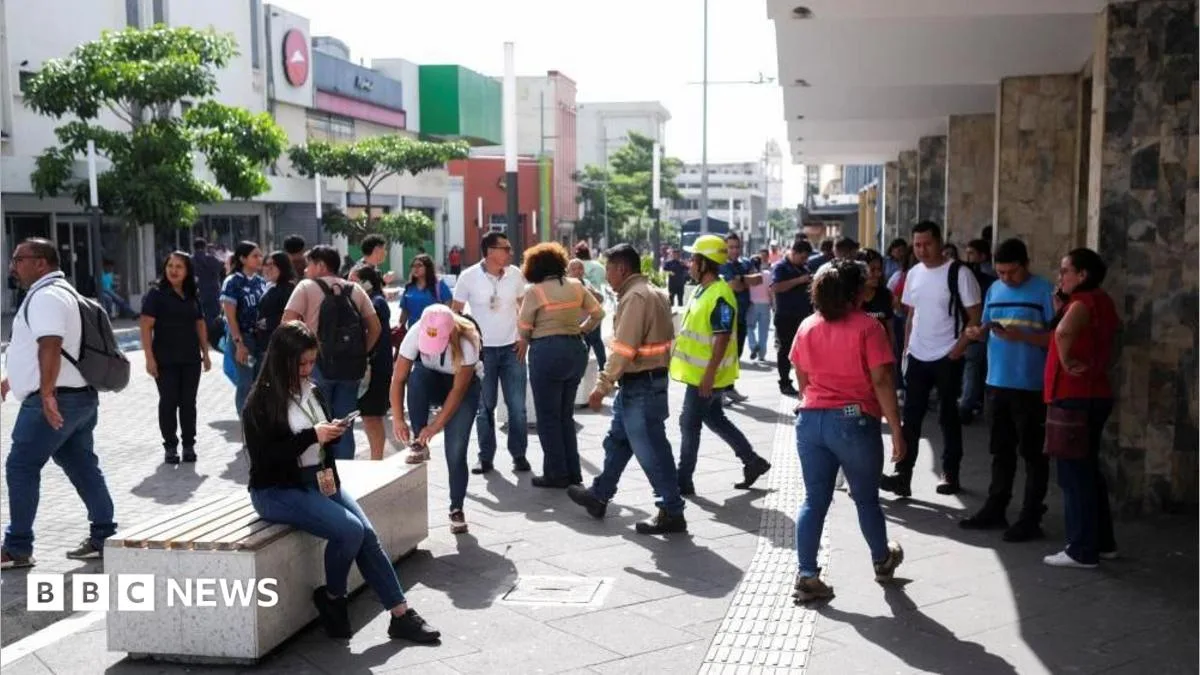
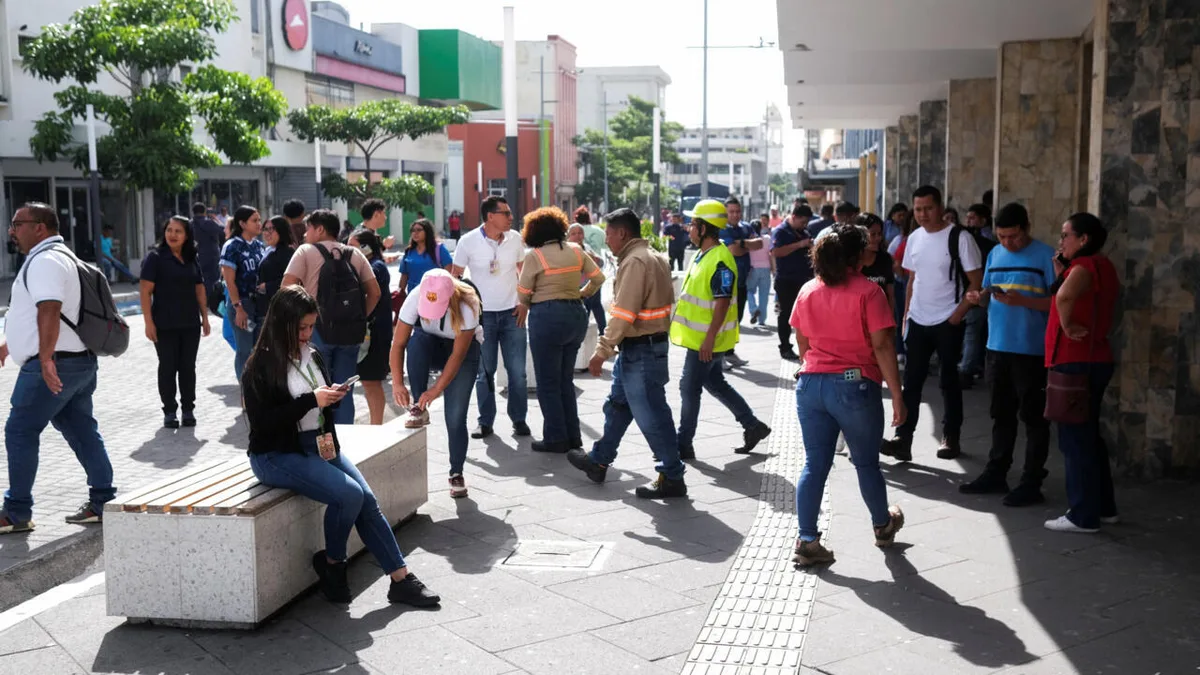
The quake produced moderate to strong shaking across southern Mexican states Chiapas and Oaxaca and was also felt in neighboring Guatemala and El Salvador [1, 2, 3, 4, 6, 7, 9, 10]. Residents reported shaking lasting several seconds, such as Alexander Valdez in Guatemala City who said, "I got really scared... The shaking wouldn't stop" [4].
No deaths or major structural damage have been reported so far in Mexico or surrounding countries [1, 3, 4, 6, 9, 11]. Mexican Navy Secretary Admiral Raymundo Morales said, "There is no problem, no serious maritime impact. We only expect some beaches to see a rise in water level of up to half a metre due to the tsunami effect from the earthquake" and advised people to avoid beaches temporarily [1, 4, 6, 9, 11]. Guatemalan President Bernardo Arévalo urged calm after evacuations, stating, "I call on the population to remain calm and to follow the recommendations" [1, 3].
Following the quake, the U.S. Tsunami Warning System issued alerts for Mexico, Guatemala, and other Pacific coastal areas. Tsunami waves of up to 0.3 meters above tide level were recorded along some Mexican coasts near Puerto Madero and Chiapas before warnings were lifted about an hour later [1, 2, 3, 4, 6, 7, 9, 10, 5, 11].
Several strong aftershocks ranging from magnitude 4.7 to 6.8 struck the region in the hours following the main quake [1, 4, 7, 11].
The seismic event remains under observation with response teams monitoring for any delayed impacts. Authorities continue to advise the public to follow updates and avoid coastal areas due to possible minor sea level changes.