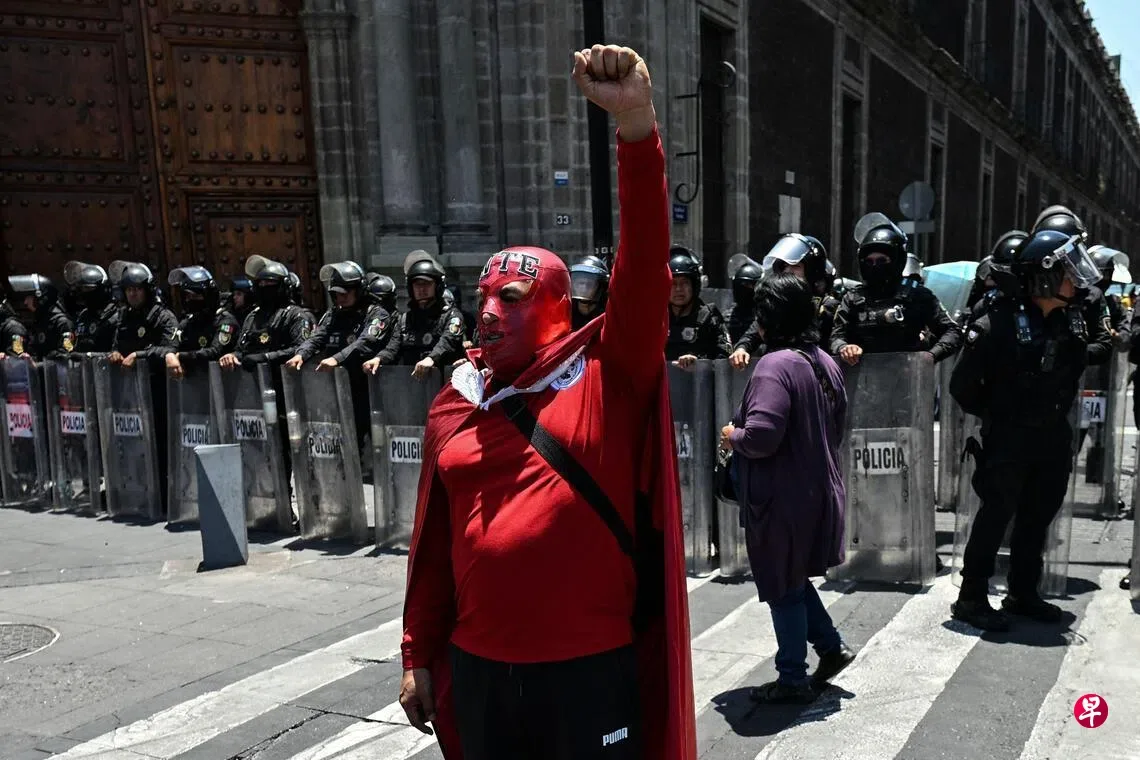
Approximately 3,000 members of Mexico's National Education Workers Union (CNTE) marched in Mexico City on May 15 demanding significant salary increases and education reforms [1, 2, 3, 4, 5]. The group called for up to a 100% salary increase, sharply contrasting with a government and official union leadership offer of 9% [1, 2, 3, 5]. Starting monthly pay for public school teachers is about $967 [1, 2, 3, 4, 5].
Teachers also seek pension reforms and the abolition of education reform policies [6, 4]. Protesters criticized the government for prioritizing multi-million dollar World Cup commercial interests over education funding, citing Mexico’s hosting of about 5 million visitors for the tournament [1, 2, 3, 4, 5]. "We demand that our requests be met," said teacher Filiberto Fraustro Orozco [1, 2].
An anonymous protester said, "There is a discourse based on double standards. Nothing has been resolved except lies. A teacher who struggles is also the one teaching in the classroom," reflecting frustration with city officials including President Claudia Sheinbaum [6]. Police blocked the marchers' route to the education department, echoing past teacher strikes that severely disrupted Mexico City, including blocking roads to the international airport [1, 2, 3, 5].
CNTE Secretary-General Morales warned, "With the June 11 World Cup opening in the capital, we have decided that if the issues are not resolved, the matches will be disrupted as we will launch a nationwide teachers' strike demanding the president listen and act on our demands" [4]. The government had considered early summer holidays to ease World Cup traffic, adding to parent and teacher discontent [4].
The 2026 FIFA World Cup is co-hosted by Mexico, the USA, and Canada, with Mexico expecting about 5 million visitors and an estimated $2.25 billion economic impact from tourists [1, 2, 4, 5]. Teachers have set the June 11 opening match date as a potential strike day to maximize pressure [1, 7, 2, 3, 6, 4, 5].