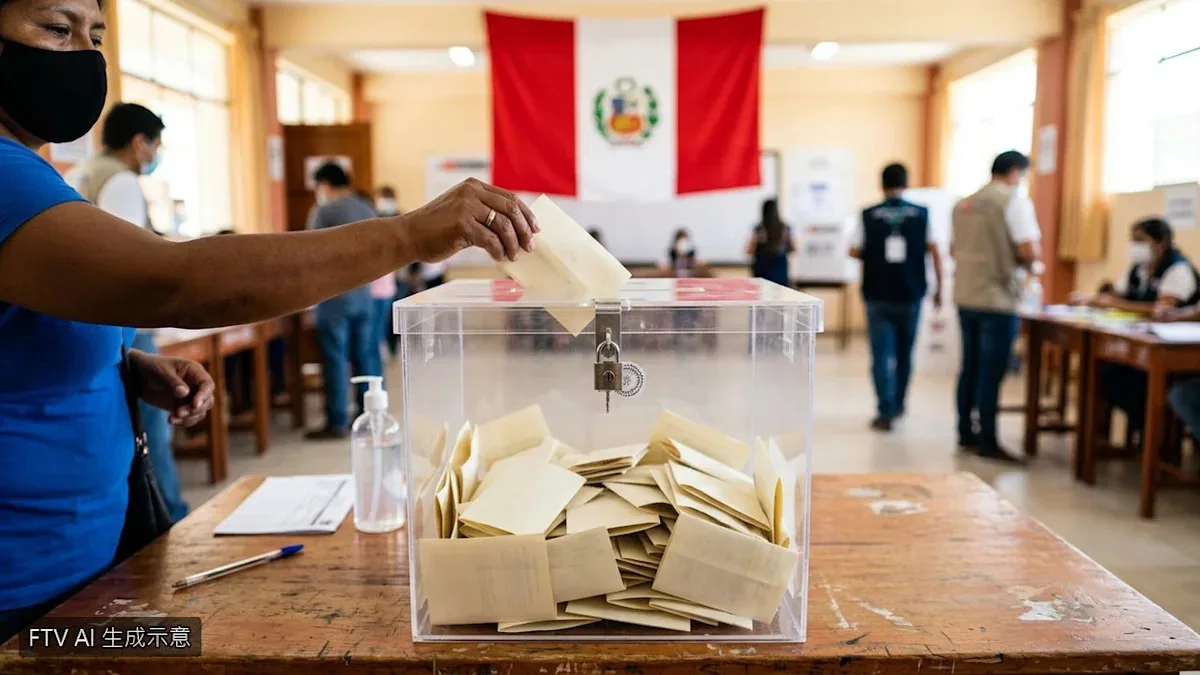
Peru’s presidential election has become one of Latin America’s closest contests in decades. With over 98.5% of votes counted, conservative candidate Keiko Fujimori holds a narrow lead over leftist Roberto Sanchez. The margin stands at roughly 18,300 votes out of nearly 18.5 million cast, representing about 0.1 percentage point difference between Fujimori at 50.051% and Sanchez at 49.949% [1, 2].
The second and final round of voting took place on June 7, 2026. The final official results have not yet been declared due to the tight race and could take days or weeks to finalize [1].
Sanchez has challenged the counting process, specifically requesting invalidation of approximately 400,000 overseas votes citing alleged irregularities. His request was unsuccessful. Sanchez’s supporters have held peaceful protests in Lima defending the vote count [2].
International observers from the Organization of American States (OAS) and the European Union (EU) have monitored the elections closely. They confirmed the voting process followed normal protocols and urged patience among voters and political parties as counting continues [2].
Fujimori’s slight lead and pro-business stance have helped boost Peru’s financial markets amid the uncertainty [2]. The country has a recent history of extremely close elections. Previous contests in 2016 and 2021 were decided by margins of roughly 0.24 and 0.25 percentage points, respectively, both times with Fujimori narrowly losing [1]. The current vote is notable given Peru’s large population relative to other Latin American countries that have experienced tight elections [1].
The first round of voting in April 2026 had also taken weeks to resolve before moving to this runoff [1]. As of mid-June, the vote counting continues alongside ongoing demonstrations by Sanchez supporters and statements from international observers calling for calm and patience during the final tally [2].