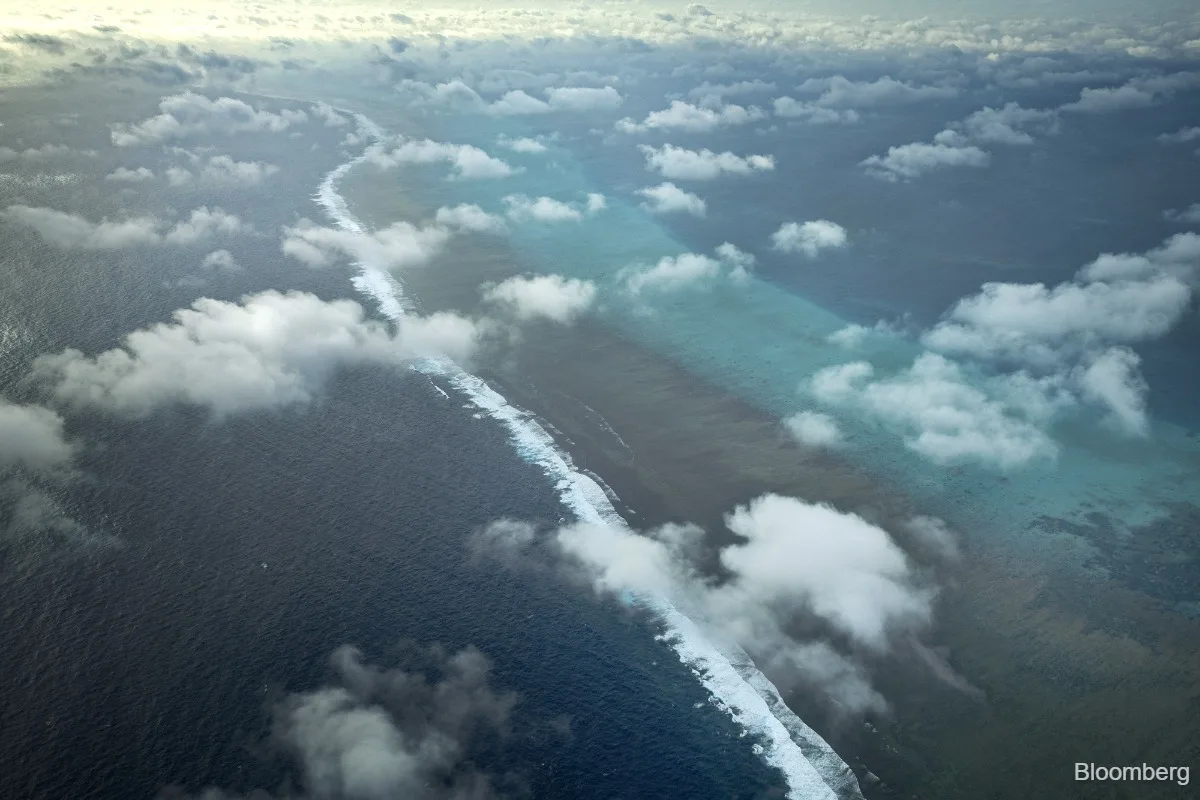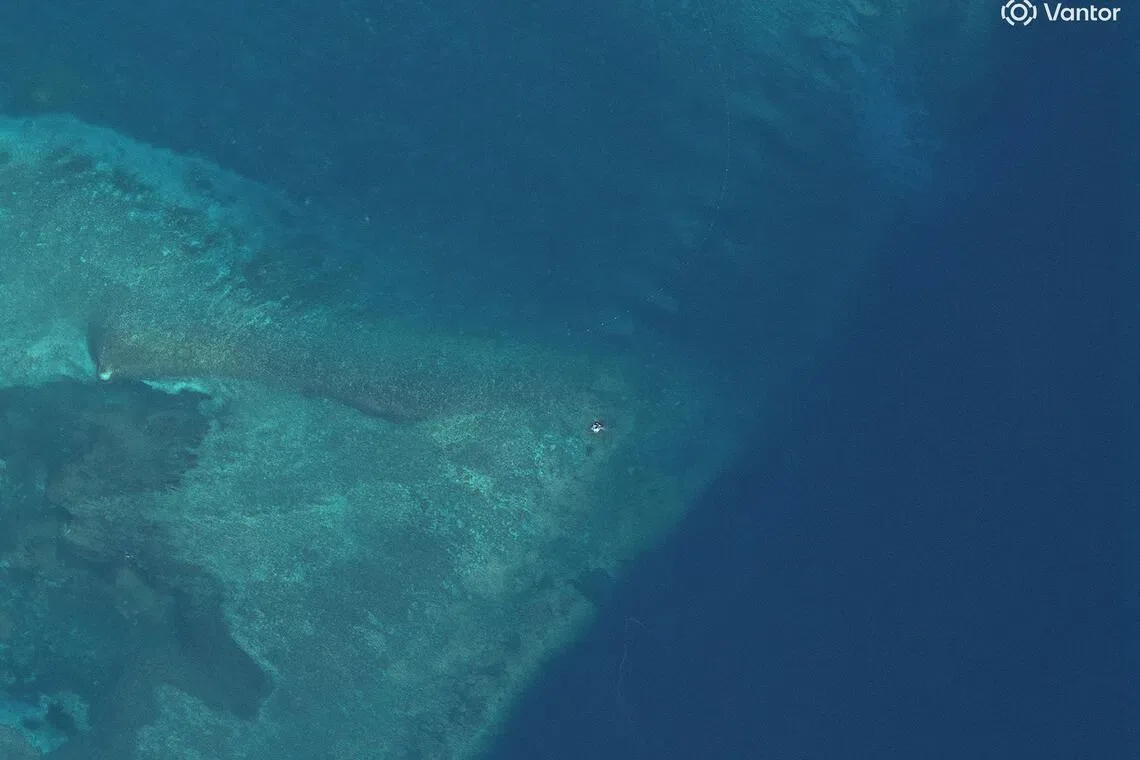
The Philippines officially requested China to remove a 6-meter by 6-meter floating structure from the contested Scarborough Shoal on June 10 [1, 2, 3]. The structure, equipped with an antenna, was first spotted at the southeastern entrance of the shoal on May 25 and later observed inside its lagoon by May 31, alongside buoys and antennas [1, 2]. Philippine authorities suspect two Chinese research vessels moved the platform into the shoal, with Chinese personnel seen aboard assisting its relocation [1, 2].
The Philippines maintains Scarborough Shoal lies within its maritime zones under international law, about 200 kilometers west of its coast, while the shoal is 874 kilometers from China's Hainan Island [4]. Philippine officials labeled the floating structure semi-permanent. Alexander Lopez, undersecretary of the National Maritime Council, said, "China’s recent actions in the shoal are deemed unauthorised and illegal. The Philippine government will undertake all steps necessary to assert its sovereignty over the shoal" [1].
Manila has issued multiple diplomatic protests and demarches to demand removal of the structure and prevent further encroachments [1, 2, 3]. Philippine armed forces warned they will not allow a repeat of past clashes in the waters [1, 2]. Satellite imagery confirmed the structure's presence at the lagoon entrance as of June 5 [4].
China’s Foreign Ministry spokesman Lin Jian asserted on June 9 that Beijing has "indisputable sovereignty over Scarborough Shoal, which it calls Huangyan Dao, and its adjacent waters," and described all Chinese activity there, including scientific research, as lawful [2]. Since 2012, China has maintained a steady maritime militia and coastguard presence in the area [4, 2].
The dispute remains unsettled despite a 2016 Tribunal ruling favoring the Philippines. The Philippine government continues to closely monitor the situation as diplomatic efforts proceed [4].