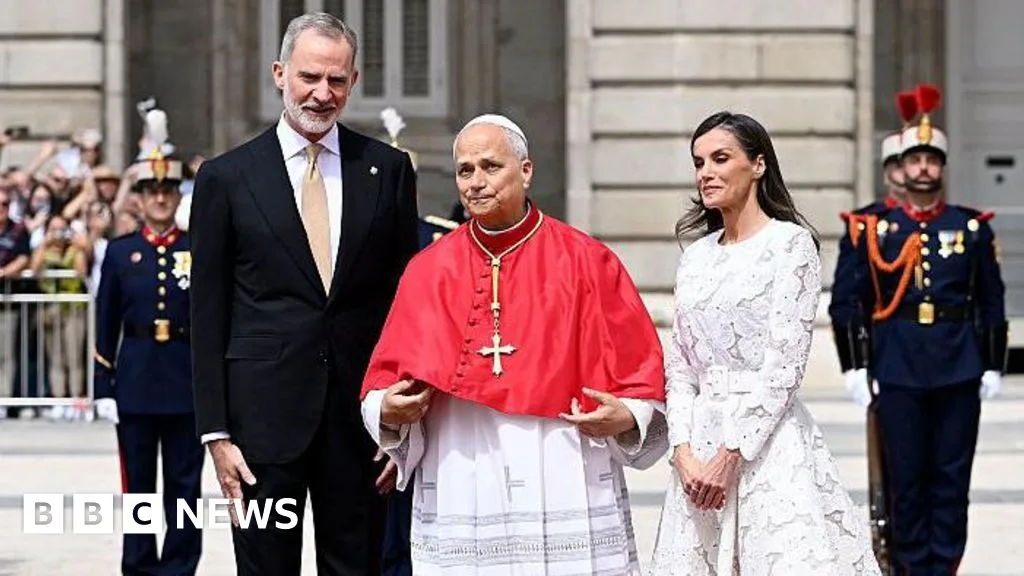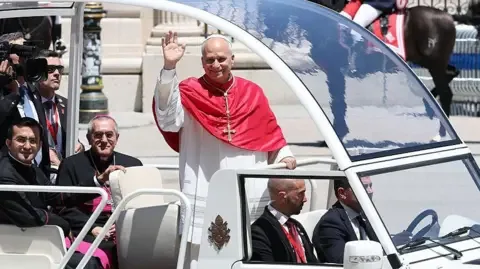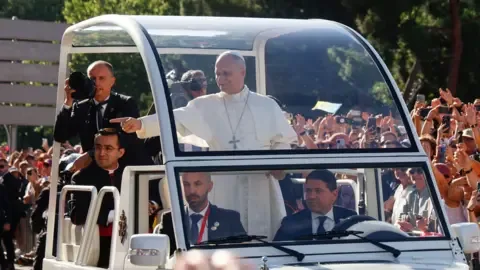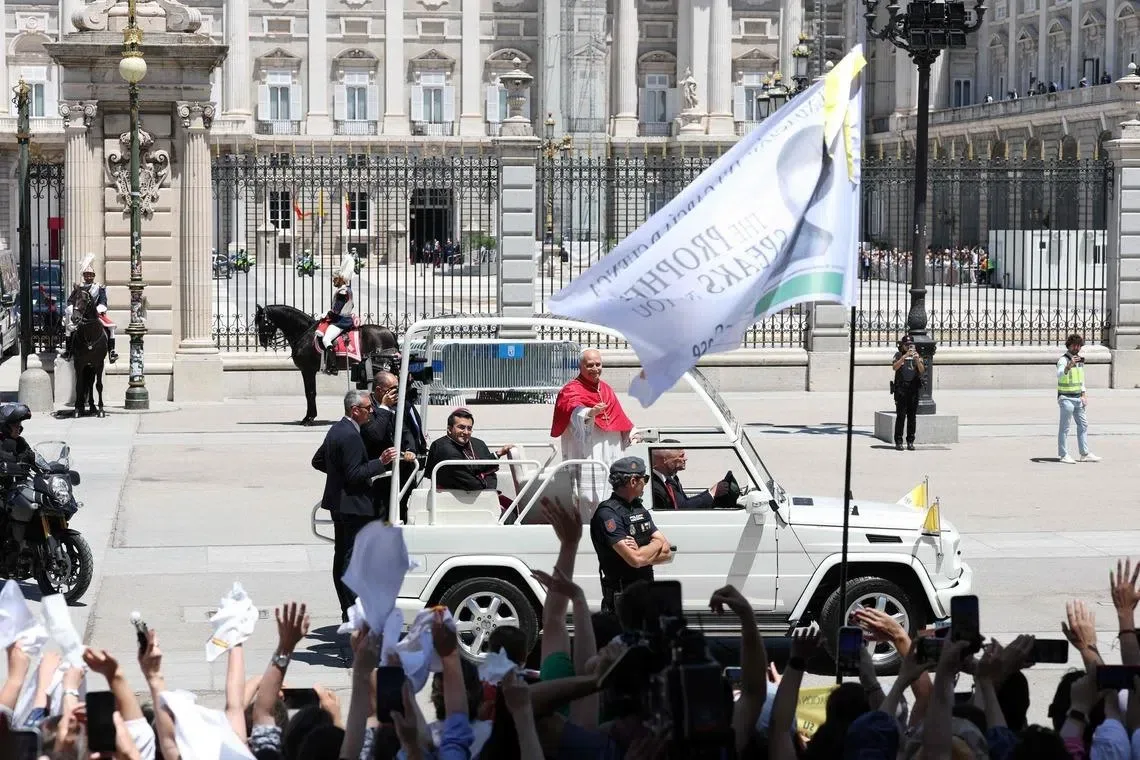
Pope Leo XIV arrived in Madrid on June 6, 2026, beginning his first official visit to an EU country outside Italy [1, 2, 3, 4, 5]. The visit will last until June 12, with stops in Madrid, Barcelona, Montserrat Monastery, and the Canary Islands [2, 6, 5]. He was welcomed by King Felipe VI and Queen Letizia at the Royal Palace in Madrid, where the King praised the Pope's “clarity and firmness” on addressing sexual abuse by clergy as “essential in the process of healing and reparation” [1, 3, 4, 7].
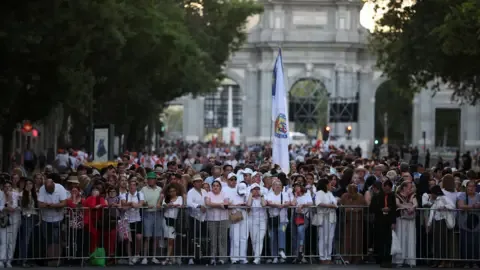
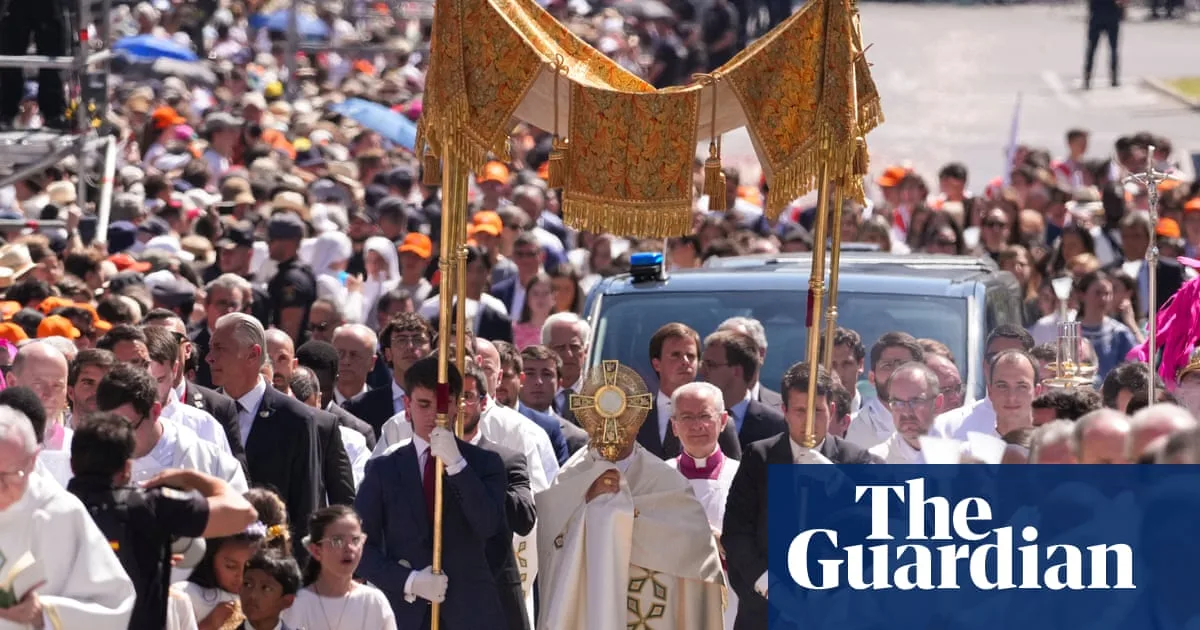
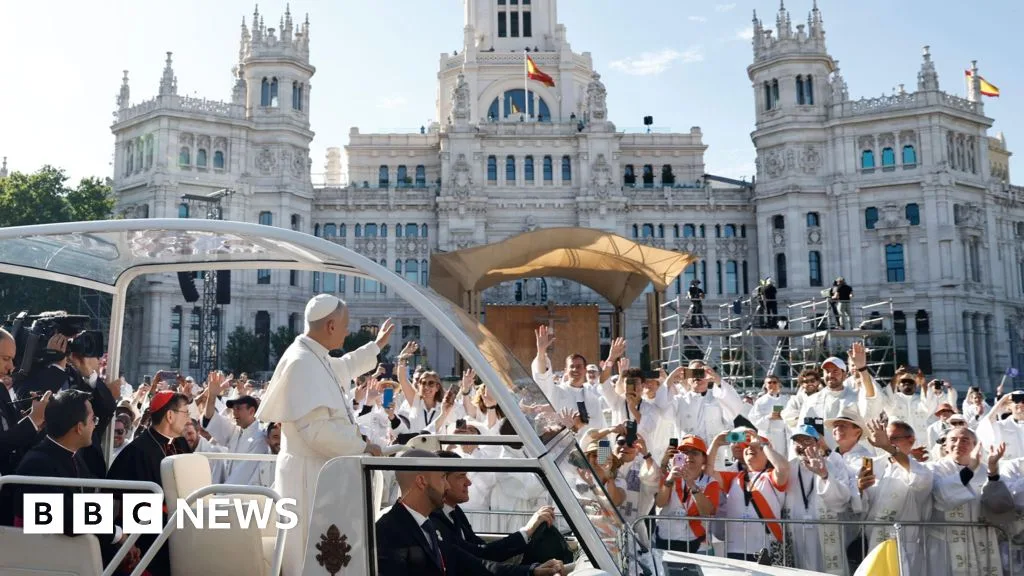
On arrival day, Pope Leo met with migrants, homeless people, and young attendees at a prayer vigil near Real Madrid's Santiago Bernabeu Stadium, drawing a crowd estimated between 400,000 and 600,000, mostly young people [8, 3, 6]. The following day, over 1.2 million people gathered in Madrid's Cibeles Square to attend an open-air Mass presided over by the Pope, marking the largest event of the visit [8, 9, 10, 11].
The Pope focused heavily on migration, meeting migrants and organizations aiding them, particularly in the Canary Islands, a key entry point for African migrants to Europe. Thousands have died attempting the dangerous crossing, with over 9,000 deaths reported in 2024 and more than 1,000 in 2025 [1, 2, 5]. Spain’s left-wing government under Prime Minister Pedro Sanchez supports a liberal immigration policy that includes plans to legalize around 500,000 undocumented migrants; opposition parties, including the Popular Party and Vox, fiercely oppose this approach [1, 2, 3, 5].
Pope Leo criticized global political polarization, calling for leaders to reject divisive narratives. He said, “Today, the temptation to gain popularity by fanning the flames of polarisation seems to have grown rather than diminished, and human dignity continues to be violated” and urged society to “set aside the divisive and polarising narratives... to overcome sterile simplifications” [3, 4, 7]. He condemned wars worldwide and called for dialogue to overcome divisions [2, 4, 7]. He also spoke about the role of technology and social media in deepening divides and weakening critical reflection [4, 7].
The Pope acknowledged the Church’s ongoing sexual abuse crisis in Spain, calling abuses “still an open wound.” He plans to meet survivors during the visit amid efforts to recognize victims and provide compensation for harm experienced by an estimated 200,000 minors since 1940; a Spanish ombudsman study found about 1.1% of the population affected [1, 3, 4, 5].
Pope Leo, the first American-born pope, will also inaugurate the new tallest tower of Barcelona’s Sagrada Familia basilica during his trip [2, 5]. He is expected to deliver the first-ever papal address before the Spanish parliament either June 11 or 12 [1, 8, 3, 5].
The visit continues through June 12 with engagements across Spain focused on migration, peace, reconciliation, and Church reforms.