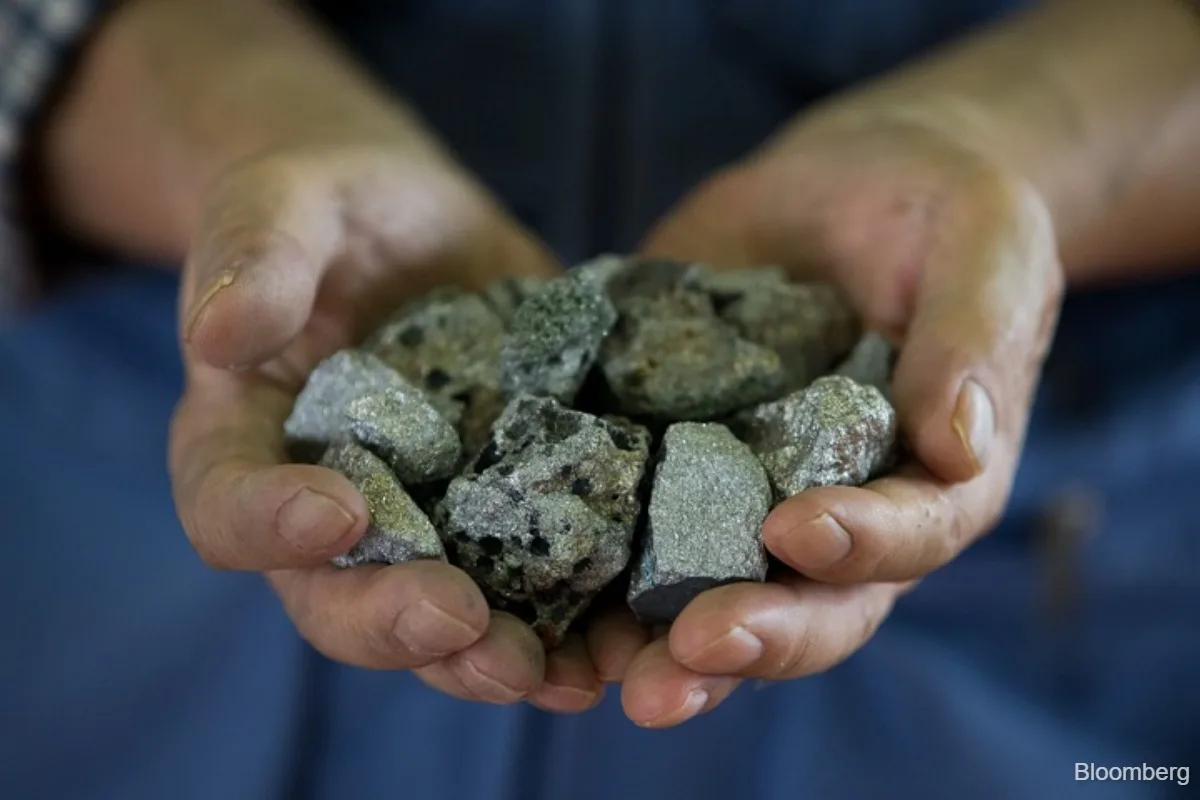
Russia's Deputy Foreign Minister Mikhail Galuzin expressed concern about Washington and Brussels pushing agreements on rare earth metals and critical minerals in Central Asia in an interview published today in Izvestia. [1, 2, 3] Galuzin said the efforts go beyond economic competition, aiming instead to exclude Russia and establish Western-controlled infrastructure close to its borders. He stated, "We are concerned by the intensity with which Washington is pushing agreements on critical minerals and rare earth metals. This is not merely about economic competition, but about an attempt to push Russia out and create a Western-controlled infrastructure in the immediate vicinity of our borders." [1]
The US, EU, and other G7 countries are seeking to diversify rare earth supply chains away from China, which dominates the market for minerals essential to electric vehicles, renewable energy, and defense technologies. [1, 2, 4, 3] Central Asian nations Kazakhstan, Kyrgyzstan, Tajikistan, Turkmenistan, and Uzbekistan are seen by Russia as within its traditional sphere of influence amid intensifying interest from China and Western states. [1, 4]
Former US President Donald Trump hosted leaders from the five Central Asian nations at the White House in November 2025, emphasizing critical minerals as a priority to secure global supply chains. Trump said at the meeting, "We have made critical minerals one of the key components of our policy. In recent weeks, my administration has reached agreements with allies and partners worldwide to expand our critical minerals supply chains to strengthen America's economic security." [2, 3]
China has also increased its focus on Central Asia’s resource-rich region, raising competition with Russia and Western countries for influence over these vital minerals. [1, 4]
The concerns voiced by Deputy Foreign Minister Galuzin reflect Russia's sensitivity to perceived encroachments near its borders as the US and allies push for new rare earth arrangements in Central Asia. Galuzin's comments today underline Moscow's opposition to what it calls Western efforts to sideline Russia in the region’s mineral development. [1, 2, 3]
The situation remains dynamic as diplomatic talks and resource agreements continue among Central Asian governments, Russia, China, and Western powers.