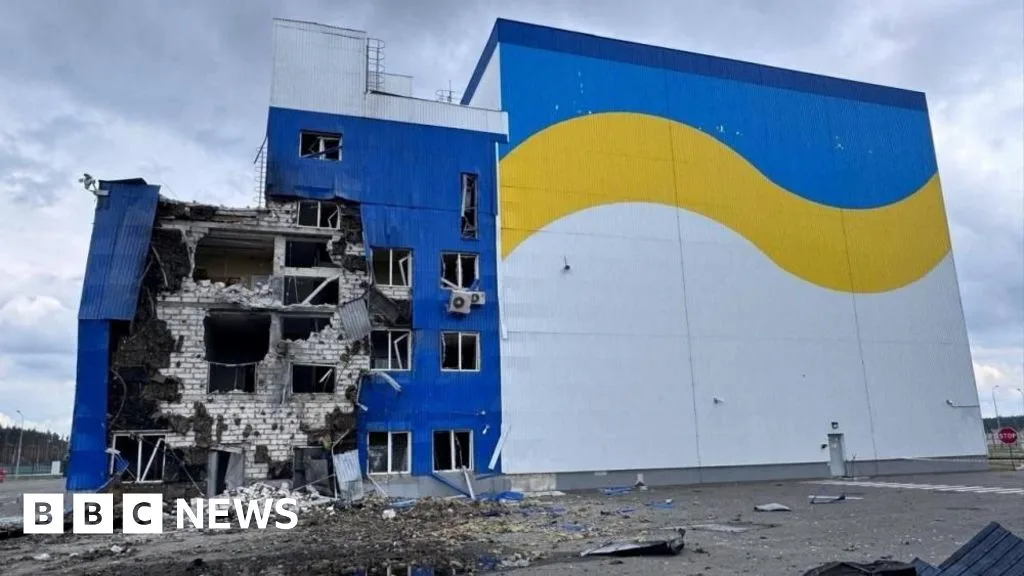
A Russian Shahed drone struck a building used to store spent nuclear fuel near the disused Chornobyl nuclear power plant on June 7, damaging the fuel-reception structure and causing a fire that covered about 40 square meters, Ukrainian officials reported[citation needed] [1, 2, 3, 4, 5, 6, 7, 8]. The building did not contain spent fuel at the time of the attack[citation needed] [1, 2, 3, 4, 5, 6, 8]. The fire was quickly extinguished with no injuries reported among personnel[citation needed] [1, 2, 3, 4, 5, 6, 7, 8]. Radiation levels at the site remained stable and within normal limits, according to Ukrainian authorities and the International Atomic Energy Agency (IAEA) [1, 2, 3, 4, 5, 6, 8].
Ukraine accused Russia of deliberately targeting critical nuclear infrastructure. President Volodymyr Zelenskyy called it "an extremely vile Russian attack" on "extremely critical infrastructure," adding "there are no readings exceeding normal background radiation levels, but there is certainly an increase in Russia’s brazenness" [1, 8]. Ukrainian Foreign Minister Andrii Sybiha stated, "Russia’s nuclear blackmail and threats to nuclear safety are systemic, deliberate, and unacceptable" [2].
Russia has not publicly commented on the drone strike near Chornobyl [2, 3, 4, 7, 8]. The IAEA plans to send a team to inspect the damage at the spent fuel facility [3, 4, 6, 8].
The attack comes amid ongoing fighting around Ukraine’s nuclear sites. Russian-installed management at the Zaporizhzhia nuclear power plant accused Ukraine of launching more than 20 drone strikes on a nearby thermal plant on June 4 [9]. On June 5, during a temporary ceasefire brokered by the IAEA, Ukrainian drone strikes reportedly injured at least three Russian engineers clearing mines near Zaporizhzhia, with two seriously wounded, according to Russia’s Rosatom corporation [10, 11, 12]. The main external power line to Zaporizhzhia was restored June 6 after repairs during the ceasefire [12].
On June 7, Russian drone strikes killed at least two civilians in Ukraine’s Zaporizhia and Dnipropetrovsk regions [1, 8]. In the past week, Moscow launched 88 missiles, over 3,250 drones, and 1,800 guided bombs across 13 Ukrainian regions [1].
IAEA Director General Rafael Grossi called for an immediate halt to attacks to prevent extended loss of power at Zaporizhzhia, saying "maximum military restraint and full adherence to the ceasefire are essential" [10].
The situation remains tense as the IAEA prepares to send inspectors to Chornobyl to evaluate the impacts of the drone strike and ensure nuclear safety.