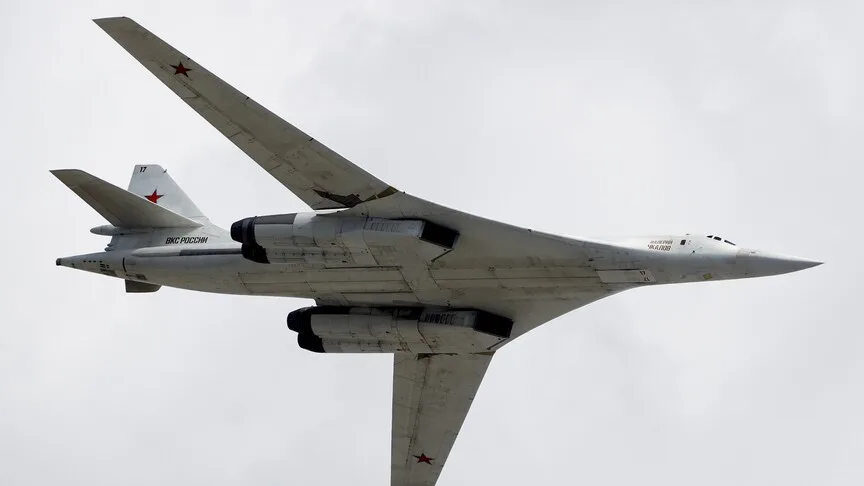
Russian Tu-160 strategic bombers completed a 16-hour patrol mission over the neutral waters of the Barents and Norwegian seas on June 23, near the borders of northern Russia, Norway, and Finland [1, 2, 3, 4, 5]. The flight was accompanied throughout by Russian MiG-31 fighter jets providing escort [1, 2, 3, 4, 5]. Foreign fighter jets also monitored and accompanied the Russian bombers during parts of the mission, though the countries involved were not revealed [1, 2, 3, 4, 5].
During the patrol, the Russian bombers conducted aerial refueling exercises demonstrating operational endurance capabilities [1, 2, 3, 4, 5]. The Russian Defense Ministry described the mission as routine and said it complied fully with international airspace regulations. A Ministry statement said, “All flights by Russian Aerospace Forces aircraft are conducted in strict compliance with international rules governing the use of airspace.” [2]
The Tu-160 bomber, designed in the 1970s by the Soviet Union, is among the fastest and longest-range strategic bombers in service and is capable of carrying nuclear weapons [1, 5]. The flight took place in a neutral zone over the Barents and Norwegian seas close to NATO member Norway, raising heightened concerns within NATO amid the ongoing Russia-Ukraine conflict [3].
The patrol represents one of the longest recent sorties by Russia’s strategic bomber forces and highlights their capability to operate in proximity to NATO airspace while maintaining aerial refueling and fighter escort support. The Russian Defense Ministry announced the patrol flight publicly on June 23 as part of routine military operations around Russia’s northern borders [1, 2, 4, 5].