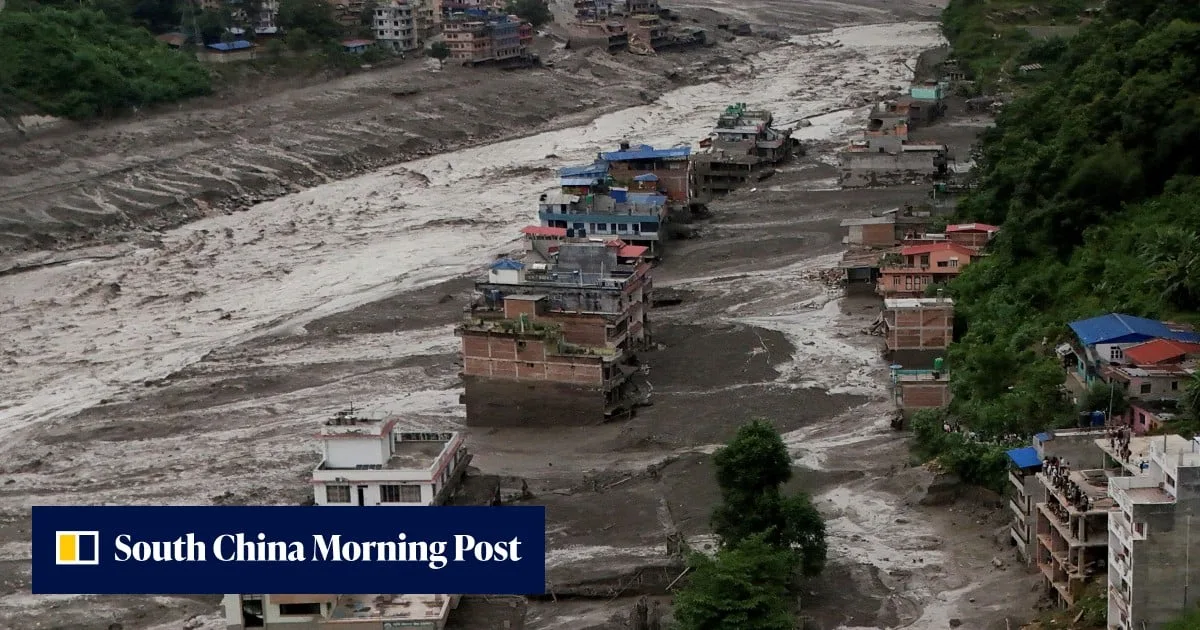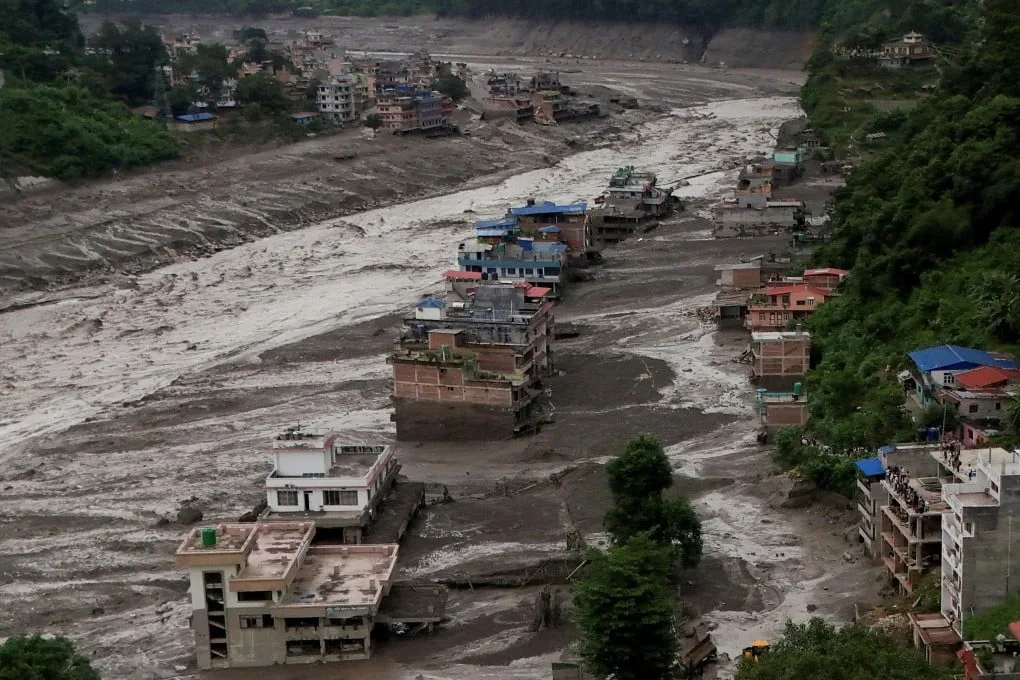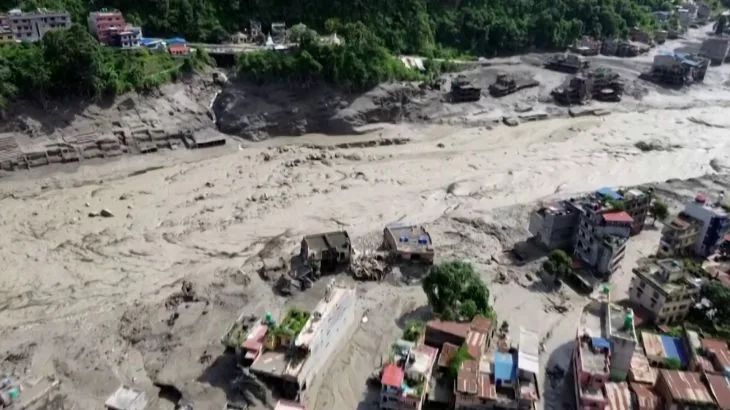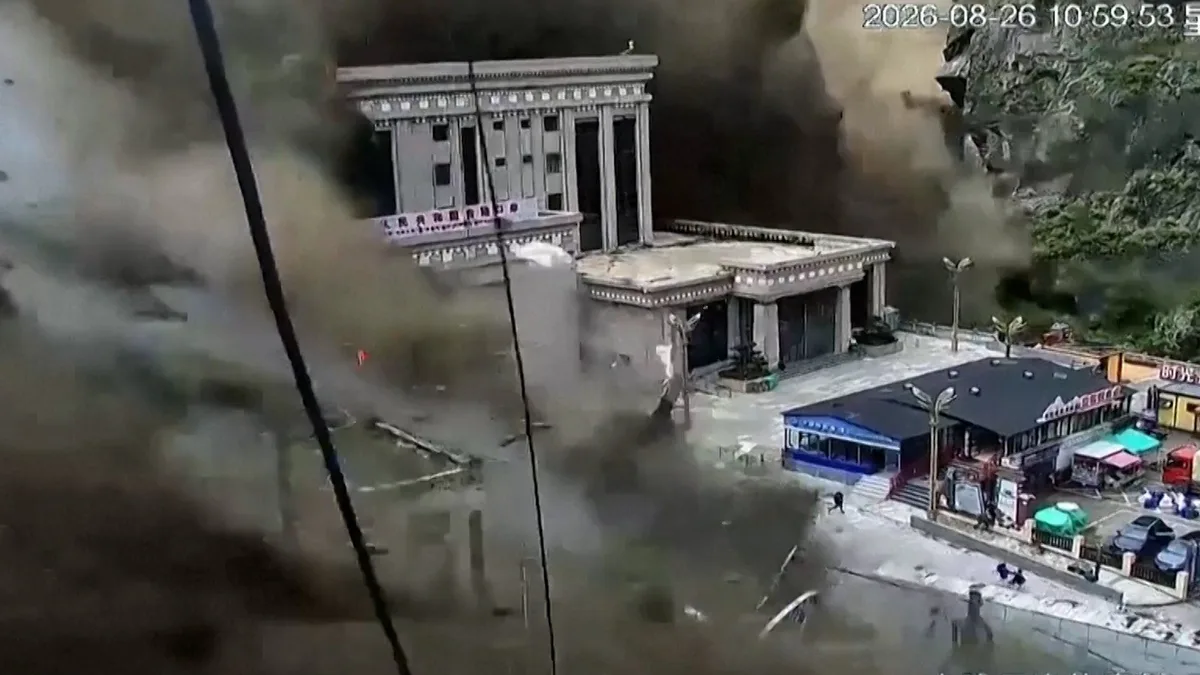
A catastrophic mudslide engulfed a crossing on the Nepal-China border, destroying roads, buildings, and vehicles on August 26, 2026 [1, 2, 3]. Nepalese authorities confirmed at least 95 deaths in the disaster, while early reports had cited nine fatalities [3, 2]. Hundreds remain missing, including at least 484 tourists, among whom three U.S. citizens have been identified, with several dozen more Americans possibly unaccounted for [2, 3].
The disaster was preceded by a 4.4-magnitude earthquake about seven minutes before the mudslides, which Nepal’s Foreign Minister suggested as the cause of the rock and ice avalanche that triggered the floods and mudslides [3]. Authorities believe the earthquake prompted the avalanche to flow into Nepal’s Lhende Khola River, causing severe flooding [3]. There are concerns about a second flood due to a blockage in the river [3].
China deployed 574 rescuers to Tibet’s Gyirong land crossing to assist in the rescue operation near the border [3]. The U.S. State Department said it is tracking Americans affected by the disaster and working with local authorities and tour agencies to support those impacted. The department urged U.S. citizens in the area to monitor local news, follow emergency instructions, and register with their travel safety system [3].
A recent study published on August 21 in Nature Communications linked the Tibetan Plateau's increasing soil water and glacier melt to a rise in geological disasters, affecting nearly two billion people across South and East Asia [1]. Physicist Chen Xiaosong said, "From now to the end of this century, the increase of soil water and the intensification of glacier melting [in the Tibetan Plateau] will constantly trigger such geological disasters" [1].
The mudslide captured on CCTV a day after the earthquake highlights the region’s increasing vulnerability to such events [2, 3]. Relief efforts continue amid fears of further floods, with authorities prioritizing search and rescue as they manage ongoing risks.