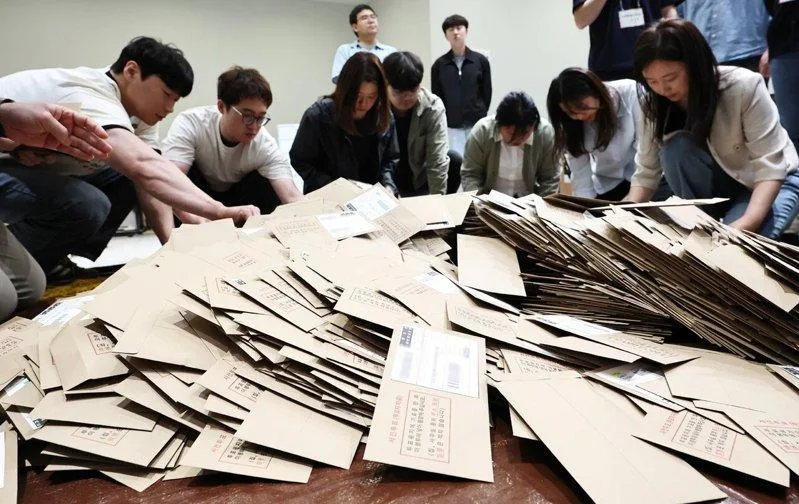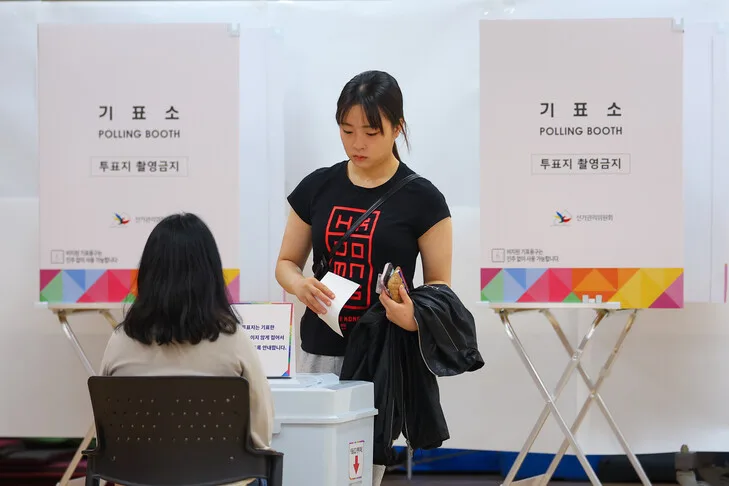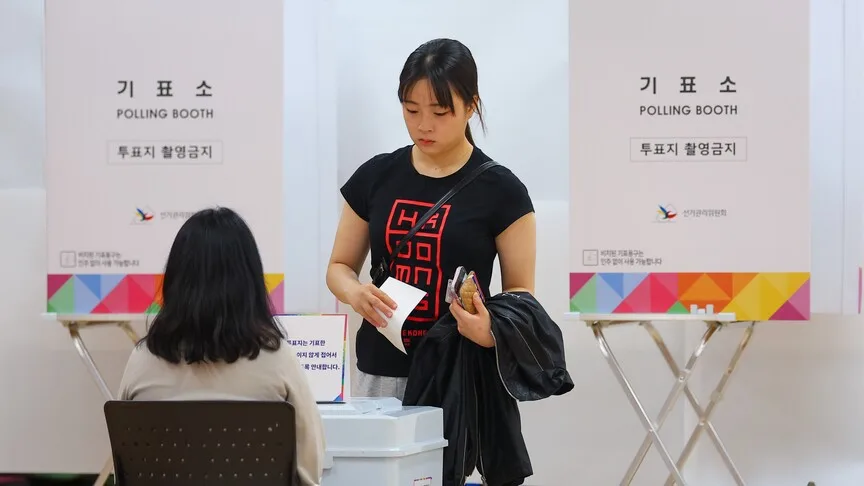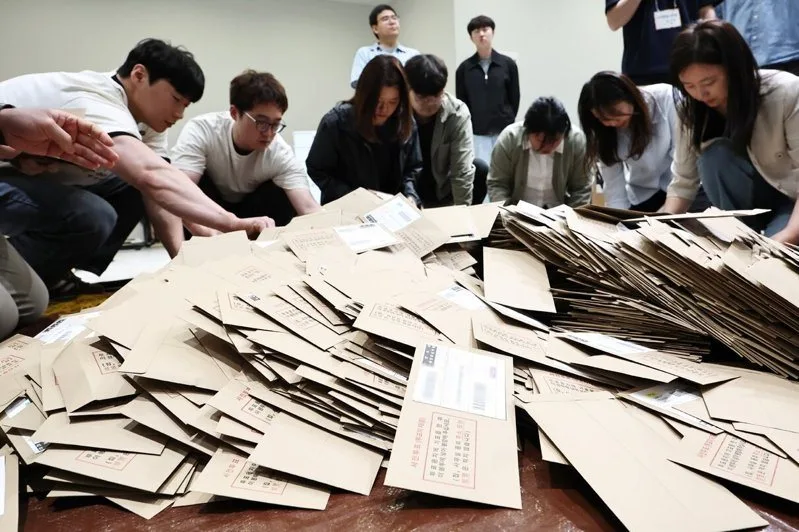
South Korea's early voting for local elections concluded on May 30 with a record 23.51% turnout, surpassing all previous early voting rates in local contests [1, 2, 3, 4]. The two-day early voting period ran from May 29 to May 30 ahead of the official election day on June 3 [1, 5, 2, 3].
About 10.5 million voters participated in early voting, drawn from a total registered voter base of approximately 44.65 million nationwide [1, 2, 3, 4]. Voting was conducted at 3,571 polling stations across the country, allowing residents to vote regardless of their registered address [1, 5, 2, 6, 4].
The turnout on the first day reached 11.6%, setting a new record for first-day early voting in local elections [1, 5, 2, 3, 6]. This lifted the overall two-day turnout beyond the previous local election early voting record of 20.62% set in 2022 [1, 2, 3].
Regionally, South Jeolla Province posted the highest early voting turnout at about 38.95%, followed by North Jeolla at 35.05%, Gwangju at 27.83%, Sejong at 27.67%, and Seoul at 23.84% [1, 2, 3, 4]. The lowest early voting rates were seen in Daegu (18.65%), Gyeonggi (20.96%), Busan (21.29%), and Incheon (21.62%) [1, 2, 4].
Since nationwide early voting began in 2014, participation rates have steadily climbed in both local and national elections [3]. The highest early voting turnout in any South Korean election was 36.93% during the 2022 presidential election [1, 2, 4].
A simultaneous parliamentary by-election is also underway, with its early voting first-day turnout at 12.07% [5, 6].
Official election day is scheduled for June 3, when early votes will be combined with ballots cast on the day to determine final results [5, 3].