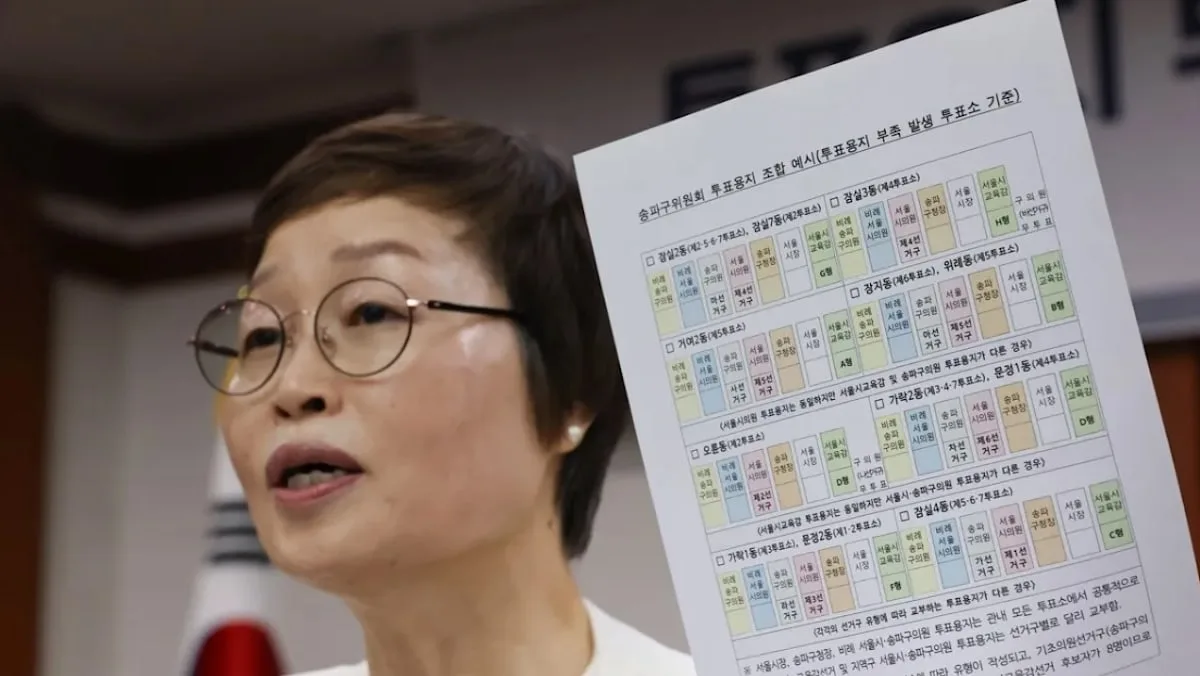
South Korea's National Assembly voted overwhelmingly on June 18 to start a 45-day special parliamentary investigation into ballot paper shortages that affected local elections held on June 3 [1, 2, 3, 4]. The investigation committee is chaired by opposition People Power Party lawmaker Yoon Sang-hyun, who said the probe "aims to establish the causes of unprecedented ballot shortages and the election commission’s inadequate response, to clearly establish accountability" [1]. He added the investigation should "find the causes and propose electoral reforms that can restore public trust" [3].
On June 3, dozens of polling stations nationwide experienced ballot shortages, impacting about 140 out of over 14,200 stations nationally, with 26 temporarily suspending voting as a result [5, 6, 3, 7]. The National Election Commission (NEC) chief Roh Tae-ak resigned amid the fallout [1, 6, 8, 3]. To investigate, police and prosecutors raided NEC offices on June 18, seizing electronic data [1, 8].
A Truth Investigation Committee conducted a 10-day probe from June 10 to June 19, recommending criminal prosecution of 12 top NEC officials including former chief Roh Tae-ak, as well as large-scale reforms of the election commission, including possible near-dissolution [5, 6, 7]. Committee Chair Zhao Xianxu said, "According to the comprehensive failure of the election management system, we recommend transferring the case to the judiciary for prosecution" [6].
Proposed reforms call for raising pre-printed ballots to over 70%, reducing unnumbered ballots, limiting NEC secretariat powers, instituting a permanent NEC chair, real-time voting site monitoring, and placing the NEC under audit jurisdiction [6, 7].
President Lee Jae Myung publicly condemned the NEC for "negligence, incompetence, laziness, and moral decay," pledging "a thorough truth finding and reforms, including legislative amendments and discussions on constitutional reform if necessary" [9]. He warned, "We cannot allow this situation to continue or be covered up. Those who resort to illegal violence and spread false information must be held accountable according to the law" [10].
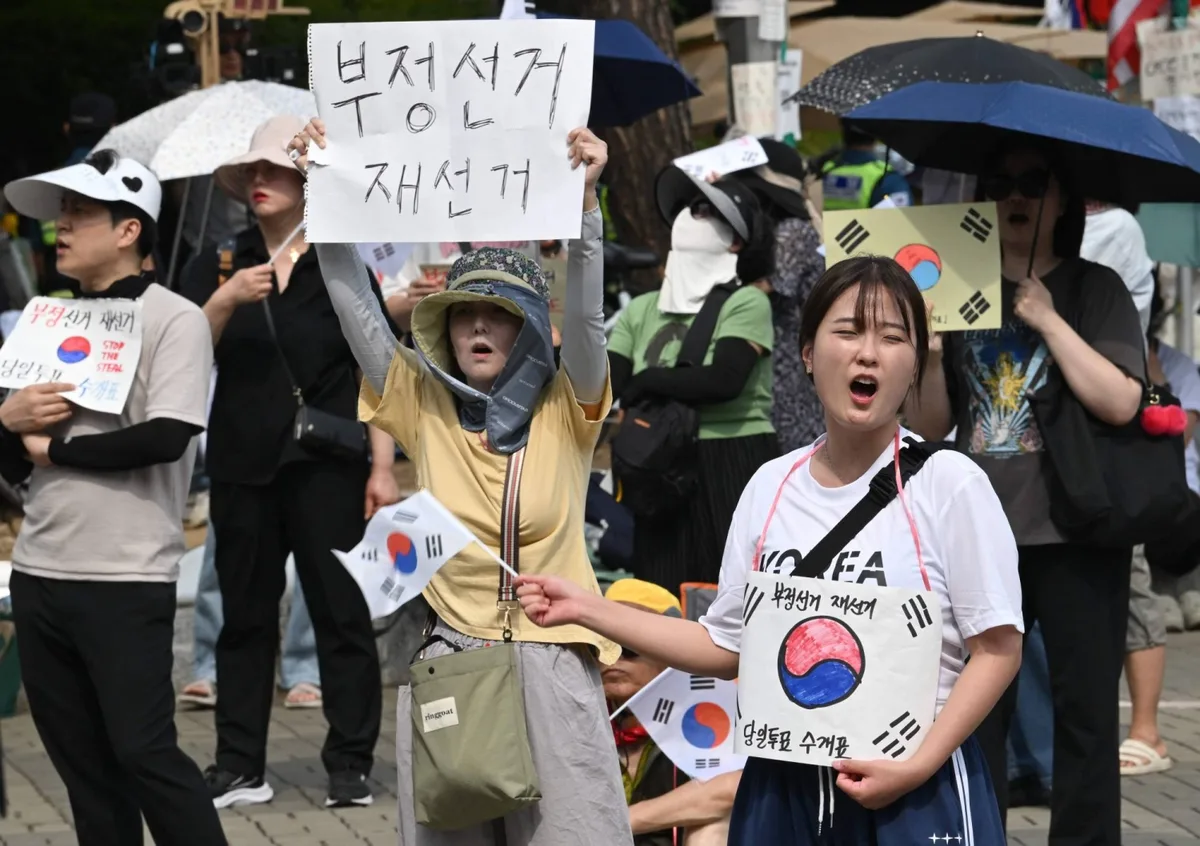
The opposition People Power Party filed appeals challenging election results in seven jurisdictions, including Seoul, citing the ballot shortages [1, 8]. Protesters blocked access to the Olympic Gymnasium vote counting center demanding reelection [1, 8, 9, 10].
Under South Korean election law, the NEC has 60 days to determine if serious irregularities occurred; confirmed issues would trigger fresh elections within 30 days. If not, election results can be challenged in court within 10 days [1, 8]. The parliamentary investigation will run through early August.