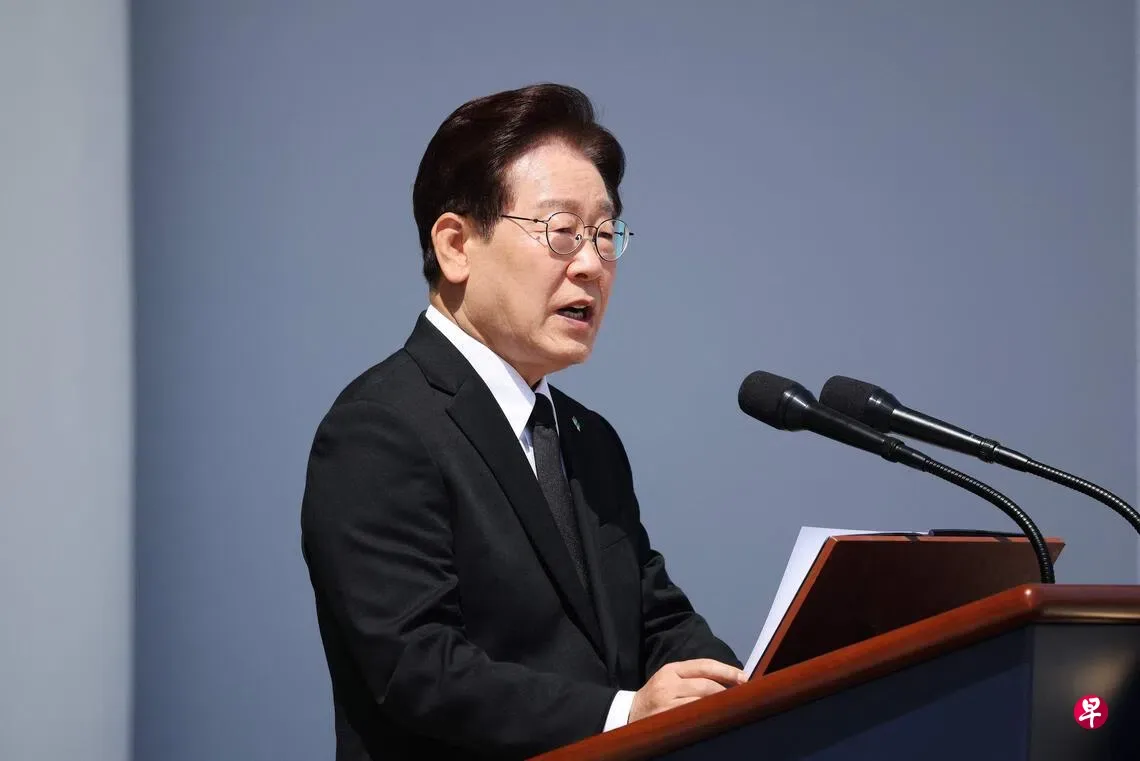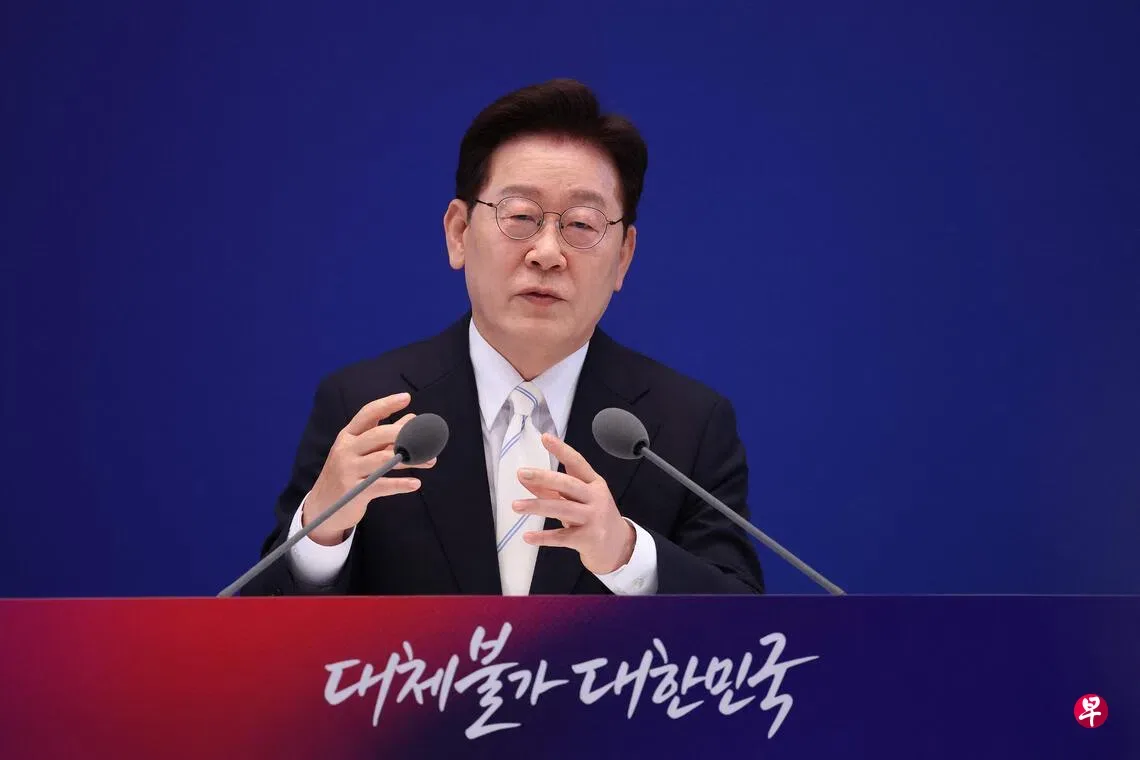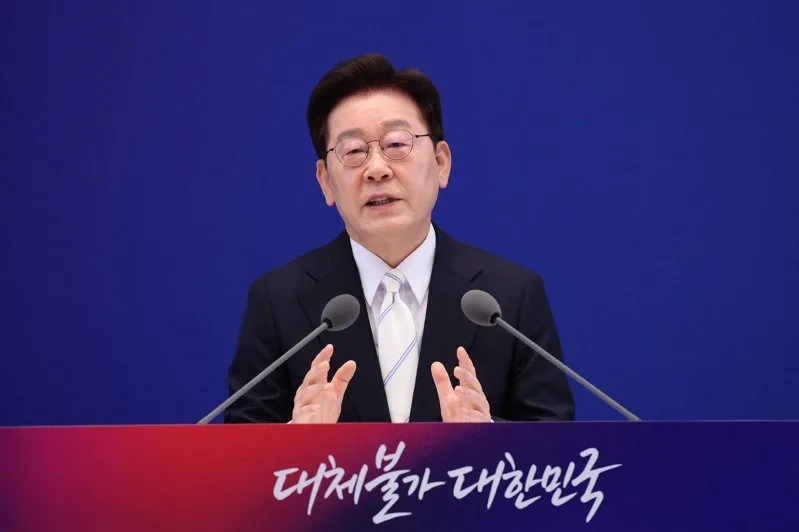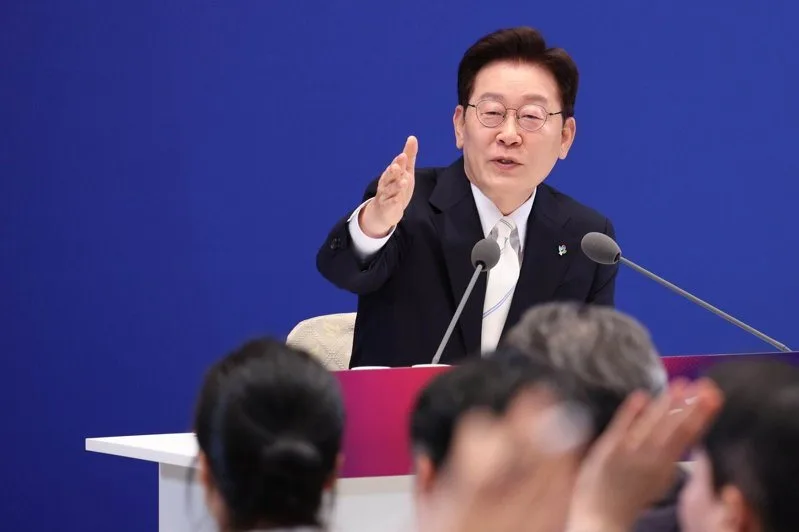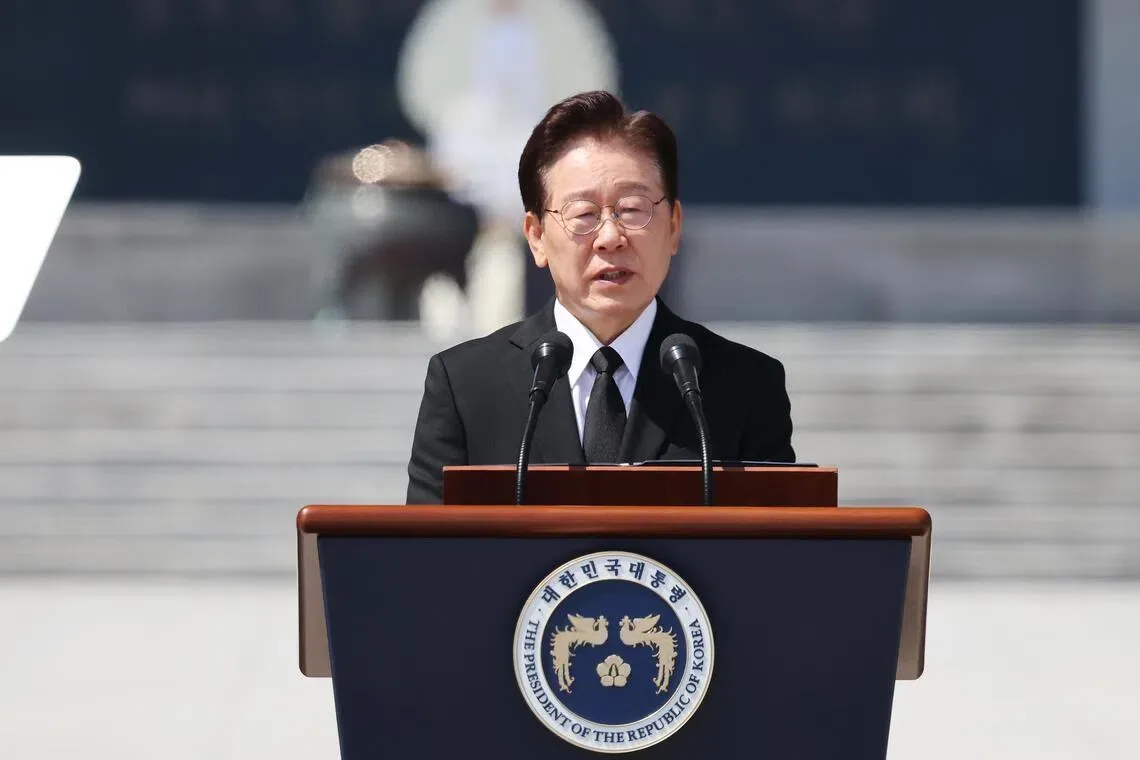
South Korean President Lee Jae-myung held a press conference on June 8, 2026, at the Blue House reception hall in Seoul to mark the first anniversary of his presidency. He reviewed diplomatic and economic achievements from his first year in office and outlined future policy priorities [1, 2, 3, 4, 5].
Lee highlighted extensive foreign engagement, including 14 overseas visits, 39 phone calls with foreign leaders, 26 meetings with officials and business leaders, and 8 economic activities across 7 countries or regions [1]. He credited these efforts for supporting South Korea’s economic rebound, with the annual growth rate climbing to 3.6% and exports exceeding $700 billion USD [6]. The KOSPI stock index rose sharply from around 2,770 points at his inauguration in June 2025 to approximately 8,700-8,900 points by June 2026 amid AI and semiconductor booms [6, 7].
He announced a soon-to-be-published large-scale investment plan to diversify South Korea’s economy beyond semiconductors. Lee said the government may channel surplus tax revenue from the semiconductor industry into a National Growth Fund targeting 150 trillion won to foster inclusive growth engines [2, 3, 8, 4, 9]. He said, “Above all, the fruits of growth must not remain confined to a select few corporations, regions or sectors” [2, 3, 4, 9]. The plan aims to bring benefits across regions, industries, and social sectors.
On tackling economic challenges, Lee pledged a crackdown on stock price manipulation and real estate crimes. He promised structural reforms to break vested interests and improve corporate governance to help restore investor confidence. Lee argued that Korea’s stock market undervaluation largely stems from structural problems rather than geopolitical risks, citing Taiwan’s rising market despite higher military risks nearby. “Many blame geopolitical instability, war risk, or uncertainty in diplomacy and security. But if that were true, it cannot explain Taiwan’s situation,” he said [10, 11, 6, 7].
Lee reiterated South Korea’s goal to become a global diplomatic and security power, working toward peace, stability, and denuclearization on the Korean Peninsula. He supports phased dialogue with North Korea with short, medium, and long-term goals. Proposed short-term measures include freezing North Korea’s nuclear material production and halting missile development as transitional steps. He warned that South Korea has no intention of pursuing nuclear weapons and called such plans irresponsible, noting it would encourage regional nuclear armament [12, 4, 5].
Regarding Japan, Lee said public opinion and unresolved historical issues make cooperation like the ACSA logistics agreement difficult at present.
Lee also criticized that Korea’s industrial and technological gains have not sufficiently benefited small and medium enterprises and startups across the country.
He addressed recent voter protests during June 2026 local elections caused by ballot shortages, calling the issue a “serious problem threatening democratic participation” [4, 6]. Lee pledged concrete progress on acquiring nuclear-powered submarines and shifting wartime operational control from the U.S. to South Korea [4, 9]. Nvidia’s planned AI data center with SK Telecom and SK Hynix in South Korea will open its first AI factory in 2027, supporting the investment drive [2, 3].