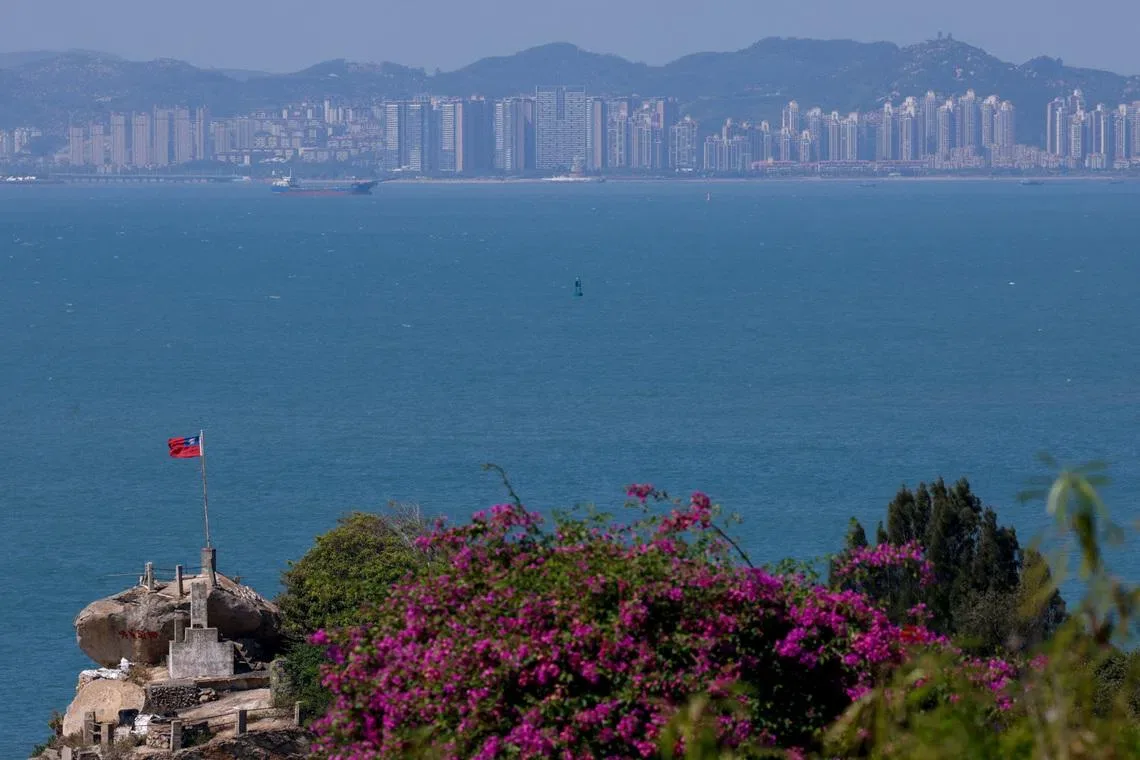
Taiwan's and China's coast guards engaged in a tense two-day standoff near the Pratas Islands, located more than 400 kilometers south of Taiwan island in the South China Sea. The islands are controlled by Taiwan but claimed by China [1, 2, 3, 4].
On May 23, Taiwanese coast guard personnel spotted a Chinese coast guard ship approaching the Pratas. Taiwan dispatched its own vessel, which broadcast repeated warnings as the two ships exchanged intense verbal confrontations over sovereignty via radio. The Chinese ship insisted it was on a routine mission and asserted sovereignty over the area. In response, the Taiwan vessel said: "Please do not destroy peace. You should return and strive for democracy. That is the correct way to serve your country" [1, 2, 3, 4].
A Taiwanese coast guard official said the Chinese ship was about 21 nautical miles northeast of the Pratas during the standoff. The official noted the Chinese wording on sovereignty and jurisdiction was unusual [1, 2, 3, 4]. The Pratas Islands are lightly defended and fall under Taiwan’s coast guard jurisdiction rather than its military [1, 3, 4].
The standoff ended late on May 24 when the Chinese coast guard ship left the area around the Pratas Islands [3, 4]. Taiwan’s National Security Council Secretary-General Joseph Wu said about 100 Chinese ships were currently deployed in the so-called first island chain, which extends from Japan through Taiwan to the Philippines. He made this statement on May 23 in the lead-up to the confrontation [3, 4].
Tensions in the region have been rising. In January, Taiwan reported a Chinese reconnaissance drone briefly flew over the Pratas Islands, calling the act provocative [1, 3, 4]. Earlier this month, Taiwan’s coast guard twice forced away a Chinese research vessel named Tongji operating near the islands [2, 3, 4]. Taiwan remains on high alert for further Chinese maneuvers following recent talks between Chinese President Xi Jinping and US President Donald Trump in Beijing [2, 3, 4].