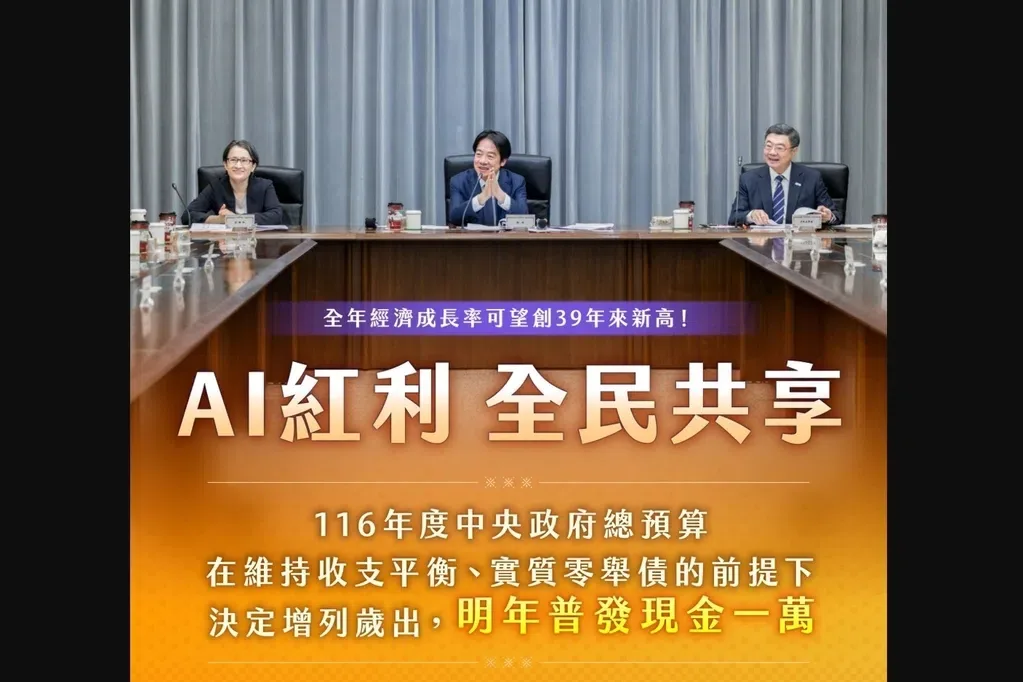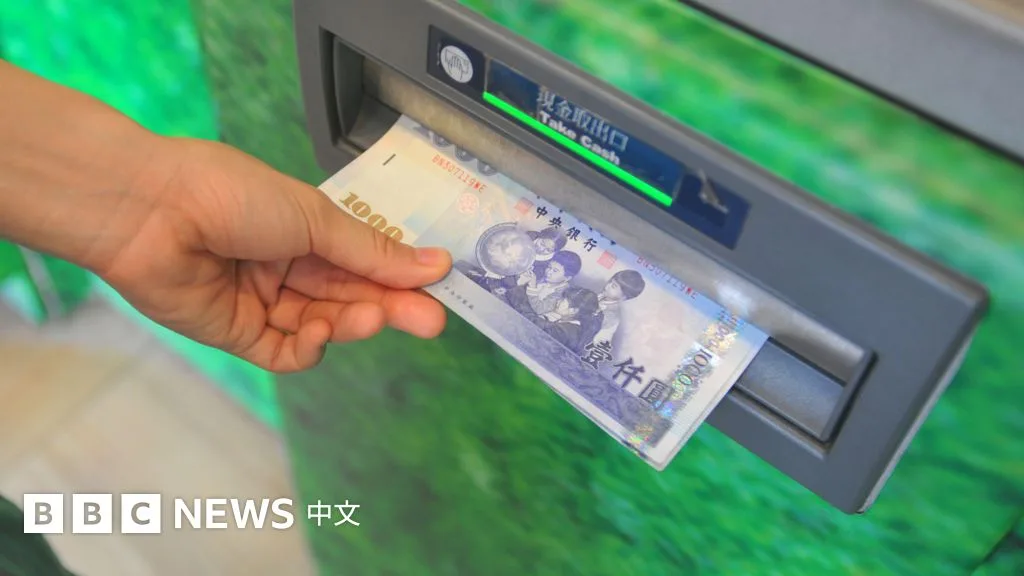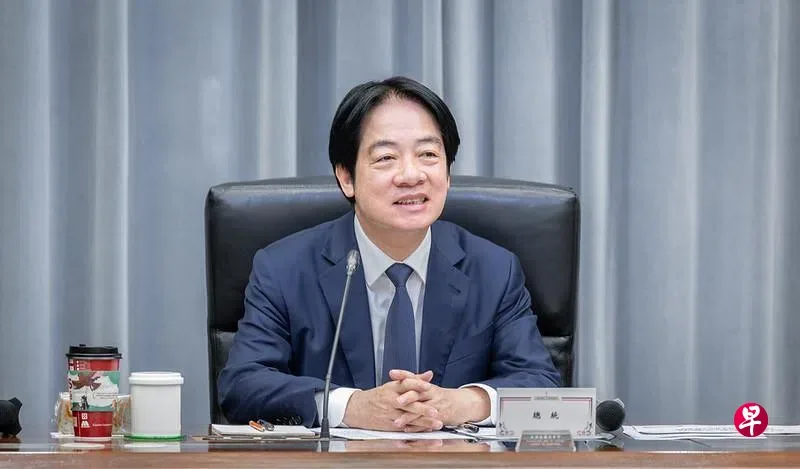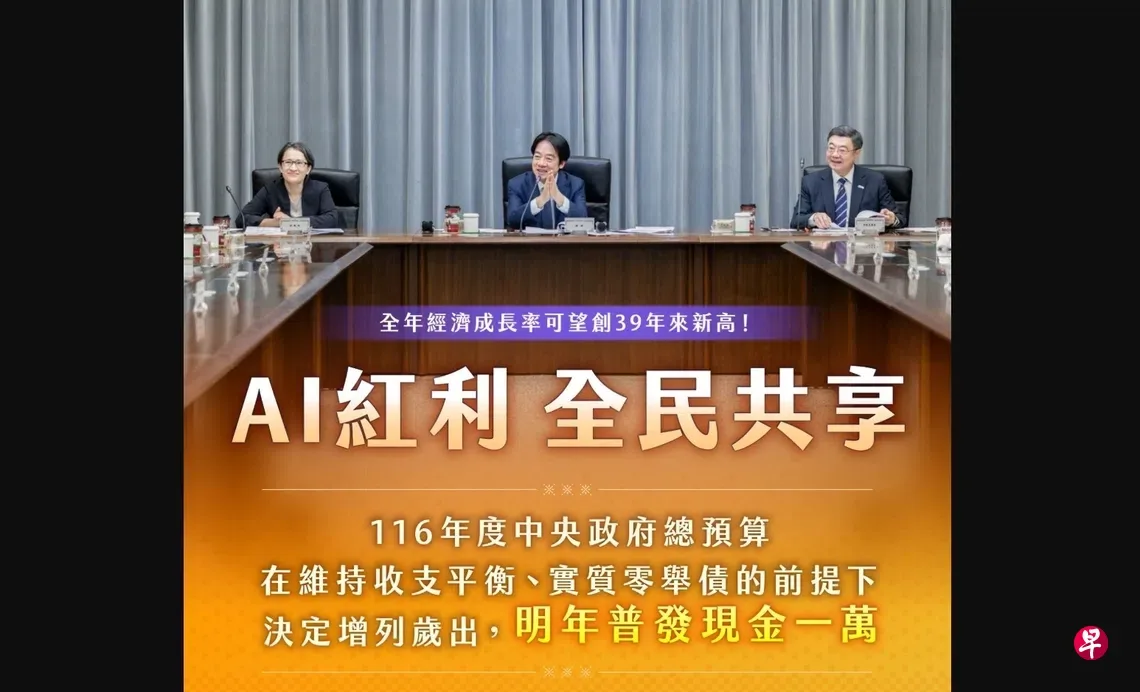
President Lai Ching-te announced on August 16 that Taiwan will distribute a one-time cash payout of 10,000 New Taiwan Dollars (about 314 USD) to every citizen in 2027 to share economic gains driven by AI and strong growth sectors such as semiconductors and ICT [1, 2, 3, 4, 5, 6, 7]. Lai said, "How this 10,000 is used is up to each individual and family. It can pay for children's education, support elders, reduce family burdens, or boost consumption and local businesses" [1].
The 2027 central government budget has increased fiscal expenditure by 235.7 billion NTD to fund the payout while maintaining a balanced budget with zero new borrowing, according to government sources [1, 2, 3, 4, 5, 6, 7]. Officials justify the payout by pointing to Taiwan’s strong 11.05% GDP growth forecast in 2026, marking the highest level in 39 years [4, 5, 6]. Lai emphasized that the payout reflects dividends from the country’s robust economy.
However, opposition parties Kuomintang (KMT) and Taiwan People's Party criticized the plan as political opportunism ahead of local elections. They accused the ruling party of double standards, noting they had proposed similar payouts in the past but were labeled fiscally irresponsible. Opposition leader Huang Kuo-chang said, "Is this not a money pit? Why use Communist Party tactics? Double standards are enough" [1, 2, 3, 7]. Taipei Mayor Chiang Wan-an called for doubling the payout to 20,000 NTD. He argued, "President Lai should distribute 20,000 NTD, otherwise it’s like he said before that ‘people just spend it on groceries’" [2, 3, 7].
Experts and scholars see the payout largely as a political move to affect election atmosphere. Academic Du Shengcong called it "a one-time political firework" that might sway some centrist voters but is unlikely to change core party support bases [2]. Surveys after prior payouts showed about 81% spent the money, but only a third was new consumption, limiting economic stimulus [8]. Taiwan’s Audit Department criticized the lack of prior planning and impact evaluation. It highlighted that government debt remains high at approximately 870 billion NTD despite claims of fiscal discipline [8].
Separately, Taiwan’s 2027 defense budget will exceed 1 trillion NTD for the first time, reaching 1.1225 trillion NTD or about 3% of GDP, signaling a commitment to self-defense amid regional tensions [4, 5, 6, 9, 10, 11]. However, some experts warn that rapid GDP growth may make President Lai’s goal of 5% defense spending by 2030 unrealistic without budget recalculation [9, 10]. The government stresses the record defense budget also aims to pressure Washington for military sales approvals and Beijing regarding Taiwan’s defense stance [11].
KMT politician Zhao Shaokang suggested reuniting key party figures along with Mayor Chiang Wan-an to boost election prospects [12]. The Executive Yuan approved the 2027 central government budget, including the cash payout and record defense spending, on August 20 [11]. Taiwan will proceed with the cash distribution next year as planned.