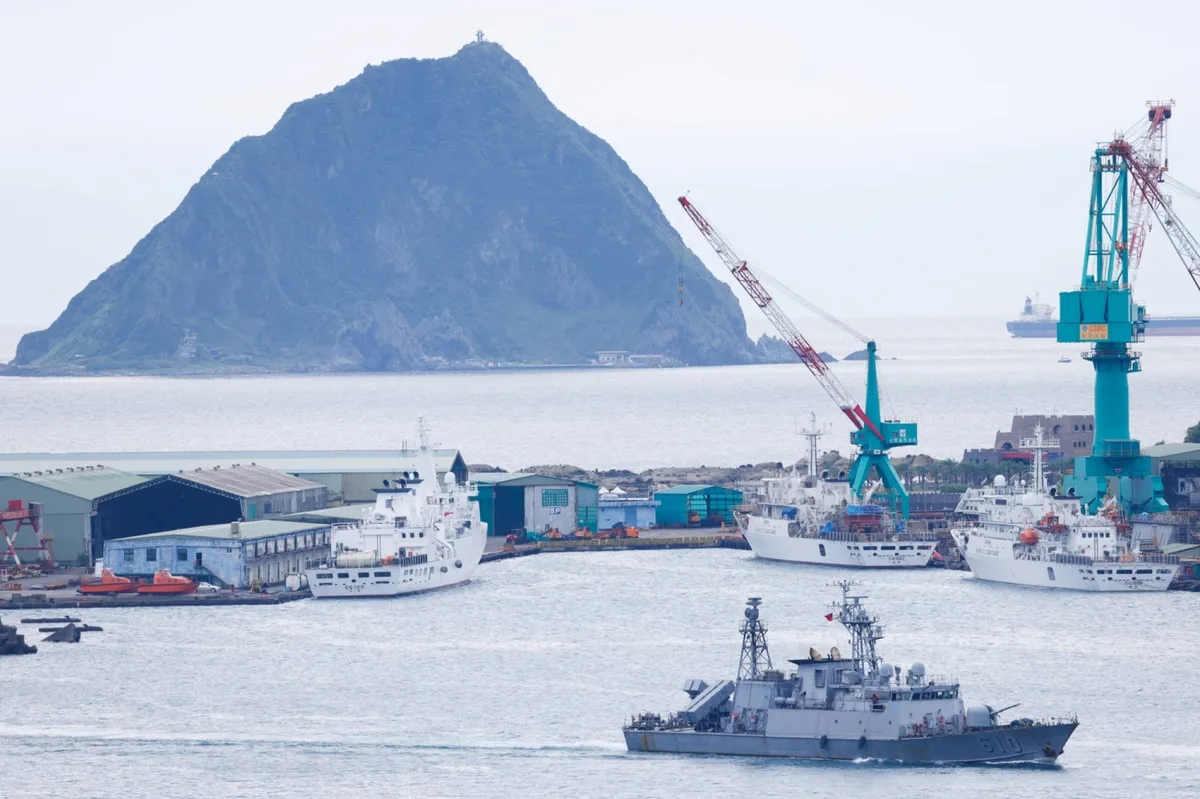
Taiwan has called on Japan and the Philippines to respect its sovereignty and maritime rights in the formal talks they plan to hold over their exclusive economic zone (EEZ) and continental shelf boundaries. Taiwan’s foreign ministry said these rights are "indisputable under international law" and urged Japan and the Philippines to fully consider Taiwan’s claims during negotiations [1, 2].
Japan and the Philippines announced in May 2026 that they would begin formal discussions to delimit their maritime boundary, a zone that overlaps with Taiwan’s EEZ off its eastern coast [1, 2]. Taiwan responded publicly on June 3, 2026, reiterating its demand for recognition of its rights and territory in the disputed maritime area [1, 2].
Taiwan’s foreign ministry emphasized that its representative offices in both countries would seek assurances that the negotiation process and any resulting agreements would not undermine Taiwan’s sovereignty or maritime rights [1]. The ministry also rejected China’s claims over Taiwan and condemned Beijing’s recent deployment of coast guard vessels off Taiwan’s eastern coast as an attempt to intimidate and disrupt regional stability [1]. It stated China has no right to represent Taiwan in any maritime boundary issues [1].
China views Taiwan as part of its territory and condemned the Japan-Philippines talks, responding by sending coast guard ships near Taiwan’s eastern waters in early June 2026 [1, 2].
Japanese Chief Cabinet Secretary Minoru Kihara said any maritime boundary agreement between Japan and the Philippines "would not be legally binding on third parties," indicating Taiwan would not be legally bound by those talks [1]. The Philippines’ foreign ministry did not respond to requests for comment on Taiwan’s concerns [1].
Taiwan’s government continues to reject Beijing’s sovereignty claims and insists on defending its maritime rights through diplomatic and legal channels [1]. The negotiations between Japan and the Philippines to define their maritime boundaries remain underway, with Taiwan closely monitoring the process and demanding respect for its territorial claims.