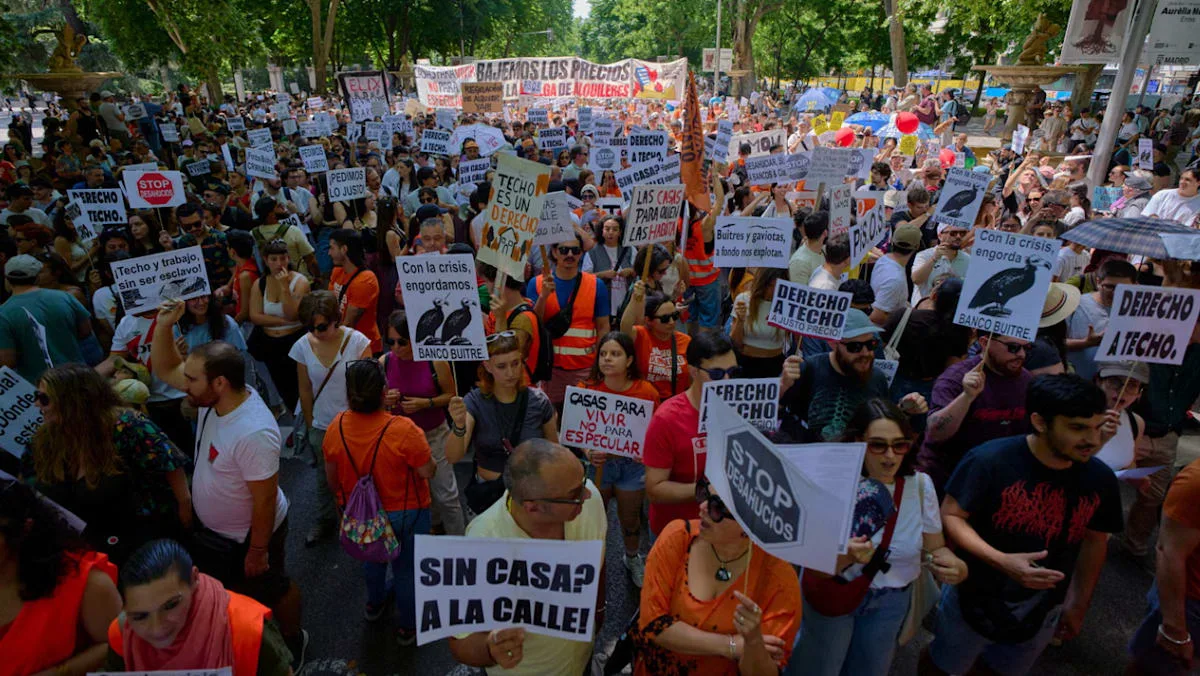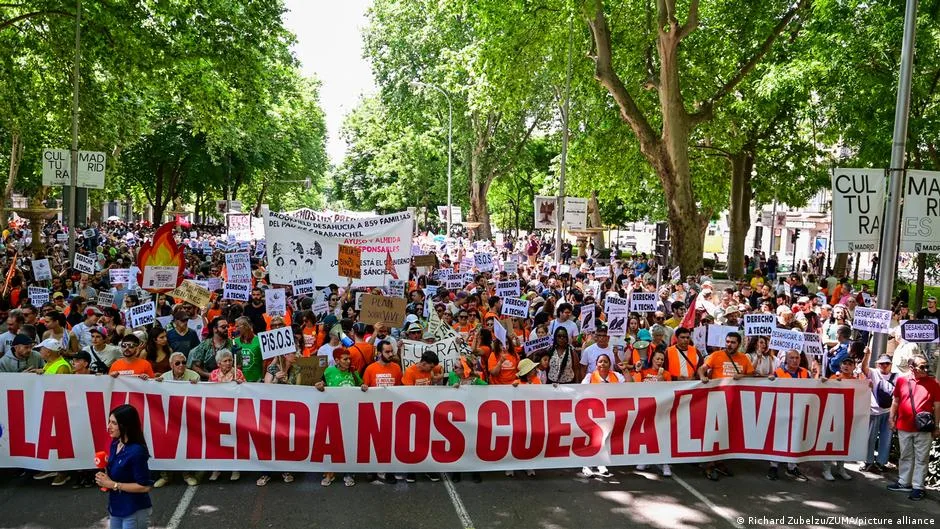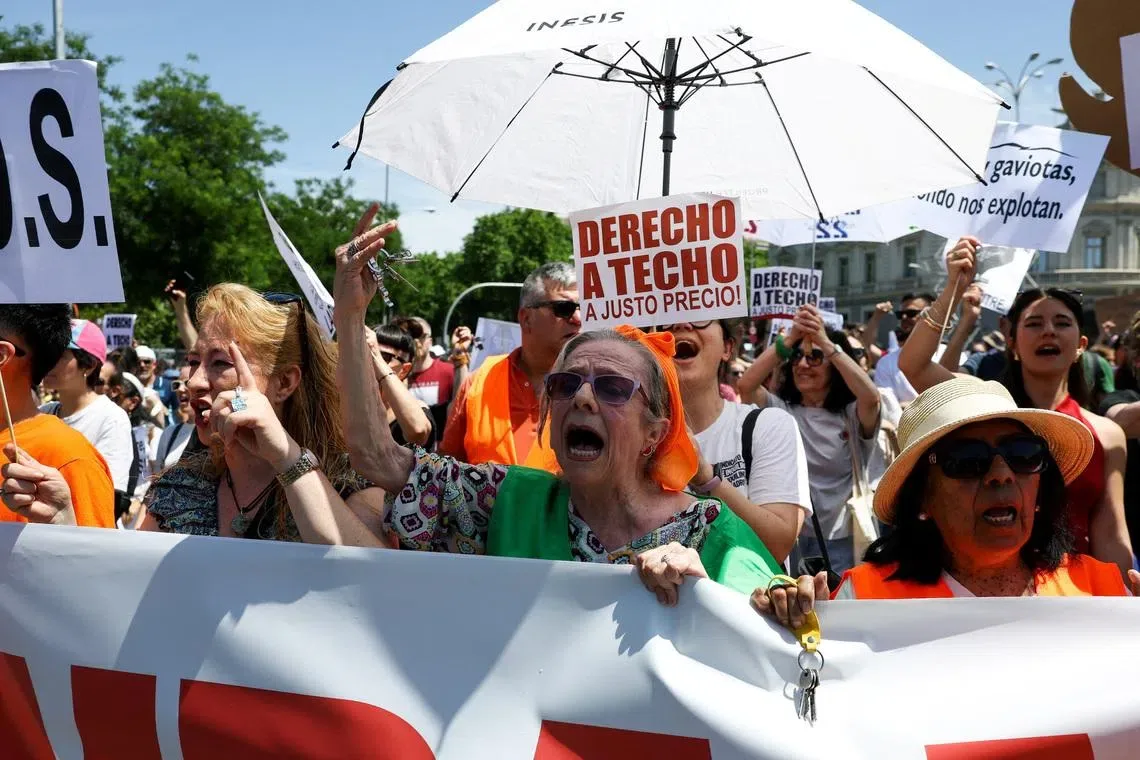
Thousands of people took to the streets of Madrid on May 24, 2026, protesting soaring rents and a severe housing shortage. The demonstration was organized by the Madrid Tenants' Union under the slogan "Housing costs us our lives. Lower rents." The union said more than 100,000 people participated, while authorities estimated around 23,000 attendees [1, 2, 3, 4].
The march had the support of Spain's two main trade unions, UGT and CCOO. CCOO Secretary-General Unai Sordo said, "Housing measures, although some are moving in the right direction, are advancing at a snail’s pace, while the housing crisis is escalating rapidly" [1]. Protesters carried signs with slogans such as "We want neighbors, not tourists" and "Rent is killing us" [5, 4].
Spain has seen average rents double over the past decade, far outpacing salary growth. Between 2021 and 2025, experts estimate a deficit of about 700,000 homes due to lagging construction and increased household formation. Eurostat data showed housing costs rose nearly 13% year-on-year in 2025 [1, 2, 3, 6, 5, 7, 4].
Protesters called for tougher government restrictions on tourist short-term rentals, which locals say are driving up rents and property prices [2, 3]. Fernando de los Santos of the Madrid Tenants' Union said, "More and more people are being forced into overcrowded conditions, having to live in shared rooms or even with other families." Irene Guinea, a 29-year-old advertising worker, added, "If we’re paying very high rent, it’s impossible for us to save up to buy a flat, so it’s a vicious circle we’re never going to escape." Nuria Nadim, 32, said the situation is "no longer compatible with working people’s lives. It’s unsustainable" [1].
The Spanish government approved a 7 billion euro plan in May to build more public housing over four years and assist young renters and buyers. This followed a February announcement of a broader 120 billion euro public investment fund targeting the housing crisis [2, 3, 6, 5, 7, 4]. However, a parliamentary decree to freeze rent increases failed to pass [2, 3, 5, 7].
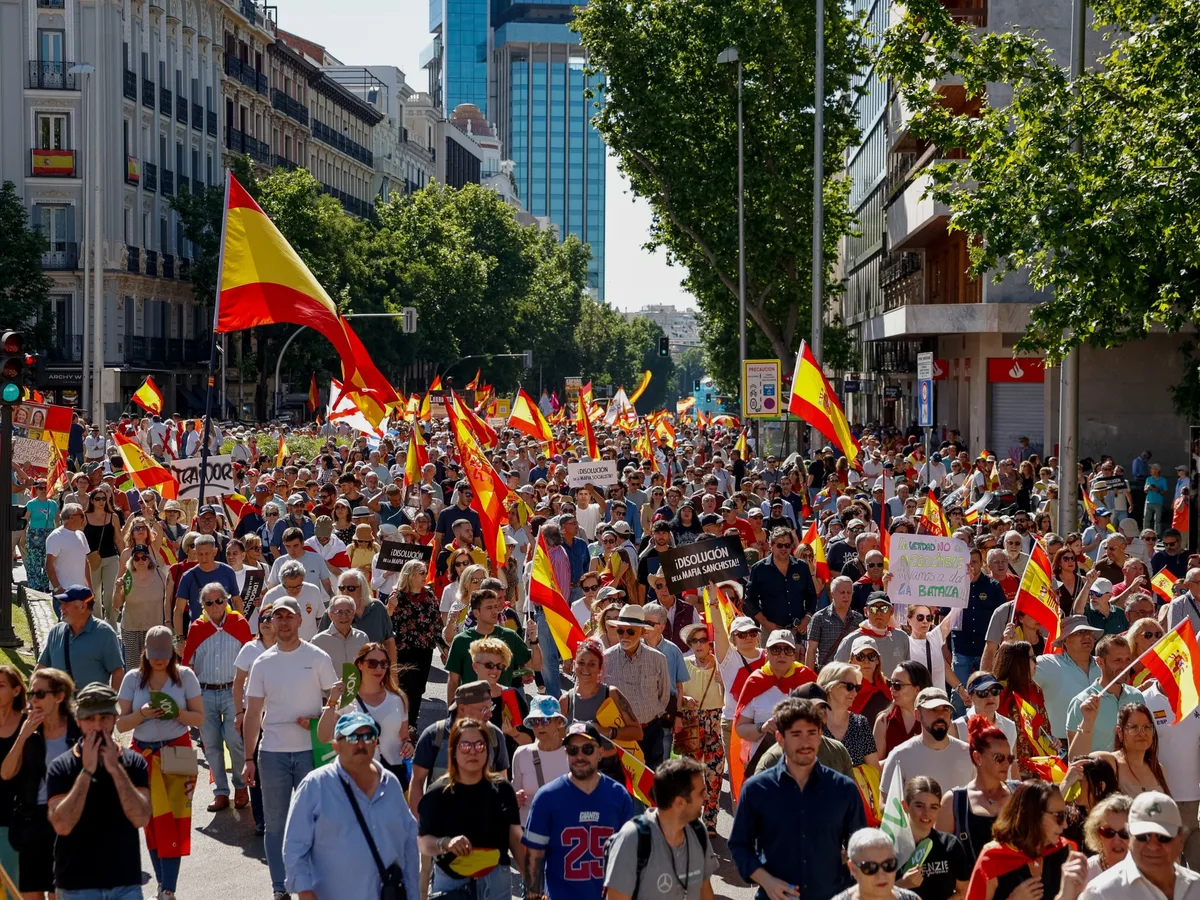
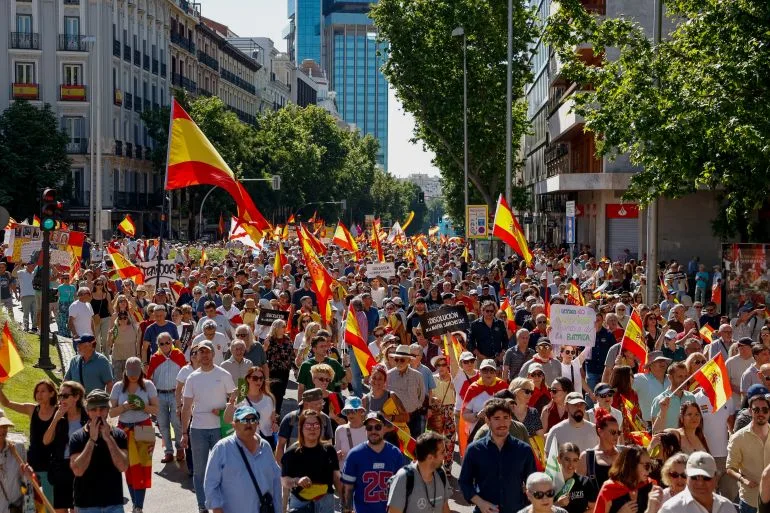
The day before, on May 23, thousands marched in Madrid demanding Prime Minister Pedro Sanchez resign over corruption scandals involving his wife Begona Gomez, his brother David Sanchez, former Transport Minister Jose Luis Abalos, and other allies. Organizers claimed 120,000 attended, while officials estimated 40,000. The anti-corruption protest was backed by over 150 civic groups, the conservative Popular Party (PP), and far-right Vox [8, 9, 10]. Vox leader Santiago Abascal said, "There is no one left in Pedro Sanchez’s circle who has not been accused of very serious crimes. Spain is being held hostage by a corrupt mafia" [8]. Clashes near the Prime Minister’s residence led to three arrests and seven police officers lightly injured [8, 10]. Sanchez denies the allegations as politically motivated and vows to continue in office [8, 9, 10].
The housing and corruption protests come amid mounting political tension ahead of Spain’s 2027 general election [1, 5, 9, 7].