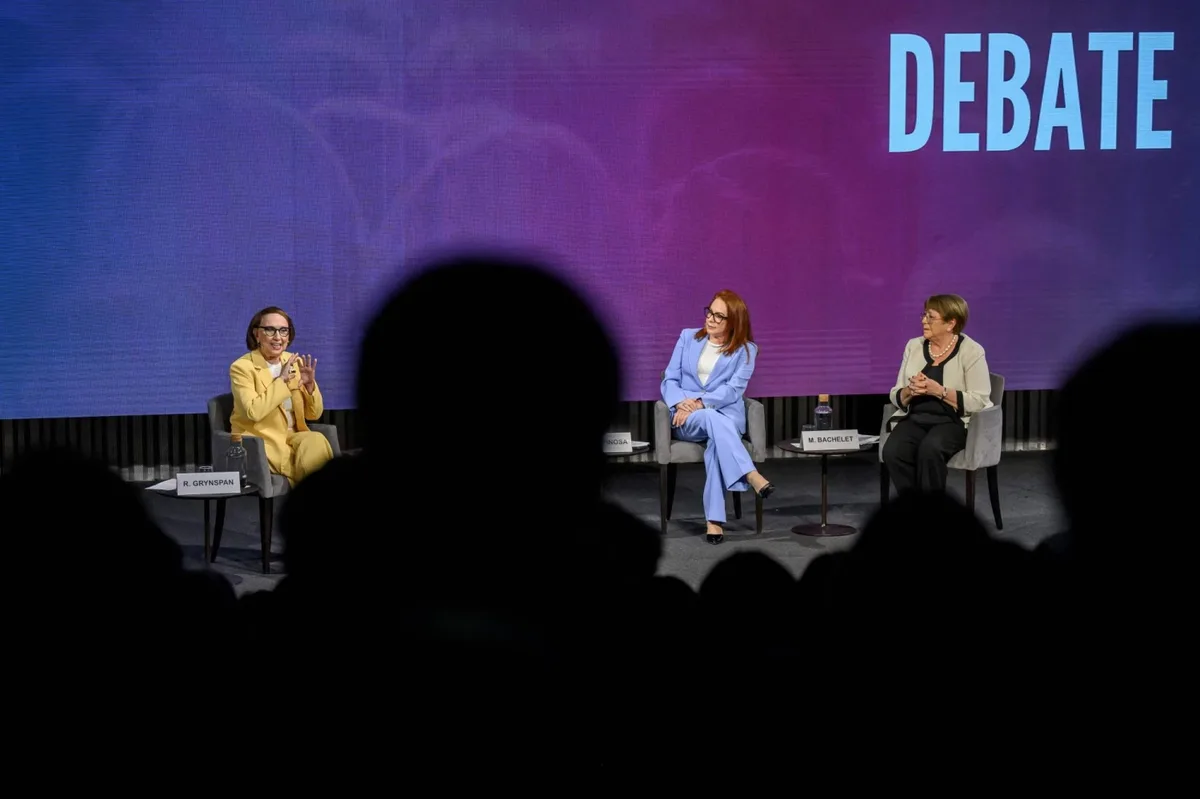
Antonio Guterres will step down as UN Secretary-General at the end of 2026 after serving two five-year terms, opening the way for new leadership at the international organization [1, 2]. Three women from Latin America—Michelle Bachelet of Chile, Rebeca Grynspan of Costa Rica, and Maria Fernanda Espinosa of Ecuador—are candidates to succeed him [1, 2].
The three candidates took part in a debate on June 9, 2026, in Geneva, home to the UN’s European headquarters, where they outlined their visions and qualifications for the role [1, 2]. The UN has never had a female Secretary-General in its 80-year history, making the potential for a first woman leader a historic milestone [2].
All three candidates stressed the importance of breaking the UN’s "glass ceiling." Maria Fernanda Espinosa said, "It is time to have a woman in charge" and emphasized that the next Secretary-General should be the best woman candidate, chosen for energetic leadership rather than gender alone [2]. Michelle Bachelet highlighted her record as a "fearless leader" who supports democracy, human rights, and women’s rights. She said she would feel honored if opposition arose because of her strong stance on those issues [2].
Rebeca Grynspan outlined current challenges facing the UN, including funding shortages, ongoing conflicts, declining global confidence in multilateralism, and cultural problems within the organization [2].
Under UN rules, the Secretary-General candidate must be recommended by the Security Council and then approved by the General Assembly, without veto from any of the five permanent Security Council members [2].
The next Secretary-General will be chosen and take office after Guterres’ term ends at the conclusion of 2026 [1, 2].