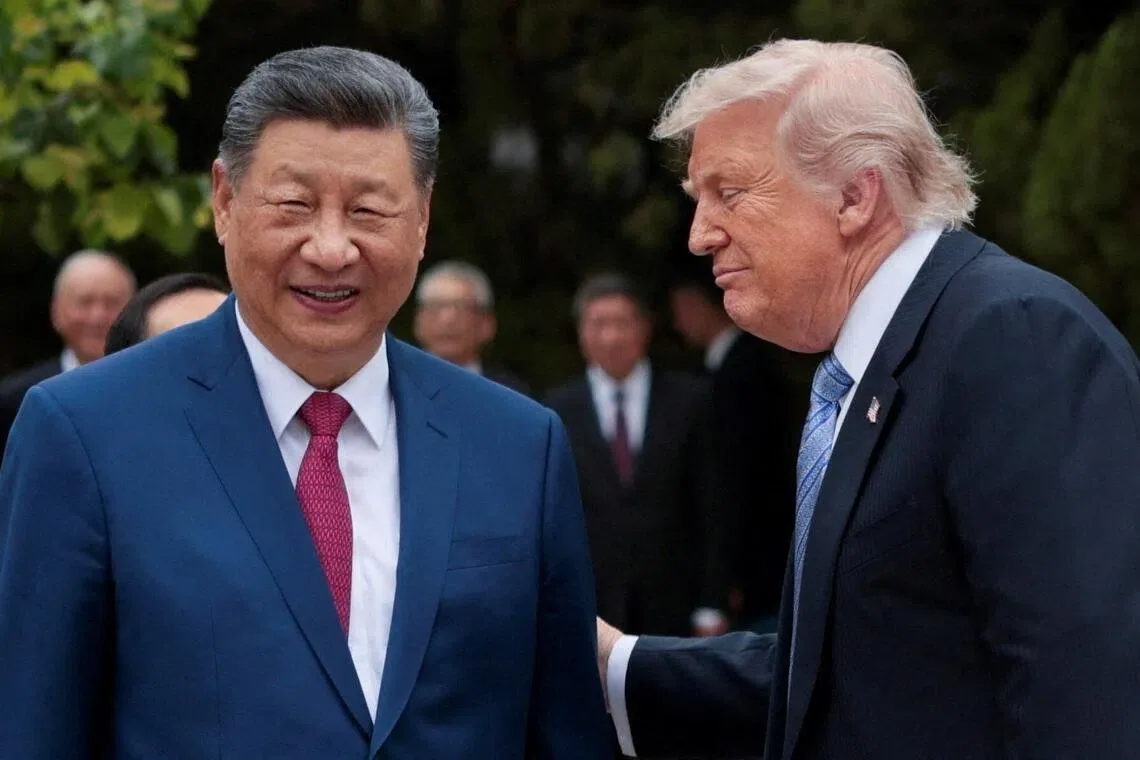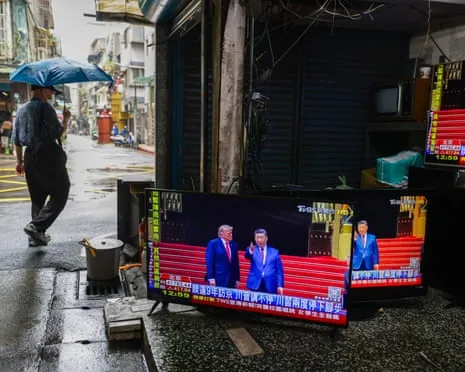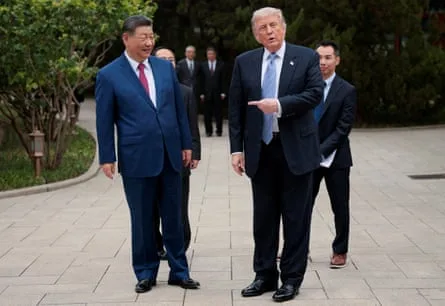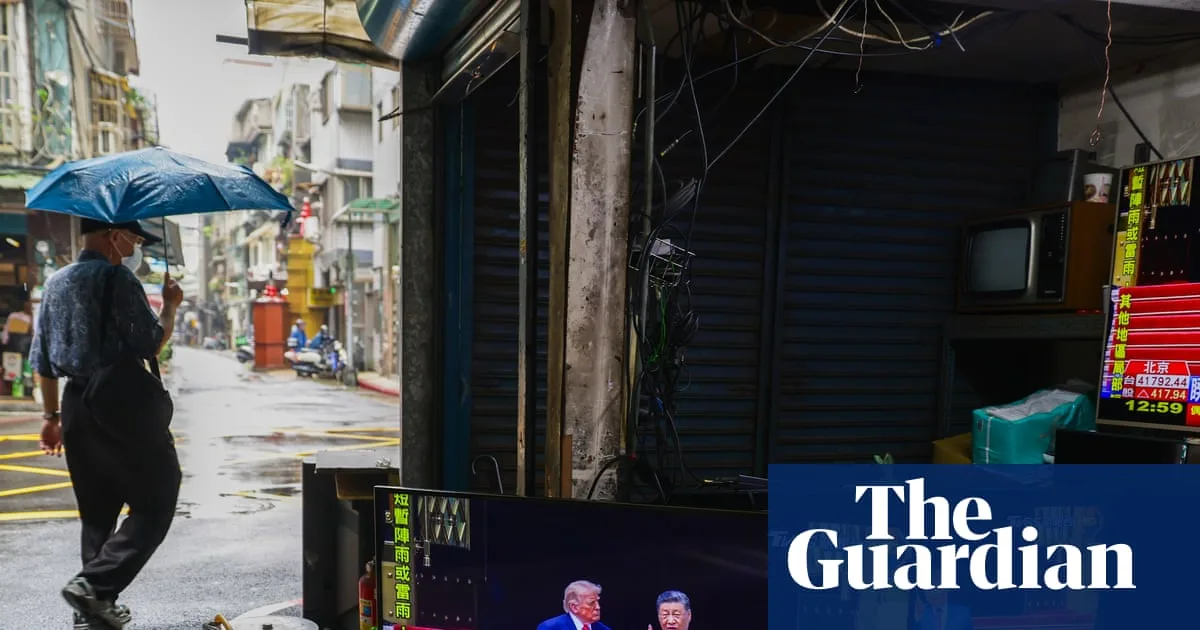
US President Donald Trump left a summit with Chinese leader Xi Jinping in Beijing on May 15 and announced he was holding off on approving a $14 billion arms sale to Taiwan, calling the package a "very good negotiating chip" with China [1, 2, 3]. Trump told Fox News he was not seeking involvement in a war over Taiwan and described the arms sales as leverage in talks with Beijing [1, 2, 3].
Trump said, "I'm holding that in abeyance, and it depends on China," signaling that the US arms deal to Taiwan would be contingent on progress in negotiations [1].
China's state media, on May 18, used Trump's remarks to cast doubt on Washington's commitment to Taiwan's defense and signal this message both domestically and to Taiwan [1, 3]. Colonel Jiang Bin, spokesman for China’s Ministry of National Defense, warned Taiwan, "Security cannot be bought with military purchases; if you become a pawn, you will only be squeezed dry" [1, 3].
Taiwan’s President Lai Ching-te expressed unease over Trump's comments and stressed the critical role of US arms sales for deterrence. Lai said US arms were "the most important deterrent" and vital for peace and stability across the Taiwan Strait, a shared interest of Taiwan and the US [2].
Trump also discussed Iran and the Strait of Hormuz with Xi during the summit, hoping China might pressure Iran to reopen the strait, though details remain unclear [1, 3]. Experts noted China has strategic reasons to avoid openly siding with the US against Iran and would not want its influence leveraged for concessions on Taiwan [1, 3].
Senior analyst J Michael Cole cautioned that Trump’s statements on Taiwan are unpredictable and sometimes contradictory. Still, Cole expects the administration to maintain longstanding US policy supporting Taiwan’s defense despite recent remarks [2].
The US decision on the $14 billion Taiwan arms sale remains pending following the Beijing summit discussions and Trump’s public comments. Observers await further US-China interactions to see how the package’s status will evolve.