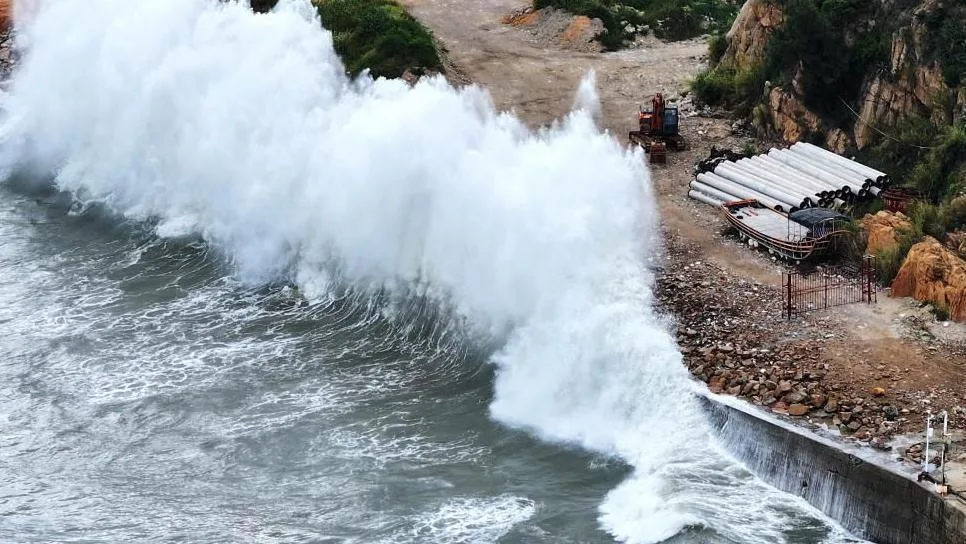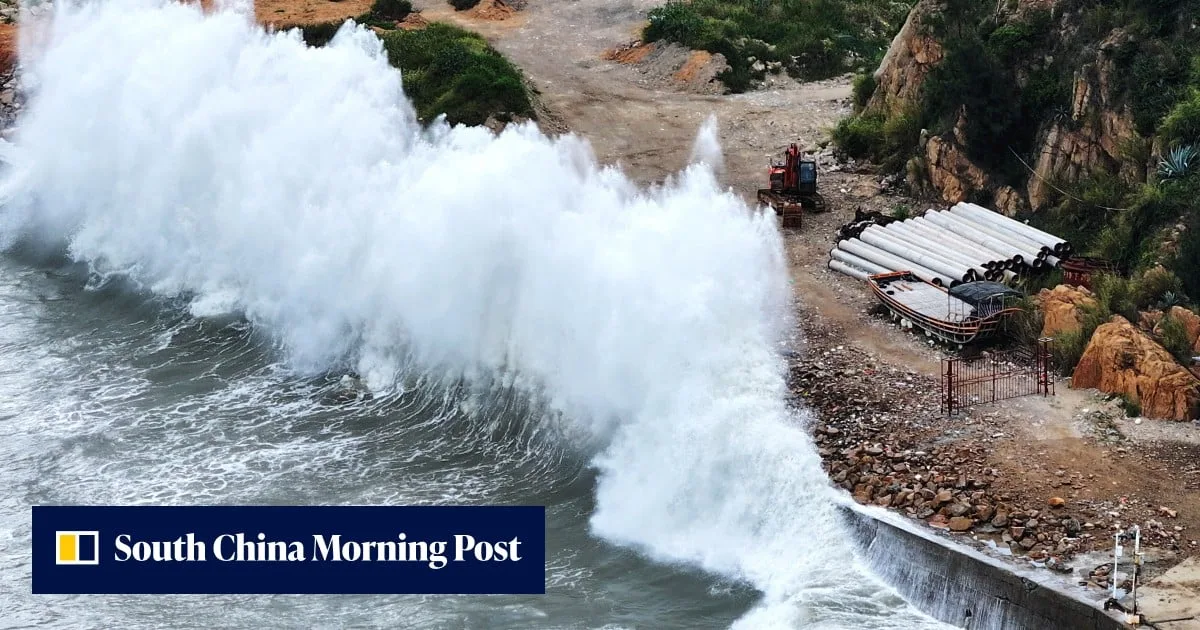
Typhoon Dolphin struck near Yuhuan in eastern Zhejiang province on August 9 with maximum sustained winds of about 150-151 km/h, similar to a Category 1 hurricane on the Saffir-Simpson scale [1, 2, 3, 4, 5]. Authorities evacuated over 1 million people across eastern China, including more than 900,000 in Wenzhou, roughly 98,900 in Fujian, and between 30,300 and 215,600 in Shanghai, where figures vary by source [1, 2, 3, 4, 6, 7]. The broad evacuations extended to cities such as Taizhou and covered parts of Zhejiang and Fujian provinces [1, 6].
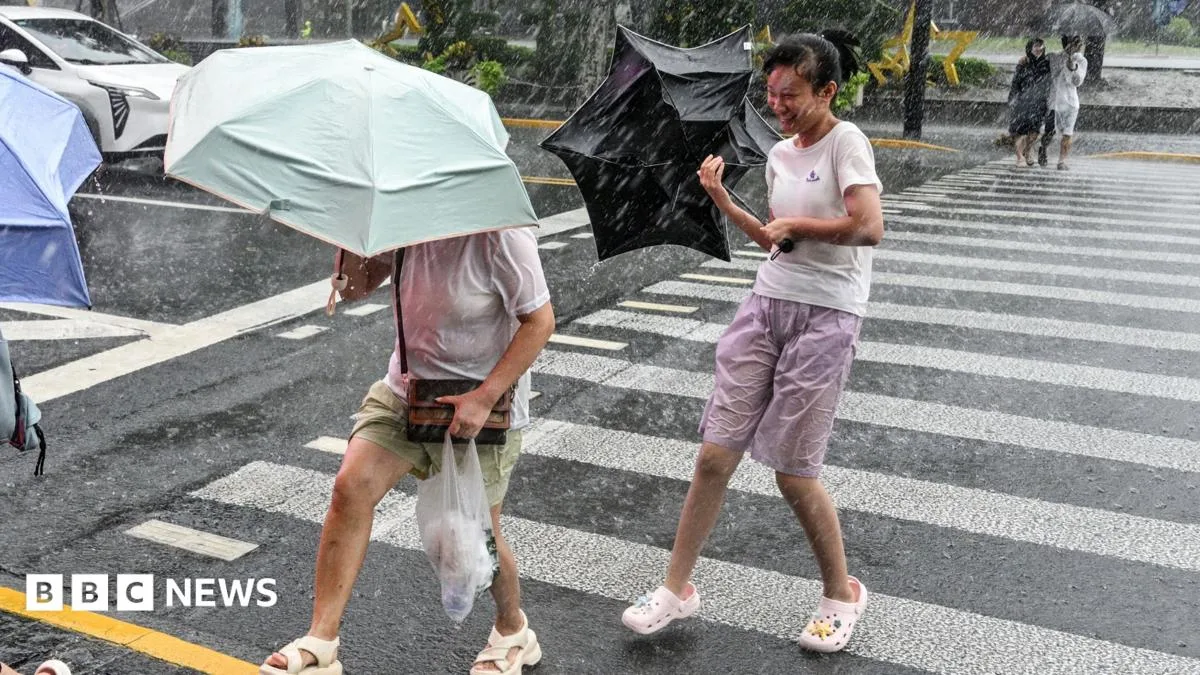
The typhoon brought intense rainfall, with forecasts predicting between 250mm and 500mm in parts of Zhejiang over several days [1, 2, 3, 4, 6, 8]. Heavy rains led to record-breaking single-day precipitation in Shanghai, Henan, and Hubei provinces, including 209.5 mm in Wugang, Henan, and 169.1 mm in Xiangyang, Hubei, on August 11 [6, 9]. Wang Xiaoling, deputy director of Hubei’s meteorological observatory, said the typhoon’s peripheral airflow intensified rainfall when forced to rise over mountainous regions, producing multiple times heavier precipitation [8].
Transport faced major disruption. Shanghai cancelled between about 943 and 1,500 flights from August 9 to 10, representing 40-60% of flights during that period, according to differing reports [1, 10, 2, 3, 4, 6, 11, 5, 12]. Regional train services and subways were suspended in several cities [6, 11, 5, 12]. Wenzhou and other areas opened emergency shelters, and Zhejiang waived public parking fees to aid residents seeking refuge during floods [1, 6].
After landfall, the storm weakened quickly but moved inland, carrying heavy rain and flooding risks through August 11 and 12 into central and northern provinces including Hubei, Henan, and Beijing [6, 11, 8, 9, 7]. Thousands of tourists and vulnerable residents were relocated in Beijing and Henan due to continued flooding dangers [7]. Wang Haiping, chief forecaster at the National Meteorological Centre, said Dolphin was forecast to track westward and gradually lose strength over central and southwestern China after landfall [2].
No official casualties have been reported, but a 9-year-old boy from Wenling, Zhejiang, went missing after being swept into the sea during the storm [1]. The typhoon was notable for its unusually long lifespan, traveling about 6,000 km before making landfall—roughly three times the distance of a typical typhoon [1, 5, 8].
Typhoon Dolphin follows earlier 2026 storms such as Typhoon Noul and Maysak that caused fatalities and damage in China [11, 8, 7]. Authorities continue managing rescue and recovery efforts as flooded areas begin to stabilize today.