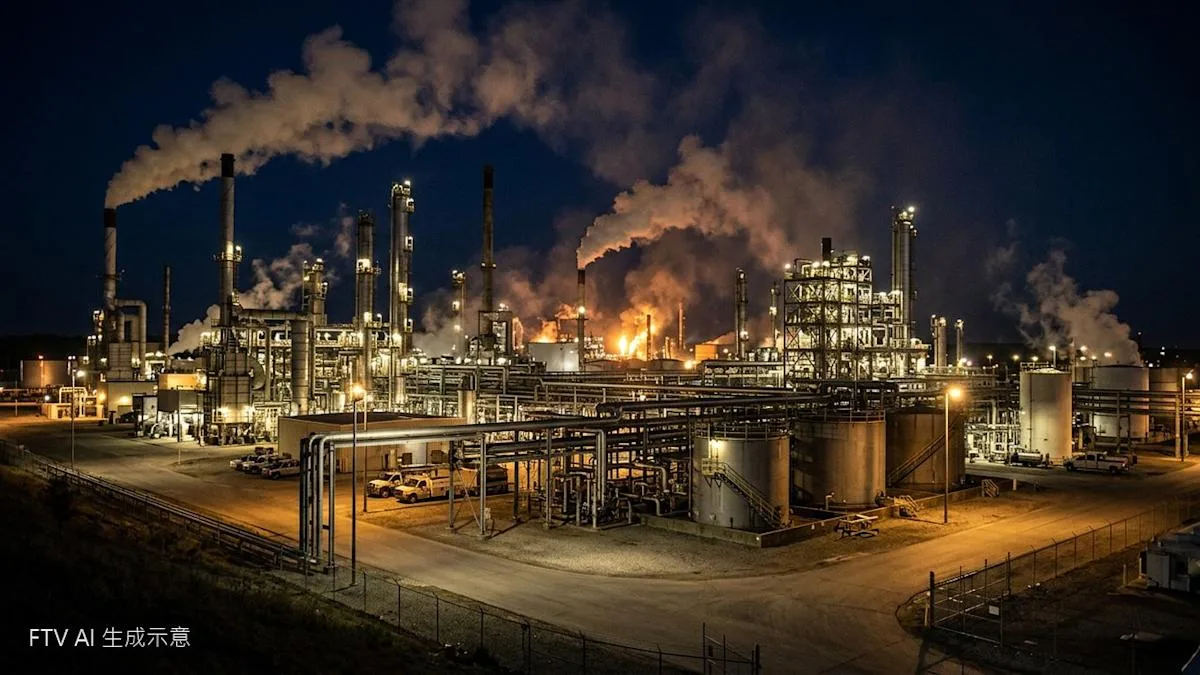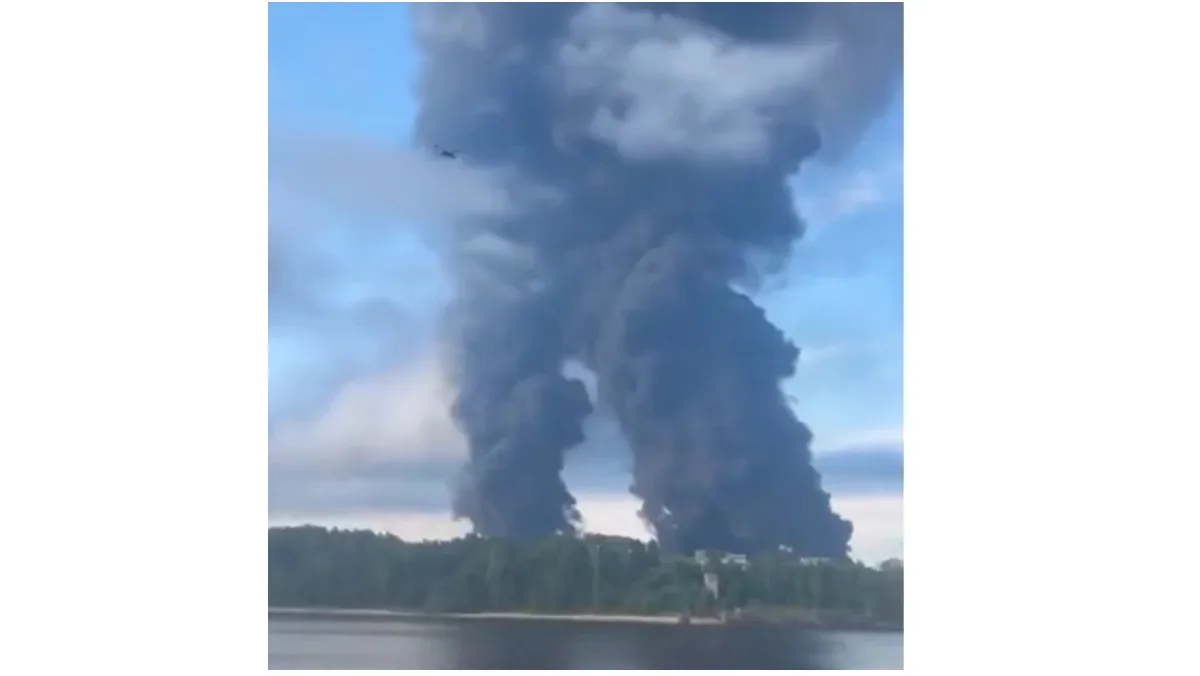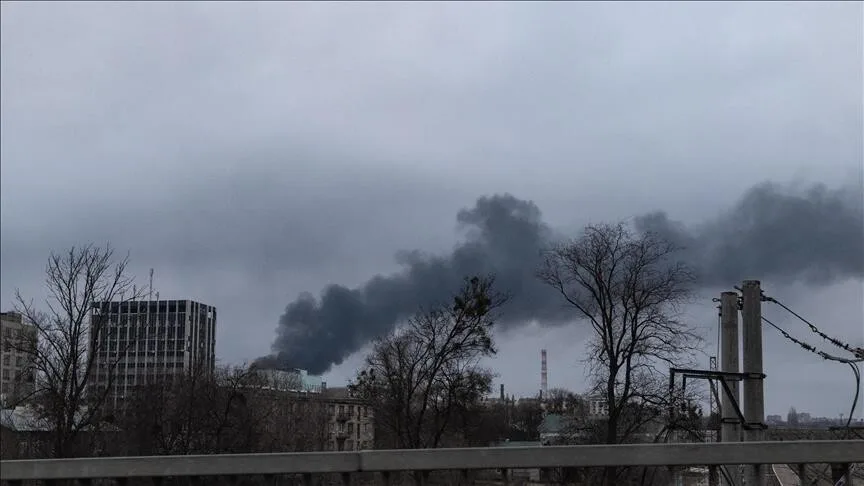
Ukrainian forces launched a series of overnight drone strikes on June 13 and 14 targeting an oil storage facility in Rybinsk, Yaroslavl region, and the Azot chemical plant in Tula region, Russia [1, 2, 3, 4]. The attacks caused large fires at the oil depot, which contains over 60 fuel tanks, including 5,000-cubic-meter tanks critical for fuel logistics to Moscow and northeastern Europe [4].
The Rybinsk oil facility is operated by the Russian Federal State Reserve and serves as a strategic fuel storage base connected to railway networks, making it a vital logistical hub [1, 4]. Ukrainian drones flew up to 700 kilometers deep into Russian territory to strike multiple tanks, triggering significant explosions and fires that required emergency response and temporary traffic restrictions towards Moscow [1, 4].
The Azot chemical plant, targeted simultaneously, is a key site for Russia’s military explosives and ammunition production. Ukrainian President Volodymyr Zelenskyy described the strike as aiming to weaken Russia’s military-industrial capacity at its source [1, 2]. Zelenskyy said, “Ukraine is carrying out its plan of long-range sanctions against Russia and the assigned tasks regarding mid-range strikes in response to Russia’s refusal to end this war.” He also noted that Ukraine’s unmanned drones “penetrated deep into Russian territory striking strategic fuel reserves like the Rybinsk facility, setting multiple tanks ablaze.” [1, 4]
Alongside attacks on Russian territory, Ukrainian forces also targeted military logistics and supply points in Russian-occupied areas within Ukraine [1, 2, 3, 4]. Zelenskyy summarized, “Ukraine strikes continue to target Russian rear base infrastructure, affecting energy facilities, military-industrial plants, and logistics in occupied territory.” [3]
In the week leading up to these strikes, Ukrainian sources claim Russia launched 1,920 attack drones, 1,790 precision-guided bombs, and 17 missiles against Ukraine [1]. Since early 2026, Ukraine has intensified attacks on Russia’s energy infrastructure, reducing nearly 40% of Russia’s main oil refining capacity due to strikes on about 15 refineries [1].
In the morning of June 14, additional Ukrainian drones continued to attack the burning oil depot at Rybinsk, causing further explosions and fires [4]. Emergency services remained active at the scene managing the damage and fires.
The strikes mark a continuation of Ukraine’s strategy to pressure Moscow through sustained attacks on strategic energy sites and military production facilities deep inside Russia, beyond the immediate frontline.