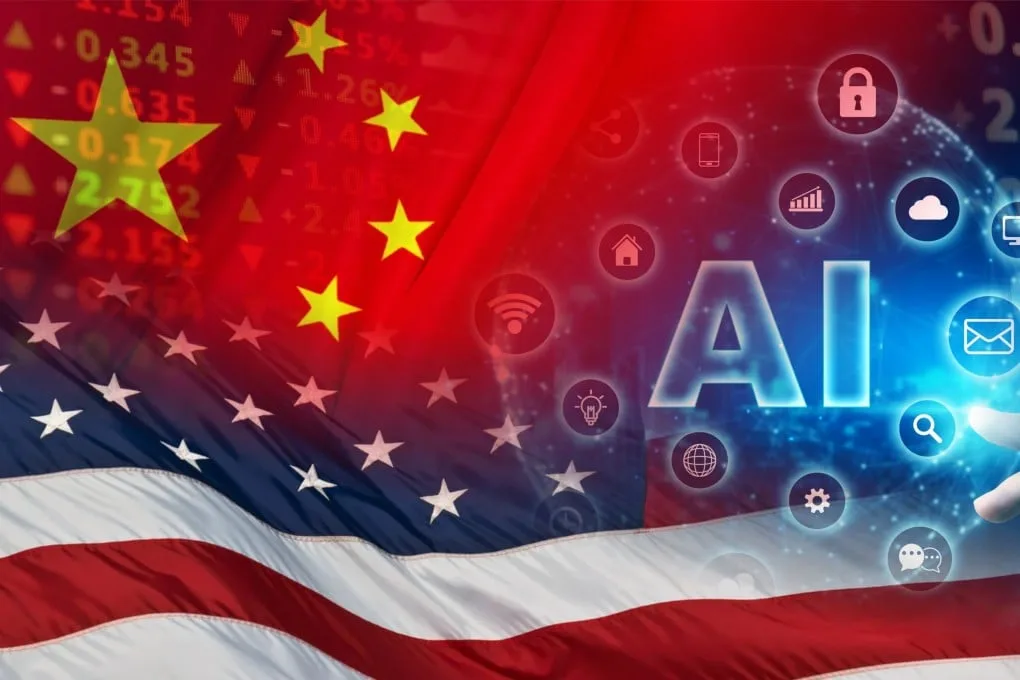
US lawmakers held a congressional hearing on June 11 titled "AI and the American Dream: Promoting Innovation, Affordability, and American Dominance," focusing on maintaining US leadership in artificial intelligence amid growing competition from China [1, 2]. Tim Scott, chairman of the Senate Committee on Banking, Housing, and Urban Affairs, said, "Cyber security and national security must be taken seriously. The United States cannot afford to let China or any other adversary gain a technological edge in artificial intelligence" [3].
Republican Senator Jim Banks emphasized the stakes in AI dominance, stating, "沒有任何競賽比在AI領域擊敗中國更攸關美國的未來,居於AI領先地位的國家,將能主導全球經濟規則,並在軍力上占有優勢" (No competition is more important for America's future than defeating China in the AI field; the leading AI nation will dominate global economic rules and military power) [1]. He warned that "最先進AI晶片是美國國力的核心資產,絕不能落入中共手中" (the most advanced AI chips are core assets of US national power and must never fall into the hands of the Chinese Communist Party) [2].
The US initially gained an AI lead through OpenAI's ChatGPT, but last year Chinese companies like DeepSeek launched new AI models as part of China’s rapid advances in the field [1, 2]. China aims to become the global leader in AI by 2030, narrowing the technology gap with the US [1, 2]. David Feith, senior researcher at the Hudson Institute, testified that the Trump administration’s AI policy recognized the necessity of winning the AI race against China, saying the policy "正確體認到美方必須贏得與中國的AI競賽" (correctly acknowledged the US must win the AI race) [1].
Democratic Senator Elizabeth Warren criticized the Trump administration for relaxing controls that allowed advanced US-made AI chips to reach China indirectly. She said, "這類晶片被大量賣至其他地方,最後莫名其妙流入中國,川普政府卻對此事視而不見" (these chips were sold in large quantities elsewhere and mysteriously ended up in China, but the Trump government turned a blind eye) [2].
The hearing illustrated bipartisan concern over China's growing AI capabilities and the need for the US to safeguard its technological edge and national security.
Lawmakers agreed on the urgency to protect AI technologies and strengthen policies to prevent the Chinese Communist Party from acquiring advanced AI hardware. The hearing underscored the central role of AI chips as key national assets.
The hearing is part of ongoing congressional efforts to shape AI policy as the US moves to preserve its global leadership in the technology sector amid intensifying competition with China.