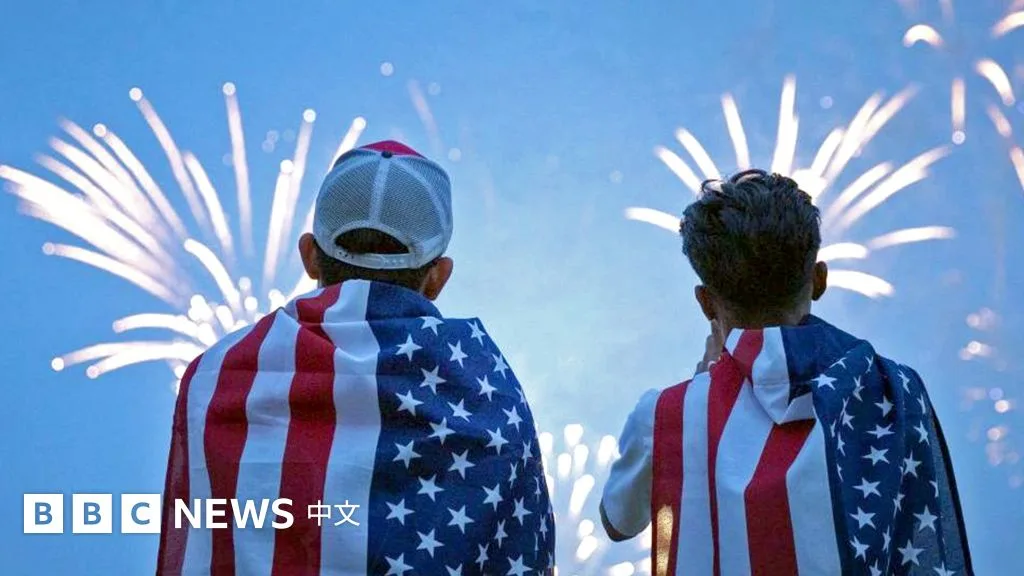
The United States marked its 250th anniversary of independence on July 4, 2026, commemorating the adoption of the Declaration of Independence on July 4, 1776 [1, 2]. Nationwide celebrations took place, including large events on the National Mall in Washington D.C., state fairs, and an international naval fleet review in New York [1, 2, 3, 4].
Two distinct official groups organized the commemorations. The bipartisan congressional America250 committee, established in 2016, focused on education, community engagement, and highlighting the nation’s diverse history through student competitions, volunteer initiatives, block parties, and cultural events [5, 6, 7]. Meanwhile, the White House launched Task Force 250 in 2025 after former President Trump re-entered office. This group emphasized large-scale national events and public spectacles under the "Freedom 250" brand, with Trump as a central figure [5, 6, 8].
Task Force 250 hosted a July 4 salute with fireworks and a large state fair in Washington D.C., spotlighting Trump’s role. Controversies arose over commemorative coins, passports, and bills featuring Trump’s likeness, and a UFC fight staged on the White House lawn on Trump’s 80th birthday in June 2025 as part of the festivities [8, 3, 5]. Trump declared, "I have the world's number one draw, more than Elvis ever had, and I don't need a guitar" [8].
Historians, politicians, and artists criticized the heavy personalization of the celebrations, arguing that Trump was attempting to overshadow the historical significance of the anniversary. Former GOP official John Pitney said, "The anniversary is to celebrate the Declaration of Independence, not any president. Trump is trying to take over the celebration and rewrite history" [8]. Patricia Windham noted the importance of understanding different perspectives beyond official US narratives [2].
Despite the heat, large crowds gathered in Washington D.C. and other cities, prompting National Guard deployment for crowd control [3]. Polls conducted in 2026 among 5,469 Americans showed only 51% felt very proud to be American, and 50% no longer believed in the American Dream. Surveys also found about half of respondents correctly identified the historical meaning of Independence Day, while many expressed concerns about US democracy and personal freedoms [9, 10, 11].
Across the Atlantic, British commemorations included historical tours and cultural events focused on transatlantic history and shared figures, with visitor reflections ranging from respectful to humorous, as Lucy Littlewood reported: "Visitors enjoyed thinking about what they would write if they made their own declaration. Peace and fairness were the most common themes, but we also got some humorous answers like 'let kids eat free ice cream'" [2, 12]. Mark Grant remarked that the anniversary "somewhat reflects how people at the center of the British Empire imagined the distant New World" [2].
The America250 commission was originally allocated $100 million but received only $25 million, while Task Force 250 raised $79 million for its activities [5]. The anniversary continued with local events following July 4, maintaining diverse commemorations nationwide [7].