Alibaba's chip subsidiary T-Head unveiled the Zhenwu M890 AI accelerator chip on May 20, 2026, at an event in Hangzhou, China [1, 2, 3, 4]. The Zhenwu M890 features 144GB of GPU memory and supports AI training and inferencing tasks, including agentic applications [1, 2, 4]. It delivers three times the performance of the earlier Zhenwu 810E chip [3, 4]. Alibaba plans to release annual upgrades to the Zhenwu series, matching Nvidia's cadence [1, 2].
Since its launch, the Zhenwu line has shipped 560,000 units to over 400 customers across more than 20 industries, including China Unicom, automotive makers, and financial services companies [2, 4]. The M890’s interchip bandwidth reaches 800 GB/s, improving data throughput [4]. Industry expert Zhang Guobin described the launch timing as "extremely precise," noting the uncertainty around Nvidia's H200 chip availability in China and Nvidia's business decline there [3]. He added the M890 "provides a reliable option... insulated from fluctuations in export controls," giving China a "Plan B" beyond Nvidia [3].
Alibaba also previewed the Qwen3.7-Max large language model, optimized for tasks such as programming, agentic coding, complex reasoning, and long-horizon operations [2, 5, 4]. The model can autonomously run AI agents for up to 35 hours without dropping performance, according to Alibaba [5]. On the LM Arena benchmarking platform, Qwen3.7-Max ranked 13th globally in text capabilities, while the related Qwen3.7-Plus version ranked 16th in vision tasks [6]. Alibaba CEO Wu Yongming has pledged to build full-stack AI capabilities across chip design, servers, AI models, and cloud services [2].
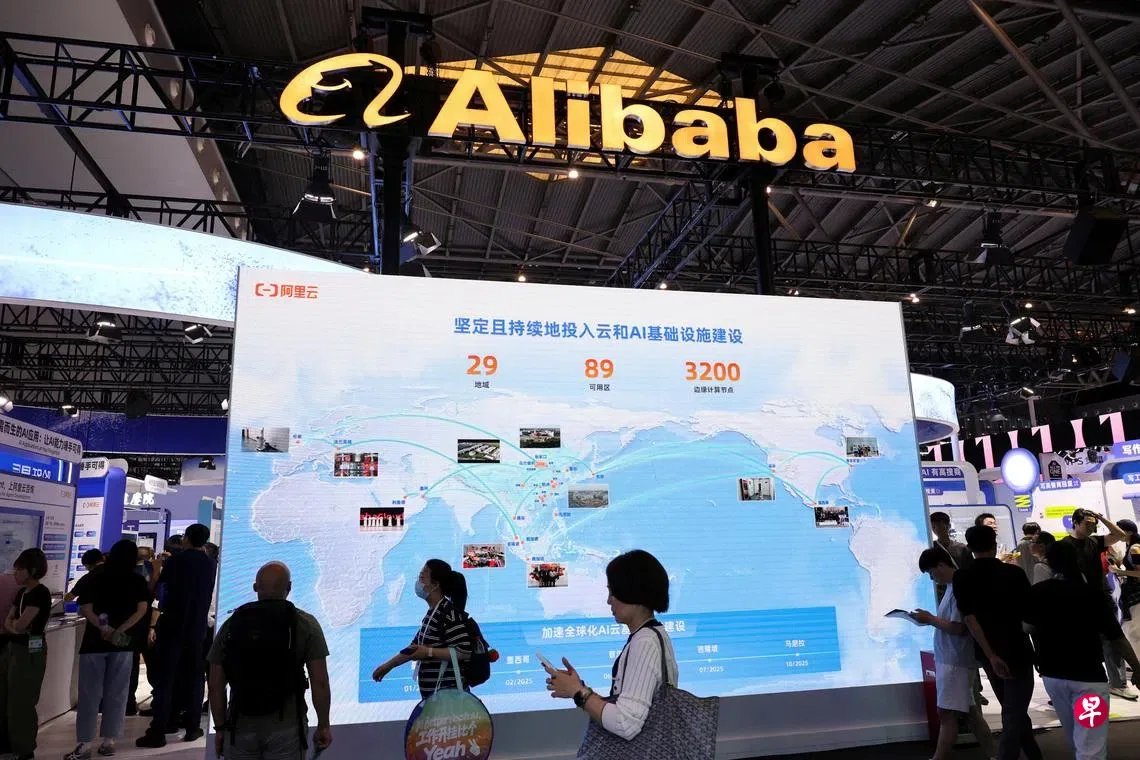
Earlier in April, Alibaba and China Telecom announced plans to launch data centers powered by Alibaba's own AI chips to strengthen domestic AI infrastructure [4]. Alibaba Cloud senior vice president Liu Weiguang said, "What we’re building is China’s AI factory" [5]. The company aims to cover all five layers of the AI stack: chips, cloud, AI models, platforms, and applications [5].
The next steps include rollout of data centers with China Telecom and annual updates to the Zhenwu chip line, continuing Alibaba’s push into AI hardware and software integration [4, 1].