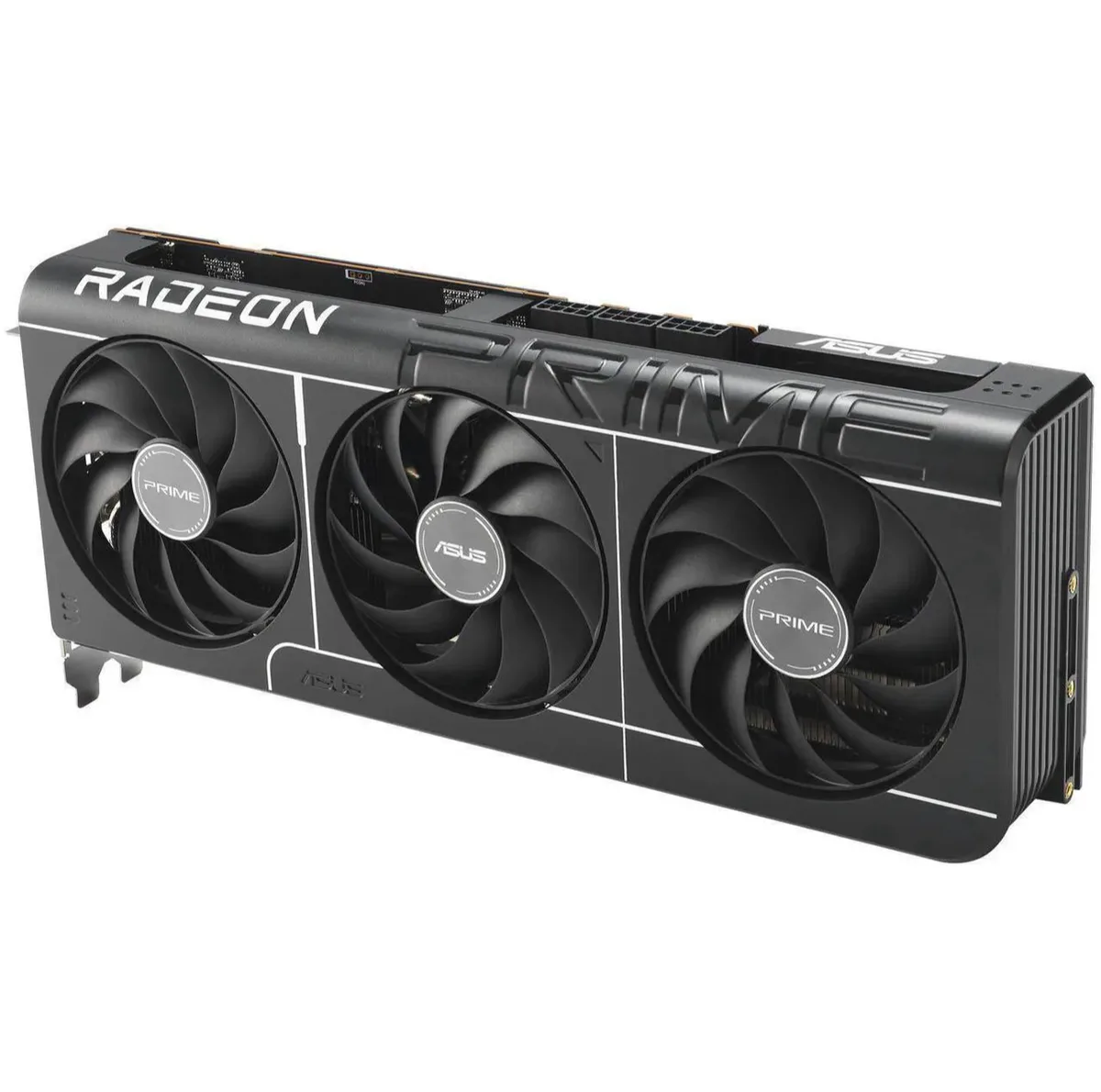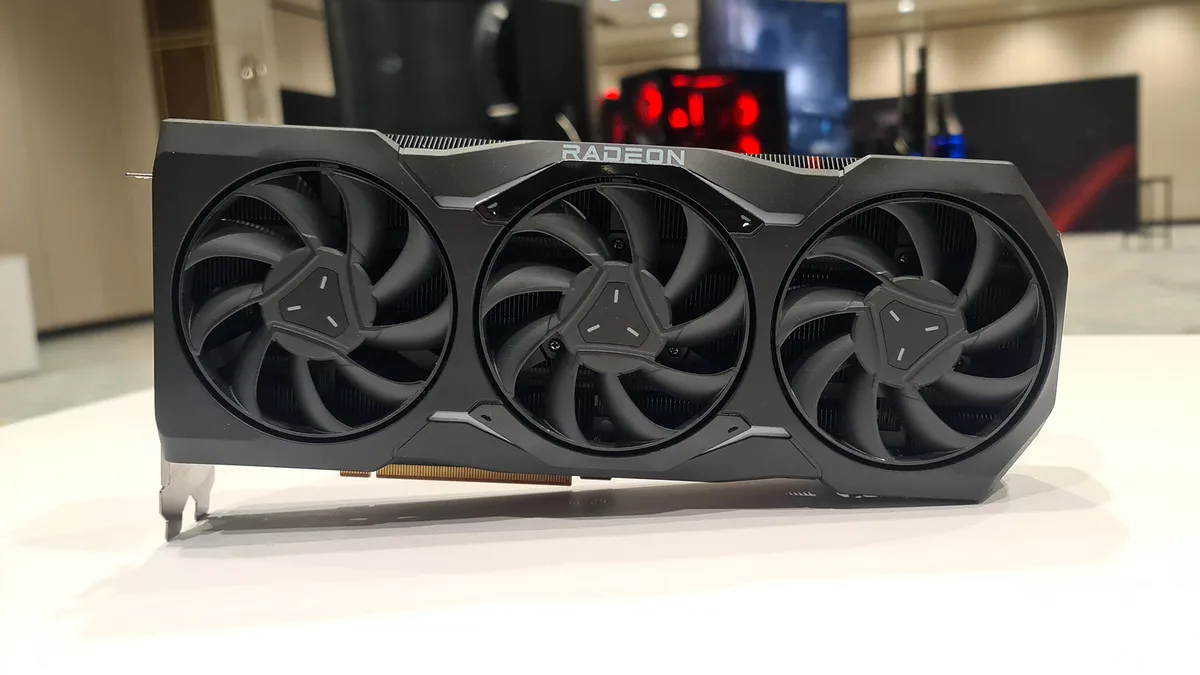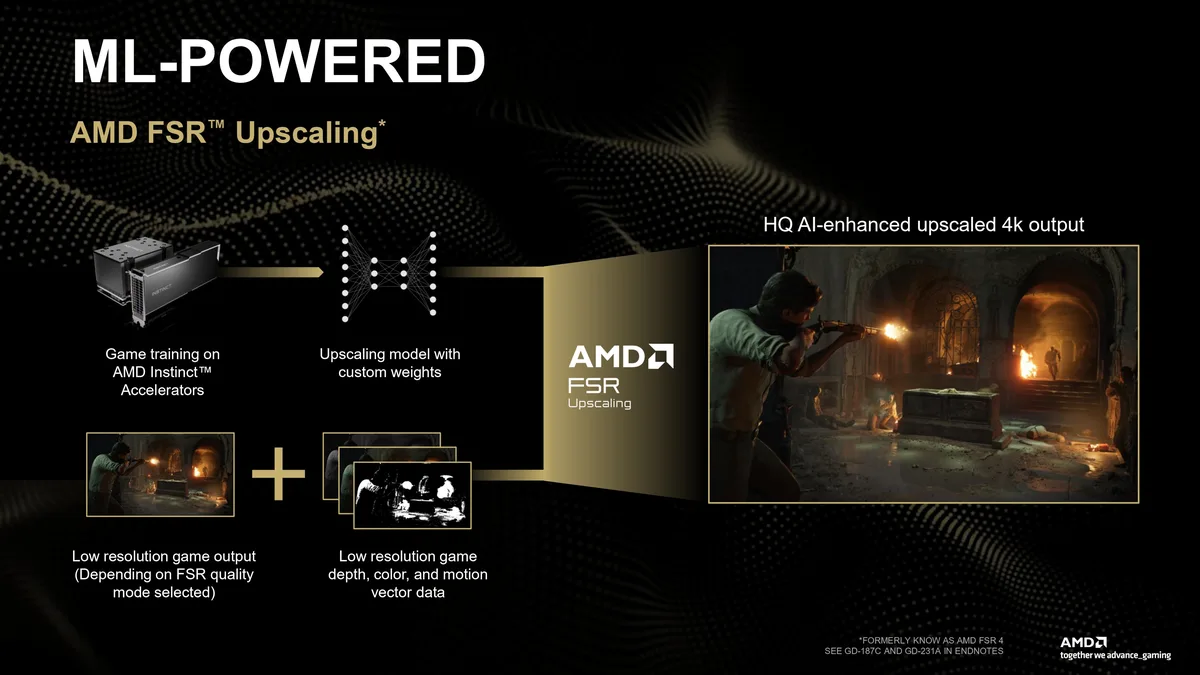
AMD will launch support for FSR 4.1 upscaling technology on its Radeon RX 7000 series (RDNA 3) graphics cards starting July 2026 [1, 2, 3]. The feature will extend to Radeon RX 6000 series (RDNA 2) cards, including the Steam Deck handheld, in early 2027 [1, 2, 3].
FSR 4.1 uses machine learning upscaling that relies on AI accelerators. RDNA 4 GPUs support FP8 data format, while RDNA 3 and RDNA 2 only support the INT8 format [1, 2, 3]. AMD has released FSR 4 INT8 source code on Github to help modders enable FSR 4 on older GPUs before official support arrives [1].
Jack Huynh from AMD acknowledged the technical challenges in bringing FSR 4.1 to older hardware but confirmed ongoing optimization efforts and future support plans, saying, "I’m grateful to our fans. Your enthusiasm and ideas inspire us to keep pushing gaming forward" [1, 2, 3].
FSR 4.1 delivers notably improved image quality compared to FSR 3.1, especially at common gaming resolutions like 1080p and 1440p [3]. The RX 6000 series delay means FSR 4.1 will not be available for RDNA 2 GPUs until early 2027, missing some 2026 Xbox titles such as Gears of War: Daybreak and The Exorcist [3].
The technology is expected to extend the lifespan and enhance gaming experiences on RX 7000 and RX 6000 GPUs amid rising PC hardware costs [2]. Xbox Series X, with 48.6 TOPS INT8 performance, stands to benefit significantly from FSR 4.1, potentially gaining image quality advantages over the base PS5, which offers 20.6 TOPS and focuses on proprietary AI super-resolution instead of broadly adopting FSR 4.1 [3].
FSR 4.1 support on RX 7000 GPUs will go live in July 2026, followed by RX 6000 GPUs and Steam Deck devices in early 2027 [1, 2, 3].