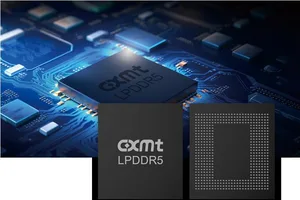
Apple started testing DRAM chips from China’s ChangXin Memory Technologies (CXMT) for devices intended for sale in China, sources confirmed in early July 2026 [1, 2, 3]. Alongside testing, Apple has been lobbying the US government since May 2026 to relax export controls and allow broader use of CXMT products [3].
CXMT is currently the world’s fourth-largest DRAM manufacturer, behind Samsung, SK Hynix, and Micron, with about 11% of global DRAM wafer production capacity in 2025. The company is projected to increase this share to 15% by 2028 as it expands production in Hefei, Shanghai, and Beijing [1, 2, 4]. Despite national security concerns leading the US Department of Defense to blacklist CXMT, Apple continues efforts to secure access to its chips [1, 3].
The DRAM manufacturer recently turned a profit, reporting a net profit of 33 billion RMB in the first quarter of 2026, reversing a decade-long cumulative loss of 370 billion RMB [2, 4, 5]. CXMT plans an IPO aiming to raise at least 29.5 billion yuan (around 4.3 billion USD) with a potential valuation near 3 trillion RMB [1, 2, 4]. Significant Chinese state-owned shareholders hold about 36% equity across more than 15 entities backing CXMT [1, 3].
Industry analysts caution that although CXMT is growing, technical challenges remain. The company has not secured advanced ASML EUV lithography equipment, limiting yields on high bandwidth memory products [2, 4]. Pre-committed production capacity and tight short-term global DRAM supply also restrict price declines [1, 2, 4]. SemiAnalysis memory analyst Ray Wang noted that memory capacity remains extremely tight and supply will continue to be constrained for at least two years, despite CXMT’s expansion [6].
Some analysts suggest Apple’s use of CXMT chips may initially be limited to devices for the Chinese market and partly aimed at gaining leverage with other DRAM suppliers rather than large-scale adoption [7]. Apple’s testing and lobbying also appear linked to attempts to ease global memory shortages that have impacted product pricing [3]. US Representative John Moolenaar called the prospect of Apple relying on CXMT a "grave mistake" on security grounds [3].
CXMT’s plans include reaching 15% of global wafer production capacity by 2028 through new sites in China [1, 2]. Apple’s ongoing testing and government lobbying indicate potential early integration of CXMT DRAM in China-sold devices, though broader adoption depends on US export policies and technical performance.