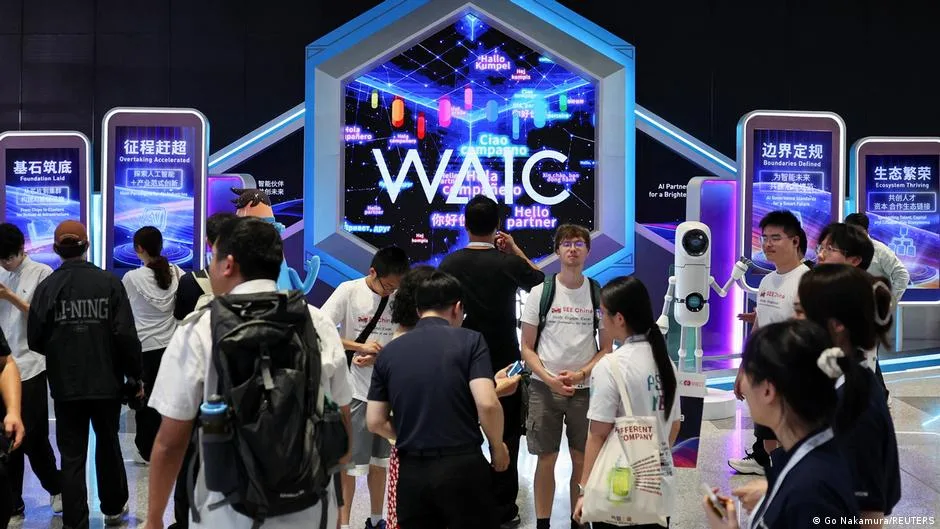
The 2026 World Artificial Intelligence Conference (WAIC) and High-Level Meeting on AI Global Governance took place in Shanghai from July 17 to 20, drawing over 400,000 visitors and 1,100 exhibiting companies, with procurement intentions exceeding 20.3 billion yuan [1, 2, 3].
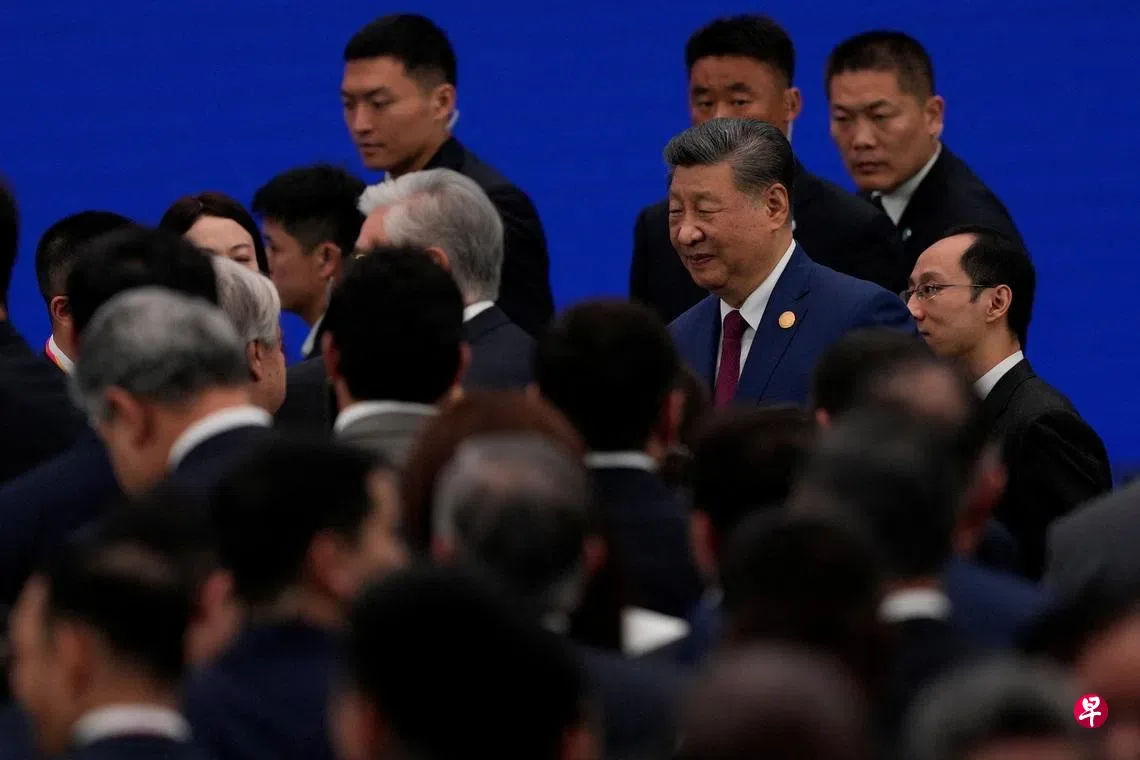
Chinese President Xi Jinping attended the opening ceremony and delivered a keynote speech calling for artificial intelligence to become "an important driver for common prosperity and security" and urged nations to jointly build a "fair and reasonable global AI governance system" [1, 4]. Xi emphasized openness and opposed technology blockades, stating "encourage open source and openness, persist in no tech blockade" [4].
On July 16, on the eve of WAIC, China officially established the World Artificial Intelligence Cooperation Organization (WAICO) headquartered in Shanghai, with 29 member countries joining at launch [1, 2, 3, 4]. WAICO is seen as a geopolitical counterweight to the US-led "Pax Silica" AI governance initiative, reflecting intensified US-China competition for global AI leadership [2, 3, 4].
China's AI industry is rapidly closing the performance gap with US models. Chinese models like GLM-5.2 and Kimi K3 have reached parity on certain benchmarks. Most Chinese AI models are open-weight with MIT licenses allowing free modification and commercial use, although firms such as ByteDance withhold model weights [2, 3, 4]. Experts note China may deploy AI faster than the US due to lower public concerns and wide-ranging "AI+" applications across industries and consumer sectors [2, 3]. However, US proprietary models from Anthropic, OpenAI, and Google still lead in safety and scalable inference efficiency [2, 3].
Since 2025, the US has imposed export controls and visa restrictions to limit China's access to advanced AI chips, compute, and talent. These controls have had limited effect due to China's use of grey market channels and cloud services [2, 3]. Yet some restrictions on semiconductor manufacturing equipment have partially curtailed China's ability to scale low-cost chip production domestically [2, 3].
China's major structural AI disadvantages lie in less mature trust frameworks and financial markets compared to developed nations, although government backing helps ease funding bottlenecks [2, 3]. Advanced AI hardware shortages caused by US export limits constrain China's ability to rapidly scale inference computing [2, 3].
At WAIC, AI was visible in public through humanoid robots directing traffic and robot baristas serving customers, creating a city-wide AI experience [2, 3]. China's AI investment and deployment costs per unit compute remain lower than the US thanks to energy advantages and algorithmic optimization, while the US maintains vastly more data centers (5,427) and private AI investment ($285.9 billion in 2025 versus China's $12.4 billion) [5]. However, US data center expansion faces growing local opposition over energy use, emissions, and grid strain, causing some projects to be banned or deferred and shifting new builds offshore [5].
Experts say the China-US AI battle extends beyond tech to competing strategic narratives. China aims to offer "good enough" locally accessible AI to erode US profitability and cultivate global South support, notably through promoting open source models [5]. Paul Triolo from Albright Stonebridge noted the US strategy to delay China’s AI advancements has failed on multiple fronts, harming American research and supply chains [2]. Rogier Creemers viewed WAIC as signaling China’s elevation of AI to a political priority and intent to compete openly with the US [2].
The WAIC ended July 20 after four days showcasing China’s accelerating AI progress and global engagement [2, 3]. The next major milestone lies in WAICO’s efforts to expand membership and influence as it seeks to position Shanghai as a global AI governance center [1, 4].