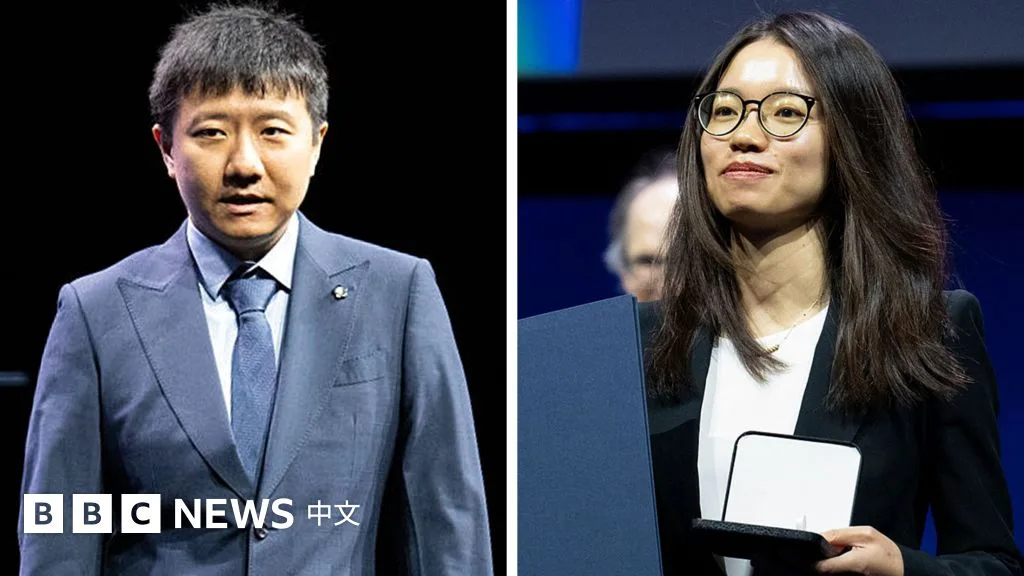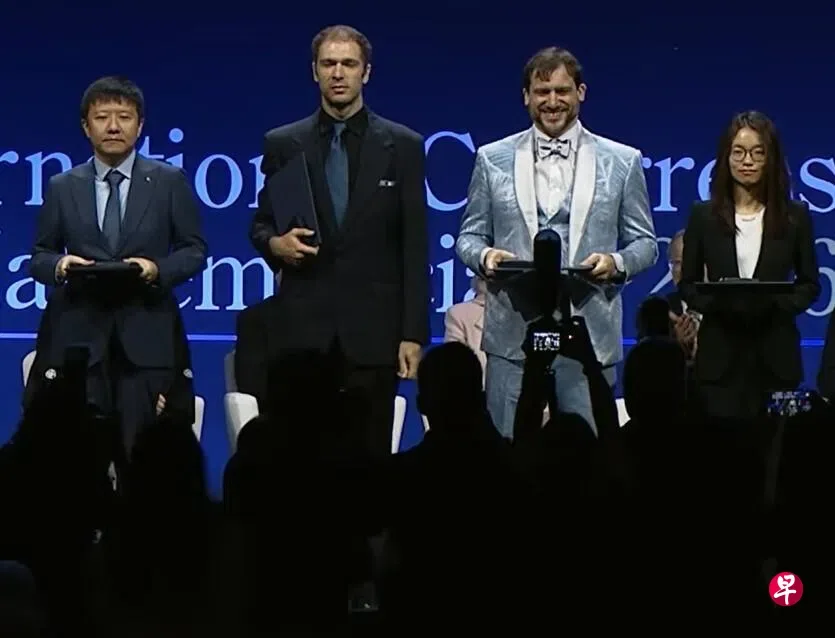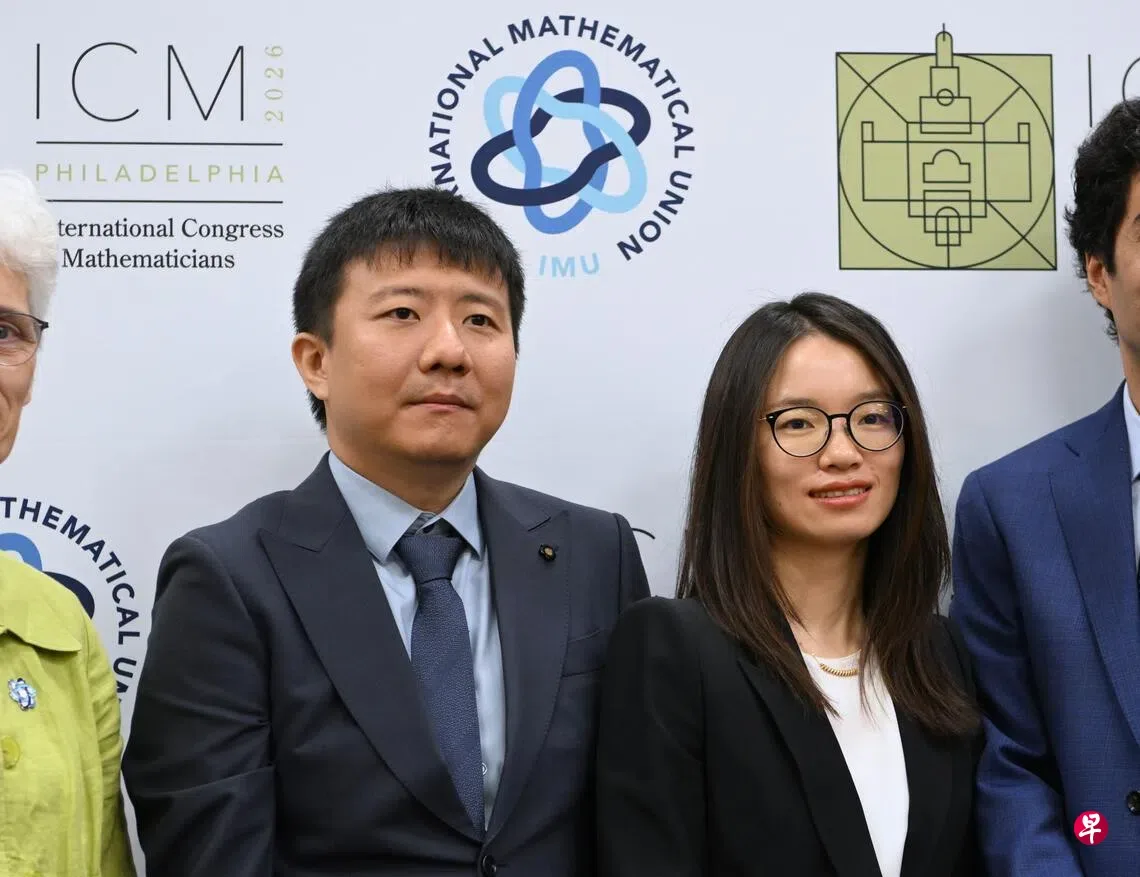
Chinese mathematicians Yu Deng and Hong Wang won the Fields Medal at the International Congress of Mathematicians held on July 23, 2026, in Philadelphia, marking the first time two Chinese nationals have received the award simultaneously [1, 2, 3, 4, 5]. The Fields Medal, awarded every four years to mathematicians under 40 with exceptional achievements, is often referred to as the "Nobel Prize of mathematics," and it was created in 1936 [1, 2, 3, 4].
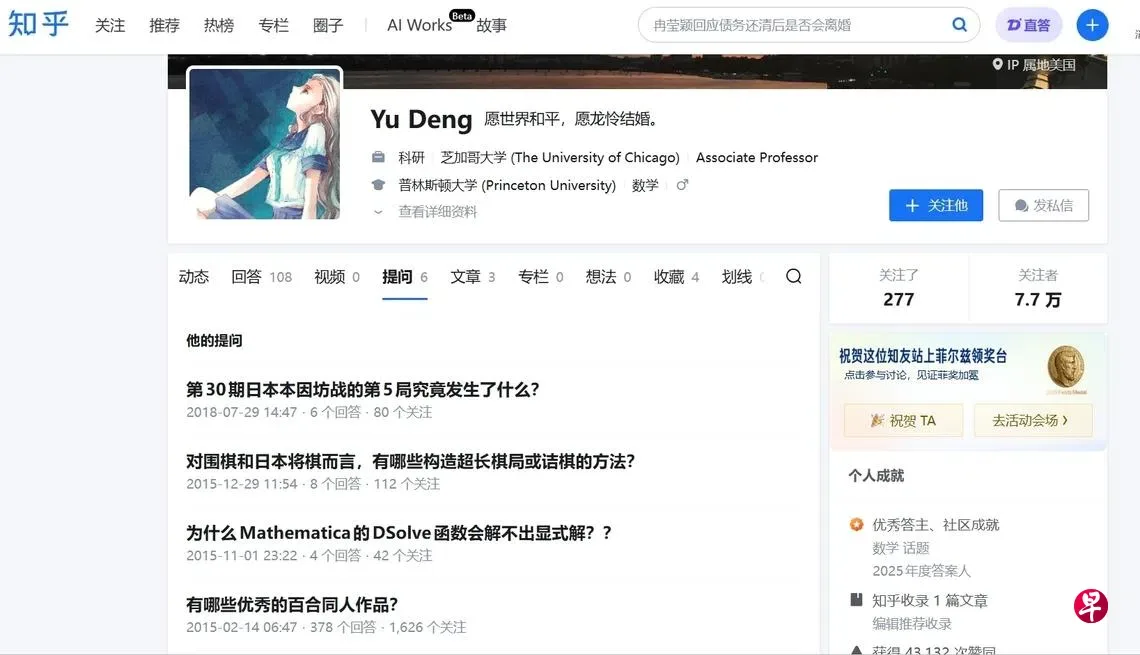
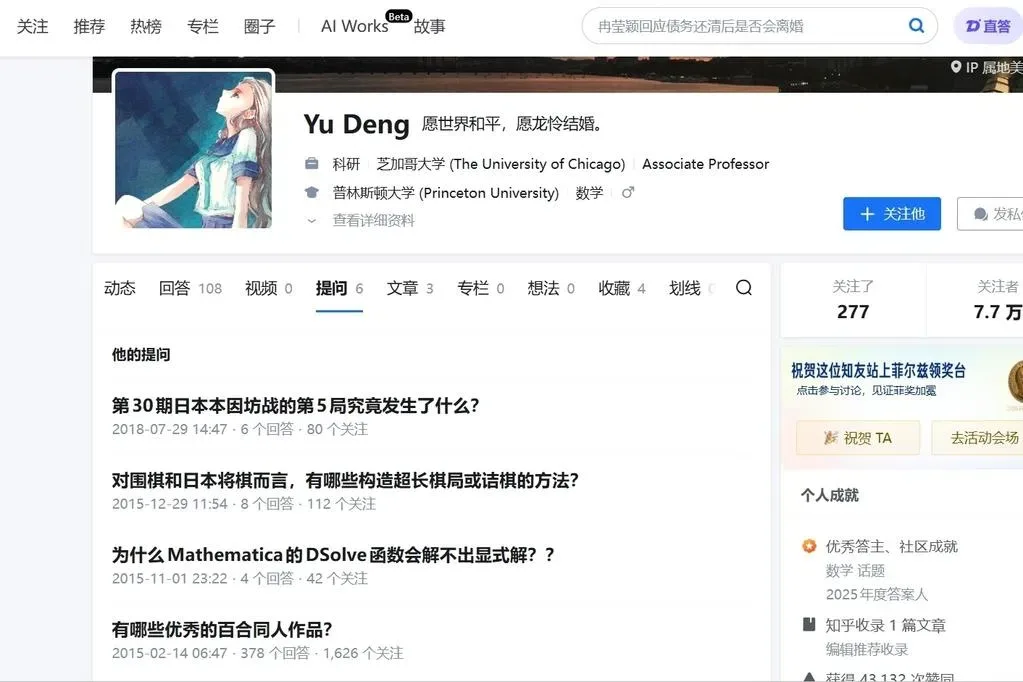
Yu Deng, 37, born in Shenzhen, is a professor at the University of Chicago. He earned an IMO gold medal at 16 and studied at Peking University, MIT, and Princeton [1, 6, 5, 7]. Deng and collaborators solved a restricted version of Hilbert’s sixth problem by rigorously deriving the Boltzmann equation from microscopic particle systems [1, 2, 5, 7]. Deng credited a breakthrough insight to a 2021 moment in a Korean fried chicken restaurant while visiting Brown University [7]. Known for his love of anime and poetry, he engages actively with China's Zhihu platform [2, 6].
Hong Wang, 35, was born in Guilin, Guangxi, and holds professorships at New York University's Courant Institute and the French Institute for Advanced Scientific Studies (IHES) [1, 8, 5, 9]. Wang graduated from Peking University, earned master's degrees in France, and completed her PhD at MIT [1, 5, 9]. She worked with Joshua Zahl to prove the three-dimensional Kakeya conjecture, a century-old problem in harmonic analysis and geometric measure theory [1, 2, 5, 9]. Her elegant style and accomplishments have attracted attention for challenging stereotypes about mathematicians [2]. NYU President Linda G. Mills called her "one of the most brilliant minds in mathematics today," saying the achievement will influence the field for decades [9].
Previously, Chinese ethnic winners Tian Yitang (1982) and Terence Tao (2006) held American and Australian citizenships respectively. Deng and Wang are the first Fields Medalists holding Chinese nationality [1, 3].
The four winners of this year’s Fields Medal each received 15,000 Canadian dollars (approximately 10,500 USD) as prize money [4].
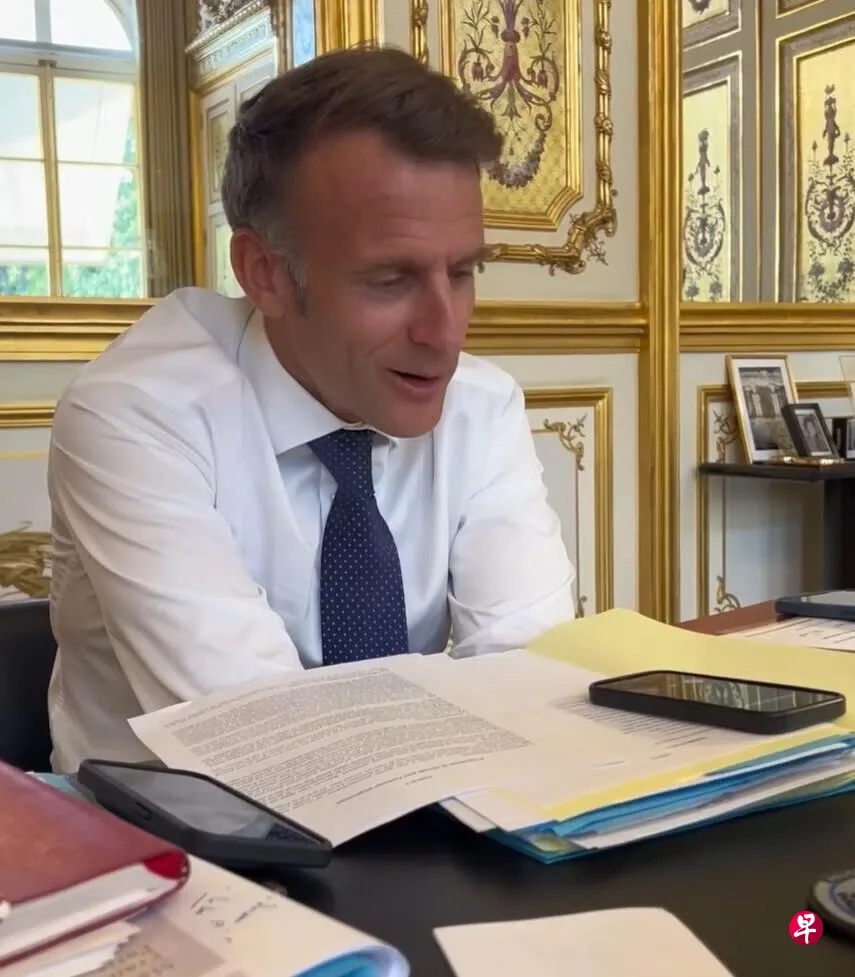
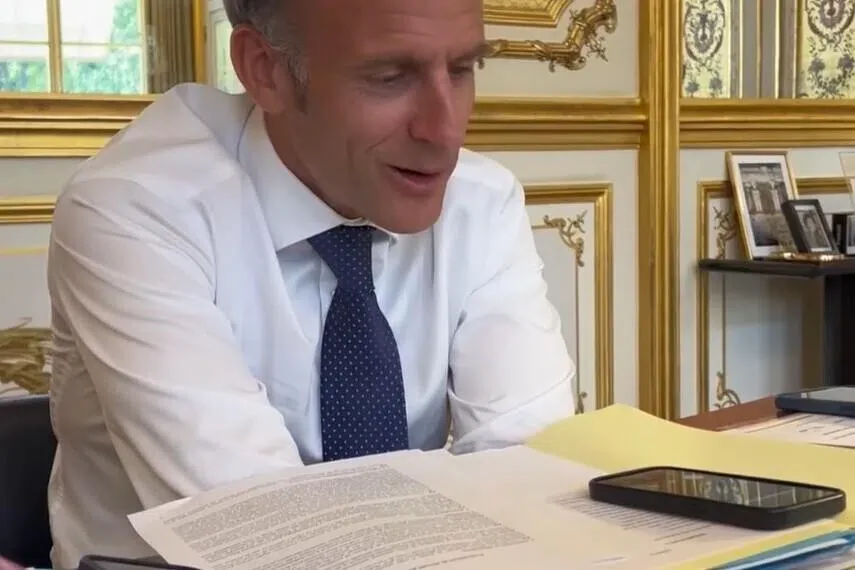
French President Emmanuel Macron congratulated Hong Wang and promoted France’s role in science, saying "Choose France for Science!" [8, 4]. The US Embassy in China also congratulated the laureates, noting that the US hosts world-class universities and research centers [3].
Ahead, the laureates are expected to receive wider recognition and present their work at upcoming mathematical conferences around the world.