Chinese military researchers have used outputs from advanced US AI models developed by OpenAI and Anthropic to train domestic AI systems aimed at strengthening China’s defense capabilities, according to a review of over 80 academic papers, patents, and more than 20 military-related case studies compiled by the Jamestown Foundation in Washington [1, 2, 3, 4, 5, 6, 7].
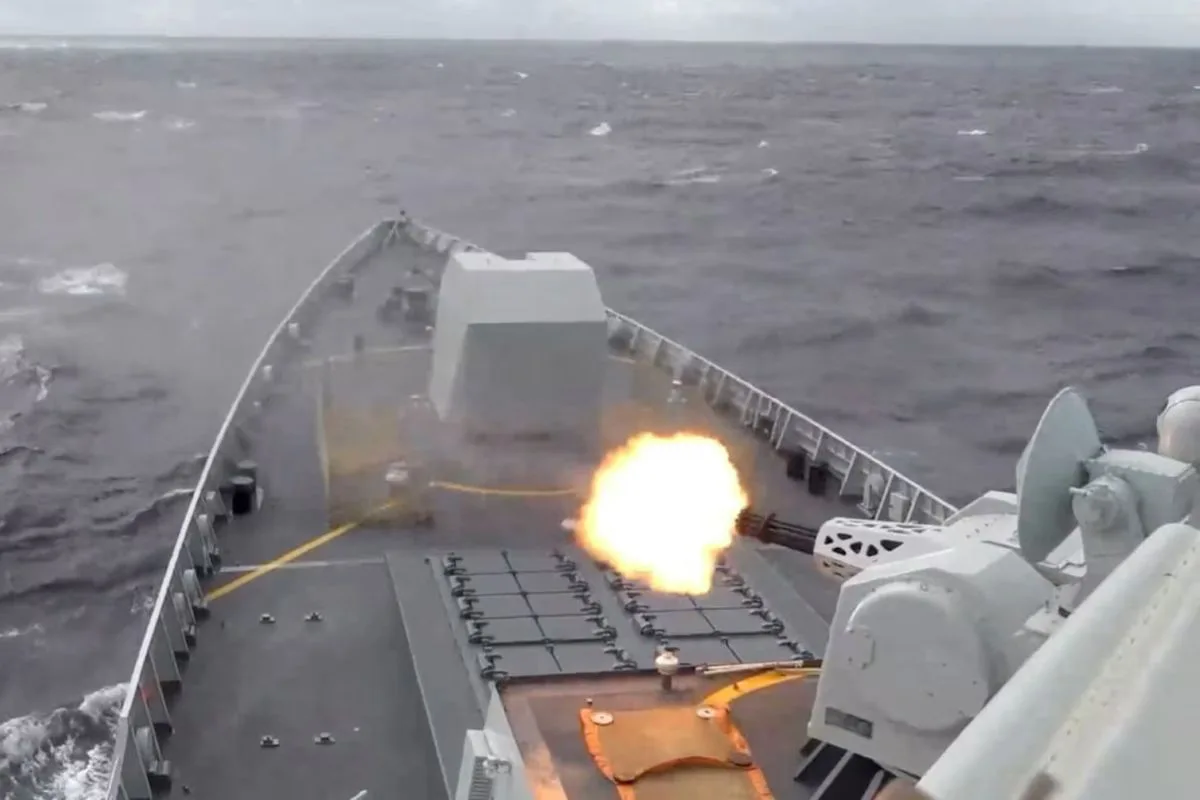
The researchers employ a technique called "model distillation," where outputs from large, sophisticated AI systems are used to train smaller, task-specific models that can run on local hardware without huge computing needs [1, 2, 3, 4, 5, 6, 7]. These distilled models support various military applications including surveillance, cyber warfare, tactical decision-making, content monitoring, and target recognition on drones and naval platforms [1, 2, 3, 4, 6, 7].
Chinese military papers detail how OpenAI’s GPT-3.5 has been used to generate software code summaries, which then train local models operating fully within internal networks. This safeguards sensitive data while tapping US AI capabilities to narrow technology gaps with American competitors [3, 8, 4, 5, 9, 6, 7]. Jamestown researcher Sunny Cheung explained, "Teaching a model the right answer is one thing but teaching it the reasoning behind the answer is far more difficult" [1], a view echoed by colleague Zhang Kunyang in Chinese: "教一個模型正確答案是一回事,教導它答案背後的推理過程則要困難得多" [2].
The Chinese AI startup Moonshot is at the center of some allegations. US officials claim its Kimi K3 model was developed by distilling Anthropic’s Fable model. Moonshot strongly denies this, asserting its breakthroughs come from proprietary innovation [2, 10, 6]. The company reportedly uses about 20,000 Nvidia Hopper H200 chips supplied via an agreement with Alibaba, representing a large share of its computing power, though Alibaba disputes the exact scale [10].
US officials also warn that some Chinese entities may have violated export controls and stolen intellectual property by extracting capabilities from US AI models without authorization, raising tensions between the countries [1, 2, 3, 4, 5, 6, 7]. China rejects these accusations, calling them AI "hegemonism" and accusing US firms of similar practices [1, 2, 3, 4, 5, 6, 7]. Anthropic states it does not offer commercial access to Claude AI in China or Beijing-controlled entities and monitors for policy violations [2, 7].
Model distillation is a standard AI technique, but the controversy concerns whether it was used to capture proprietary US AI capabilities without permission [1, 2, 3, 4, 5, 6, 7]. The Chinese defense sector sees US AI models as a key source of technical insight and a way to close the gap with US technology [1, 3, 5, 7].
Recent research from 2025 to early 2026 shows Chinese military scientists deploying distilled target recognition AI on tactical hardware to support joint operations. Earlier in 2024, researchers demonstrated drone image processing models enabling function even if communications were lost [7].
On July 31, 2026, Reuters published a major investigation revealing the scope of Chinese military use of US AI outputs for defense AI training [1, 2, 5, 9, 11, 6, 7]. Moonshot’s Kimi K3 AI model development with Nvidia chips dates to July 2026 [10].