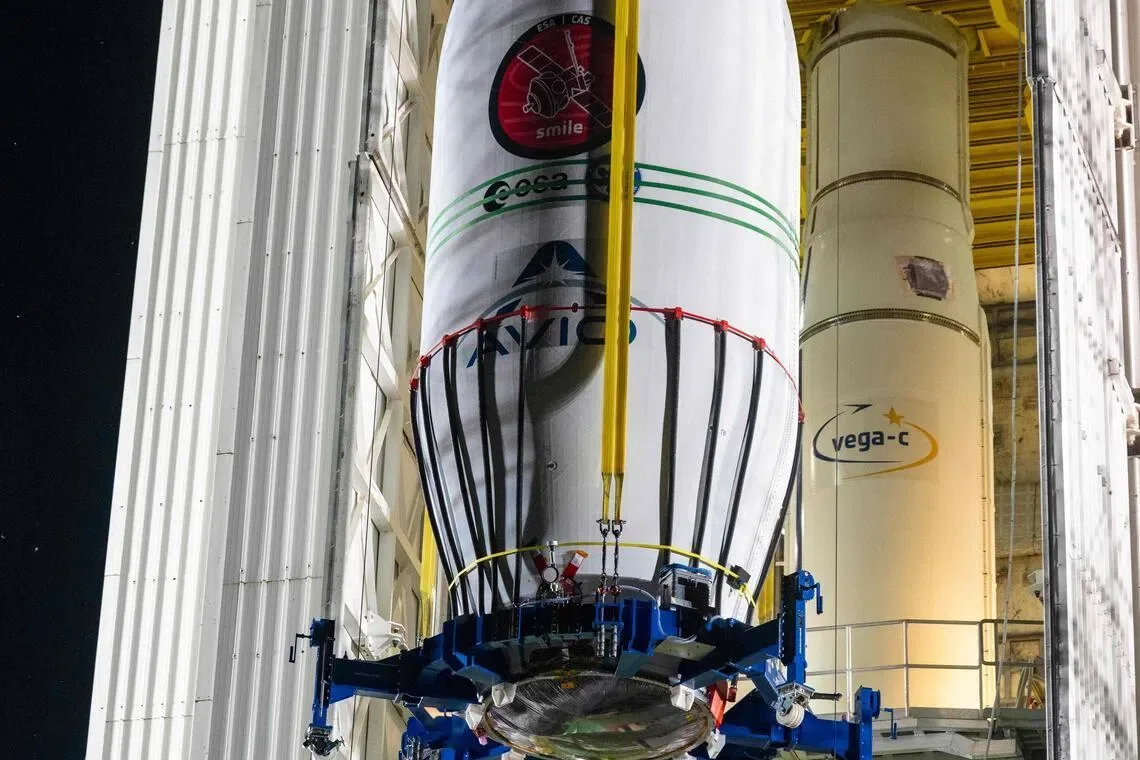
The SMILE spacecraft lifted off on May 19, 2026, from the European spaceport in Kourou, French Guiana, aboard a Vega-C rocket at 03:52 GMT [1]. Originally set to launch April 9, the mission was postponed due to a technical issue [2].
SMILE is a joint effort between the European Space Agency (ESA) and the Chinese Academy of Sciences. The spacecraft aims to investigate how solar wind, streams of charged particles from the Sun traveling at about 2 million kilometers per hour, interact with Earth's magnetic field [1, 2]. ESA scientist Philippe Escoubet said, "What we want to study with SMILE is the relationship between the Earth and the Sun" [2].
The mission will produce the first-ever X-ray observations of the Earth's magnetic field to improve understanding of space weather effects on satellites, power grids, and human activities [1, 2]. SMILE will orbit Earth in an elliptical path, separating at an altitude of 700 kilometers and reaching up to 121,000 kilometers above the planet, passing over both poles [1]. At 5,000 kilometers altitude, the spacecraft will fly over the South Pole to transmit data to the Bernardo O’Higgins research station in Antarctica [1].
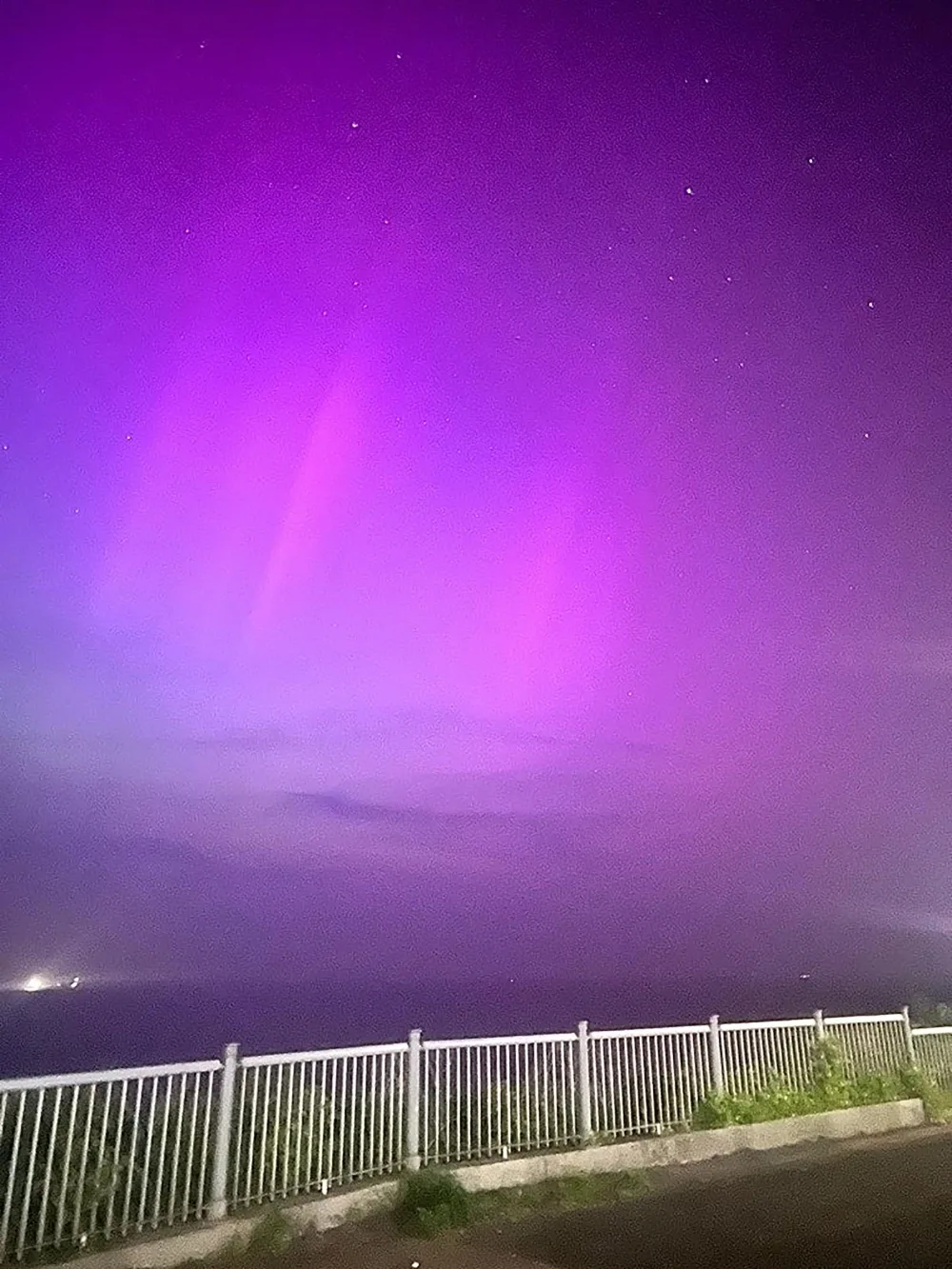
Solar wind can trigger geomagnetic storms that disrupt satellite operations, power systems, and pose risks to astronauts. Such storms also create auroras visible near the poles. The worst recorded geomagnetic storm occurred in 1859, with auroras seen as far south as Panama and electric shocks affecting telegraph operators [1, 2].
The successful launch marks the start of SMILE’s mission to deepen knowledge of space weather dynamics. Data transmission will begin once the spacecraft reaches its South Pole overflight altitude. Researchers will monitor SMILE’s operation closely to analyze solar wind interactions with Earth’s magnetic environment over the coming months.