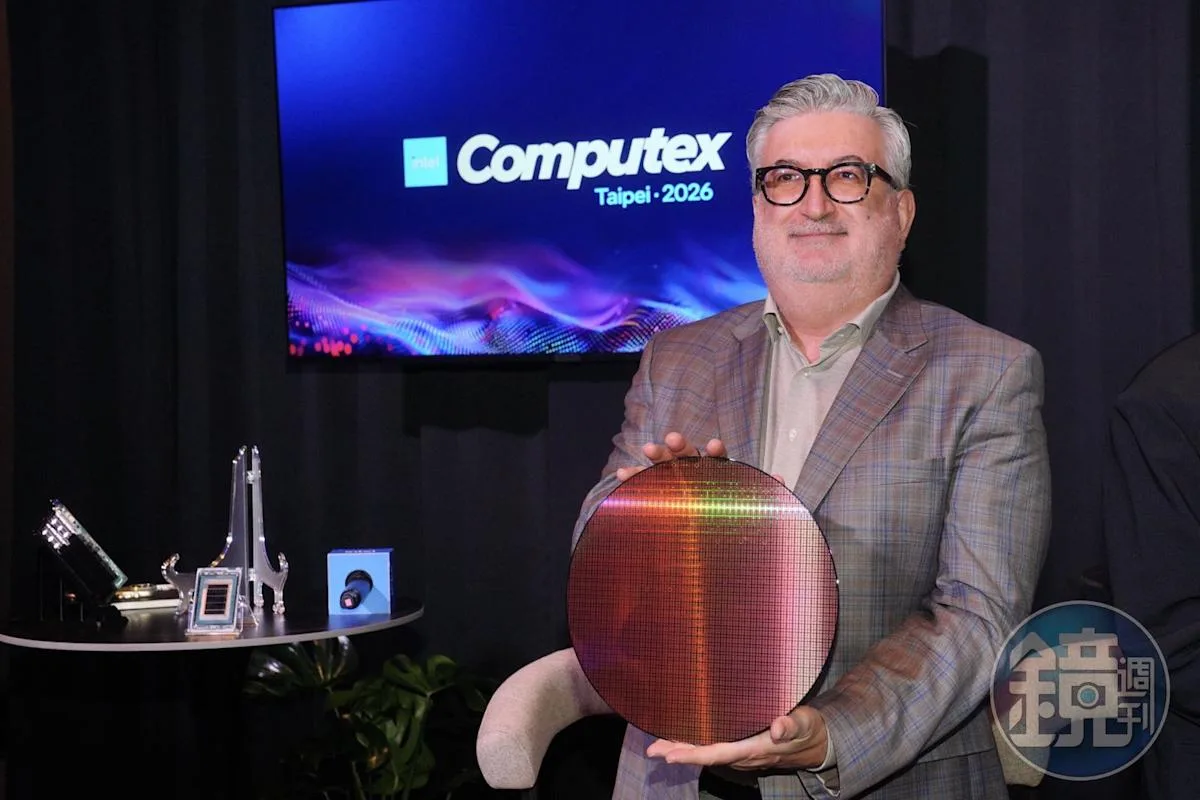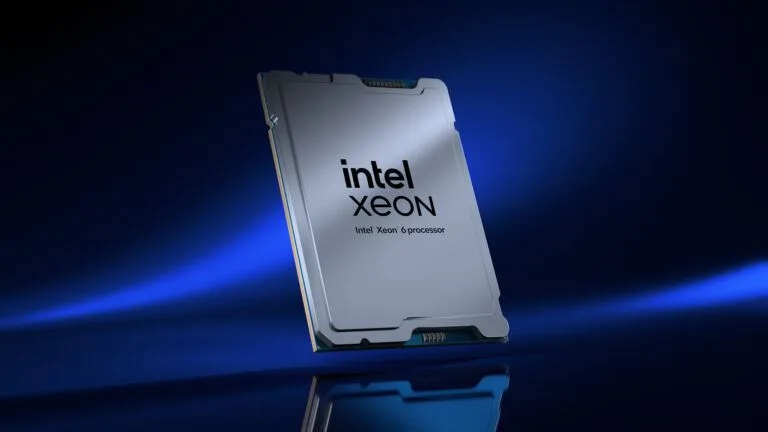
Intel launched the Xeon 6+ central processing unit (CPU) today at COMPUTEX in Taipei, aiming to regain market share in data center servers amid the AI boom [1]. The new CPU is built on Intel's 18A process and integrates four core technologies: RibbonFET, PowerVia, Foveros Direct3D, and EMIB 2.5D packaging [2]. It includes 12 compute chiplets totaling up to 288 cores, along with 576MB of L3 cache and 288MB of L2 cache [2].
The product comes from Intel’s Arizona facility in the U.S., reflecting the company’s ongoing domestic manufacturing focus [3]. Intel CEO Pat Gelsinger, who took office in March 2025, led reforms that helped Intel rebound after losing AI-related market share to Nvidia and TSMC [2]. The U.S. government supported Intel with an $8.9 billion investment for a 9.9% stake in August 2025 [2].
Intel reported a 7% year-on-year revenue increase to $13.6 billion in Q1 2026 and projects Q2 revenue of $14.8 billion, surpassing Wall Street expectations [2]. Executives stressed the CPU’s rising role in AI applications, where heavy multitasking and data processing are crucial. Kevork Kechichian, Intel’s EVP and GM of Data Center Group, said, "CPU正重新成為AI基礎架構的核心," noting the new Xeon 6+ delivers up to 2.5 times the performance of previous generations thanks to the 18A process [1].
Intel also introduced the Ethernet E835 controller and network adapter supporting up to 200GbE bandwidth to ease AI data center network bottlenecks [1]. The Xeon 6+ platform improves performance per watt by about 60%, offering strong appeal to telecom operators facing tripling global network traffic in five years. Ericsson Asia Pacific CTO Magnus Ewerbring commented, "採用Xeon 6+平台後,每瓦效能可提升約60%,對於電信營運商而言具有實際吸引力" [1].
AI workloads relying on enhanced reinforcement learning require massive CPU-based simulated environments, sharply increasing CPU demand, according to Yujing Qian, GMI Cloud VP of Engineering: "當前許多AI實驗室已大量採用強化學習(RL)進行模型訓練,而過程中需要大量由CPU建立的模擬環境(Sandbox)進行測試與驗證,因此CPU需求正快速增加" [1].
There are unconfirmed reports that Apple might shift some M-series chip production to Intel's 18A process, Google may adopt Intel's EMIB packaging, and Tesla's Terafab chips could use Intel's 14A process [2].
Intel’s launch today marks a major step in its strategy to reclaim leadership in data center CPUs amid fast-growing AI demand.