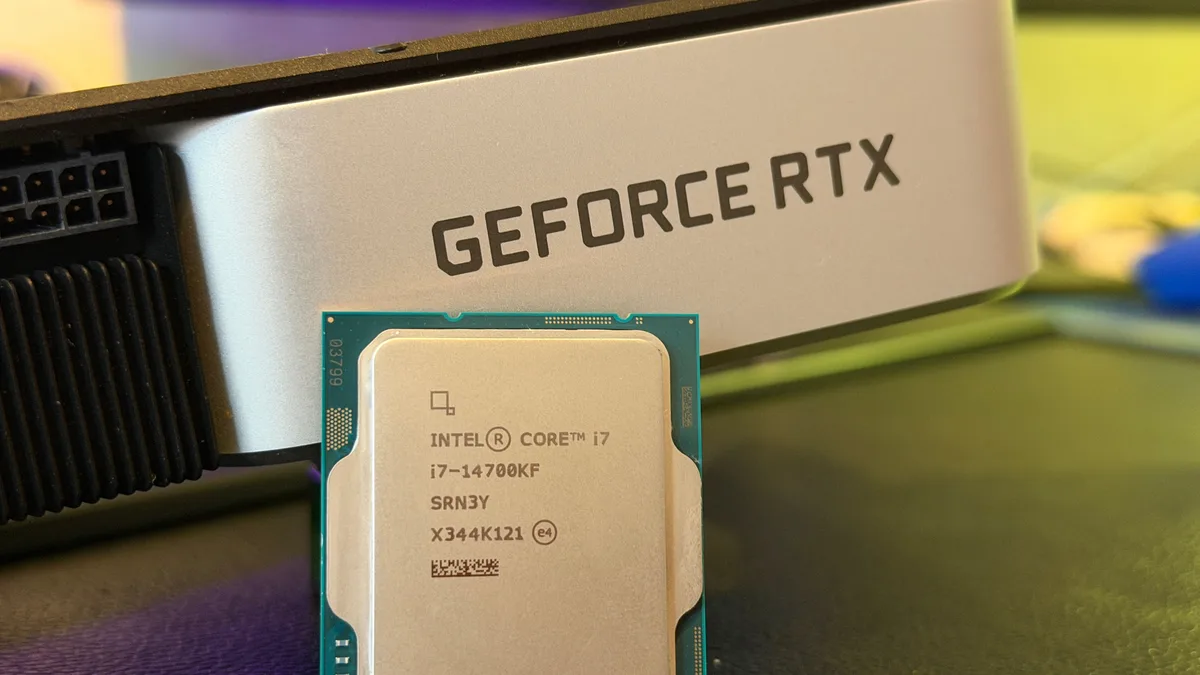
Intel plans to launch its first x86 processors with integrated Nvidia GeForce RTX graphics in early 2028, targeting CES 2028 for the event [1, 2, 3]. These processors belong to the Serpent Lake family, a branch of Titan Lake, which combines Intel CPU technology with Nvidia GPU chiplets in a single system-on-chip (SoC) [2, 3]. Nvidia CEO Jensen Huang and Intel CEO Lip-Bu Tan publicly confirmed the collaboration in 2025 [2].
The new Intel-Nvidia SoC aims to boost AI computing, gaming, and RTX ecosystem applications by bringing high-performance integrated graphics to PCs [2, 3]. However, exact technical details—such as CPU and GPU core counts, memory support, process node, packaging, and media engine designs—remain undisclosed at this time [3]. Intel’s approach differs from its earlier Kaby Lake-G chips, which integrated Intel CPUs with AMD Radeon GPUs [3].
Separately, Nvidia revealed the RTX Spark SoC at Computex 2026, which pairs an Arm Grace CPU with an RTX Blackwell GPU, but this design is distinct from the Intel x86 integration [2]. Nvidia is also expected to launch Rubin architecture desktop RTX GPUs, possibly branded as the RTX 60 Series, around late 2027 or early 2028 [1].
AMD is planning its own next-generation APUs, Grimlock Point and Grimlock Halo, for 2028, following 2026-2027 releases of Medusa Point and Medusa Halo [1].
Tech journalist Erdi Özüağ noted that Intel's current roadmap targets the first quarter of 2028 for next-generation processors with Nvidia graphics units, with CES 2028 potentially serving as the launch platform [1]. Intel and Nvidia are set to reveal more details at that show.