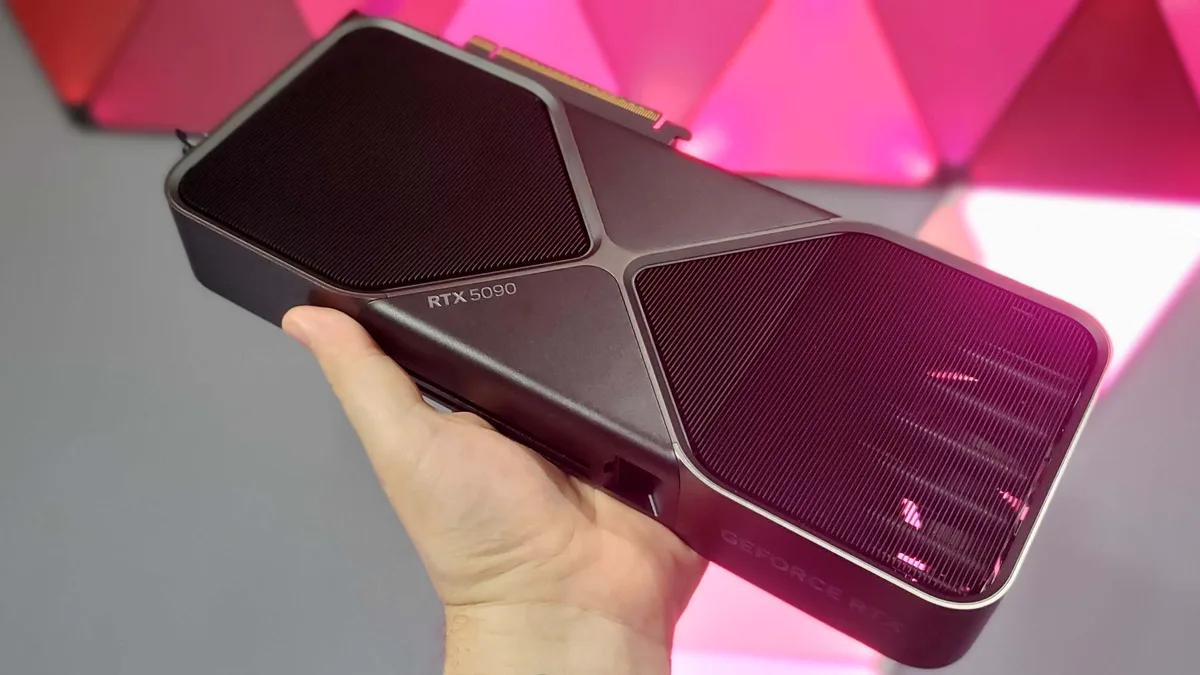
Nvidia notified its add-in-card (AIC) partners on May 13 that it will raise the cost price of the RTX 5090 and RTX 5090D V2 graphics cards by approximately $300, or around 2000 RMB [1, 2, 3]. The increase affects only these models, which use GDDR7 memory, and does not extend to other RTX 50 series cards [2, 3].
The RTX 5090 is equipped with 32GB of GDDR7 memory, while the China-exclusive RTX 5090D V2 features 24GB of the same memory type [1, 2, 3]. The rising cost comes amid a shortage of GDDR7 memory supply. This shortage is driven by high demand from the artificial intelligence sector, which is straining memory availability [1, 3].
Although Nvidia's official suggested retail price (MSRP) for the RTX 5090 remains $1,999, street prices in some markets have surged to $3,500 or more [1]. The higher cost to partners is expected to push consumer prices upward eventually [1, 3]. The recent price hike surpasses prior increases AMD made for comparable graphics cards [2, 3].
The ongoing memory shortage is forecast to continue until at least 2028, delaying significant price relief for these GPUs [1]. Meanwhile, the elevated prices have already contributed to lower sales volumes across Nvidia and AMD brands recently [3].
The cost increase took effect starting May 13, 2026, marking a new chapter in supply-driven pricing pressure for high-end graphics cards [2]. Nvidia and its partners will likely adjust retail pricing in the near term to reflect these higher input costs.