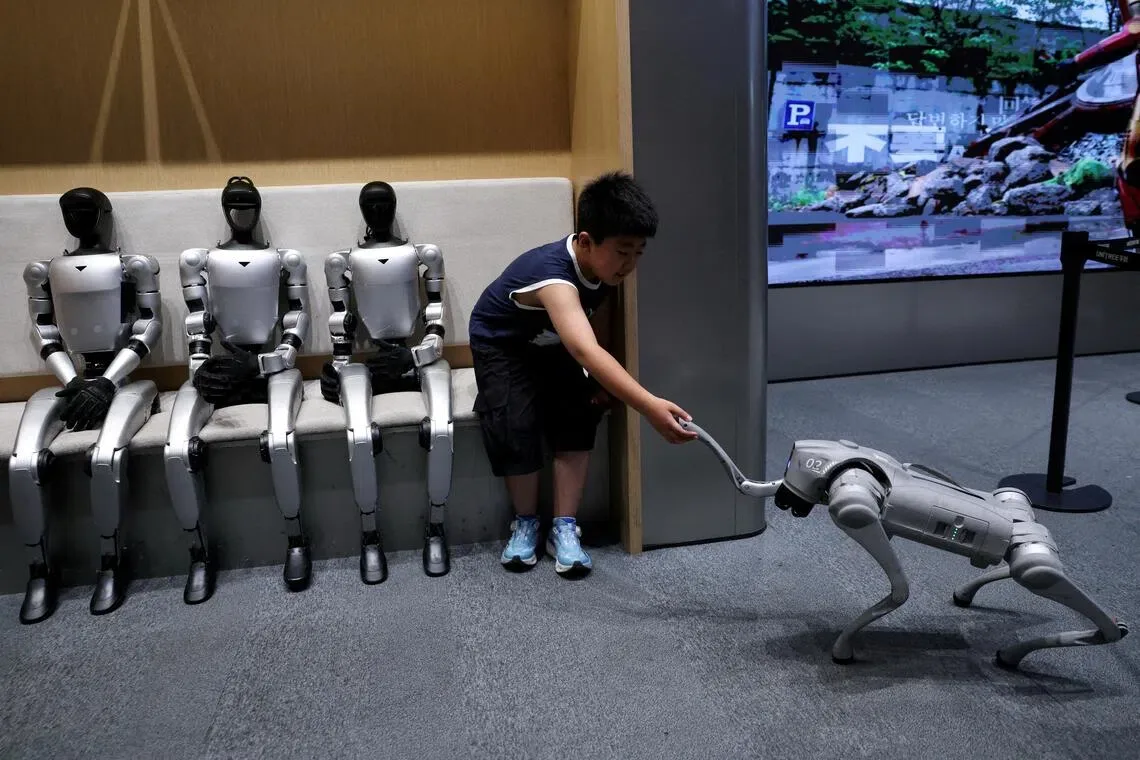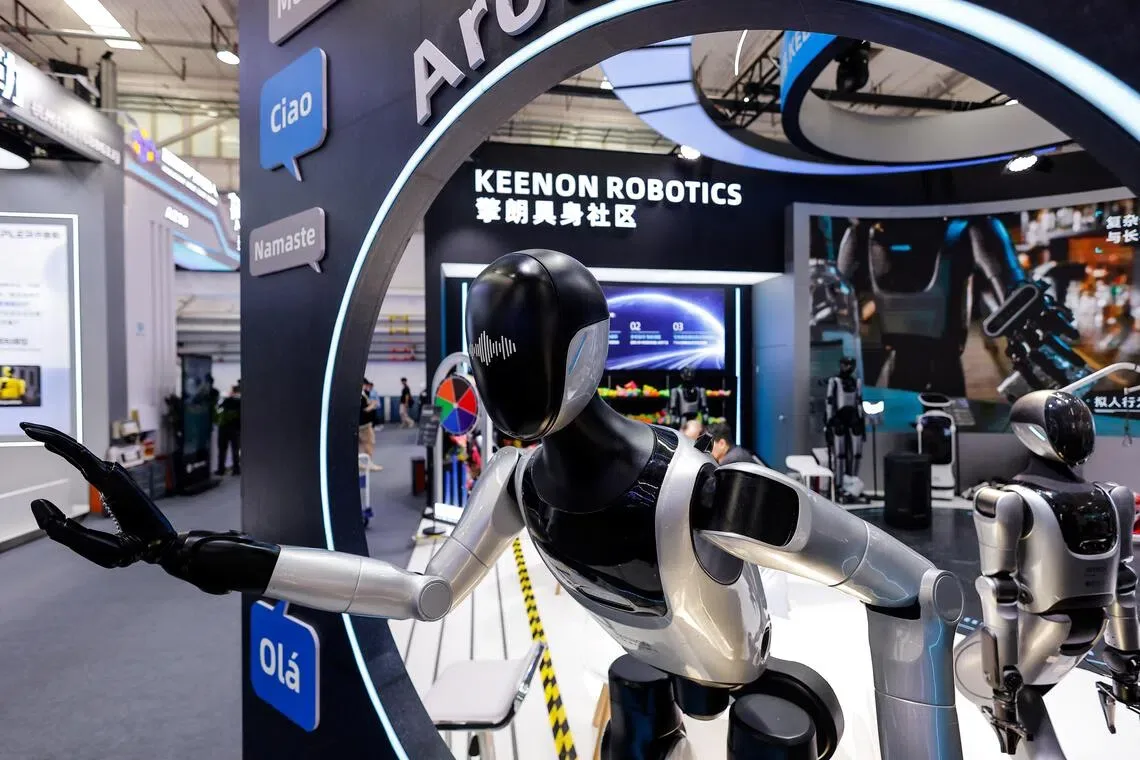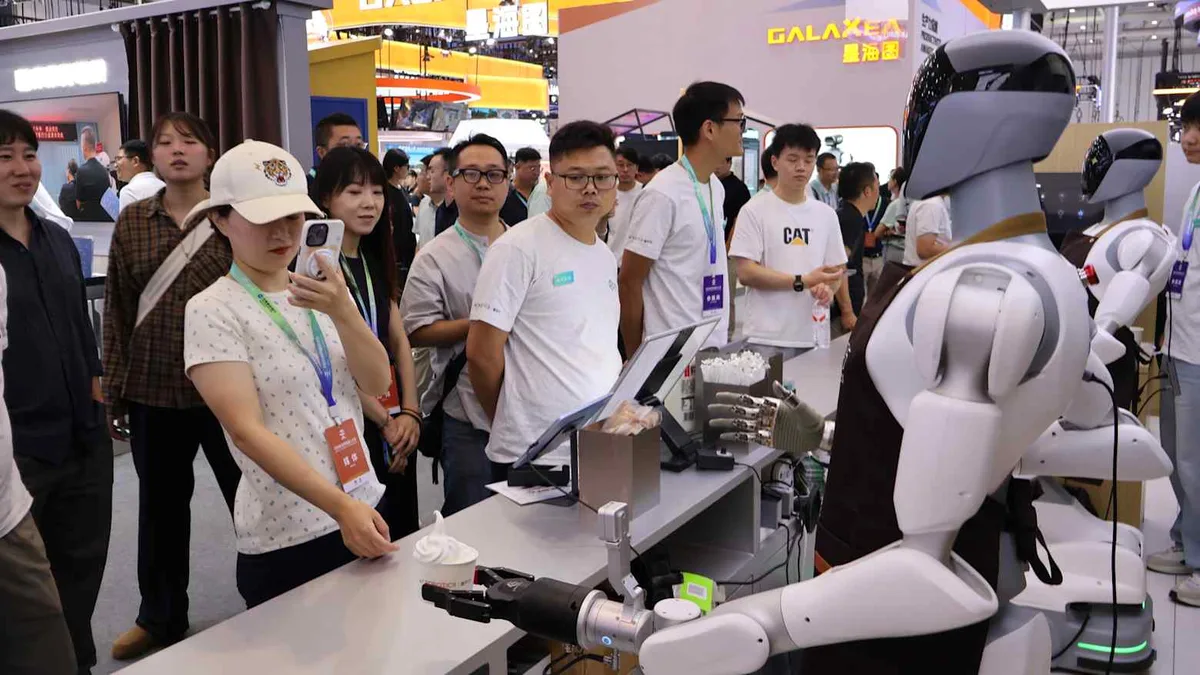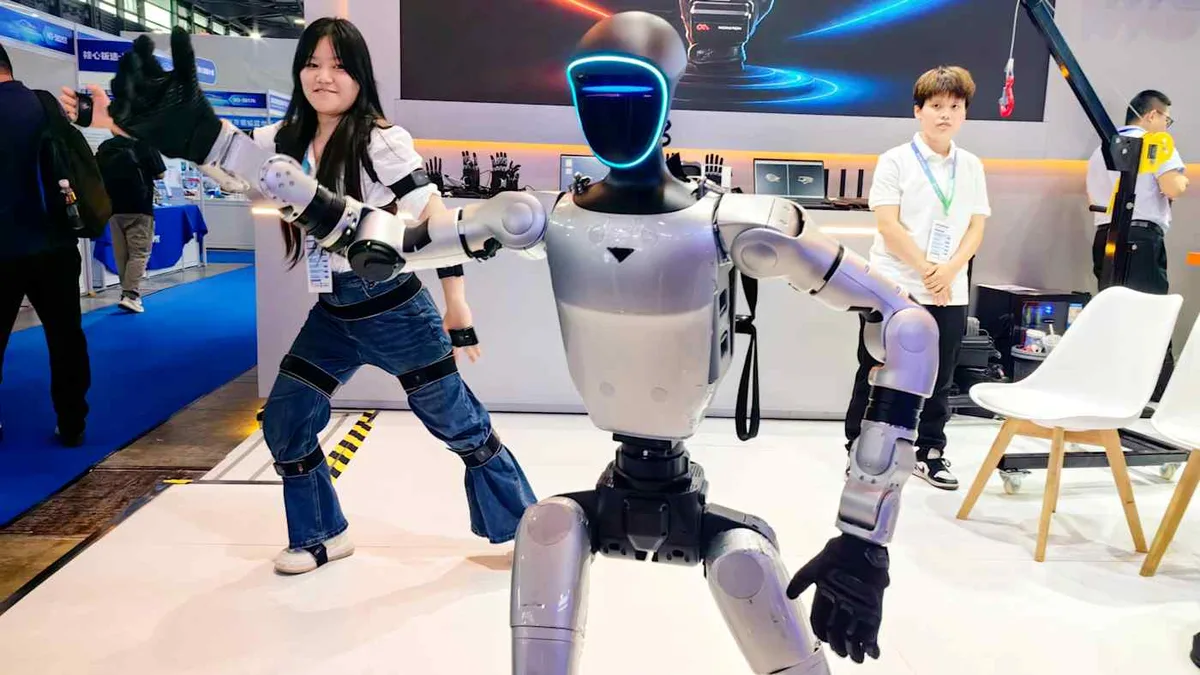
The 2026 World Robot Conference opened in Beijing on August 19, drawing more than 300 companies and featuring over 2,000 exhibits and 150 new robot product launches [1, 2, 3, 4].
Unitree, a leading Chinese humanoid robot maker, debuted on the Shanghai stock market that day, with shares soaring nearly sixfold [1, 2, 3, 4]. Startups Lumos Robotics and Chery Automobile’s robotics division announced plans for stock market listings following highly oversubscribed IPOs, with Lumos’s IPO exceeding 8,000 times subscription [1, 2, 3, 4].
Xin Guobin, vice-minister of China’s Ministry of Industry and Information Technology, praised robotics as "an important force" in the country’s economic and social development [1]. Zhang Guibing, head of AiMOGA Robotics, noted the rapid industry growth resembles the electric vehicle sector, with many companies appearing almost overnight, creating intense competition that will deepen technology and capabilities [1].
Chinese robots are increasingly deployed in hotel food delivery, assembly lines, and logistics, but large-scale adoption beyond pilot programs remains limited [1, 2, 3, 5, 4]. Startup Robotera showcased a parcel-sorting humanoid robot with a 900-1,000 hour continuous running time and 85% human efficiency compared to human workers [1, 2, 3, 4]. Leju, an industrial humanoid robot firm, supplies logistics robots to European and Chinese factories performing tasks at human-level efficiency, including moving boxes and loading components [4].
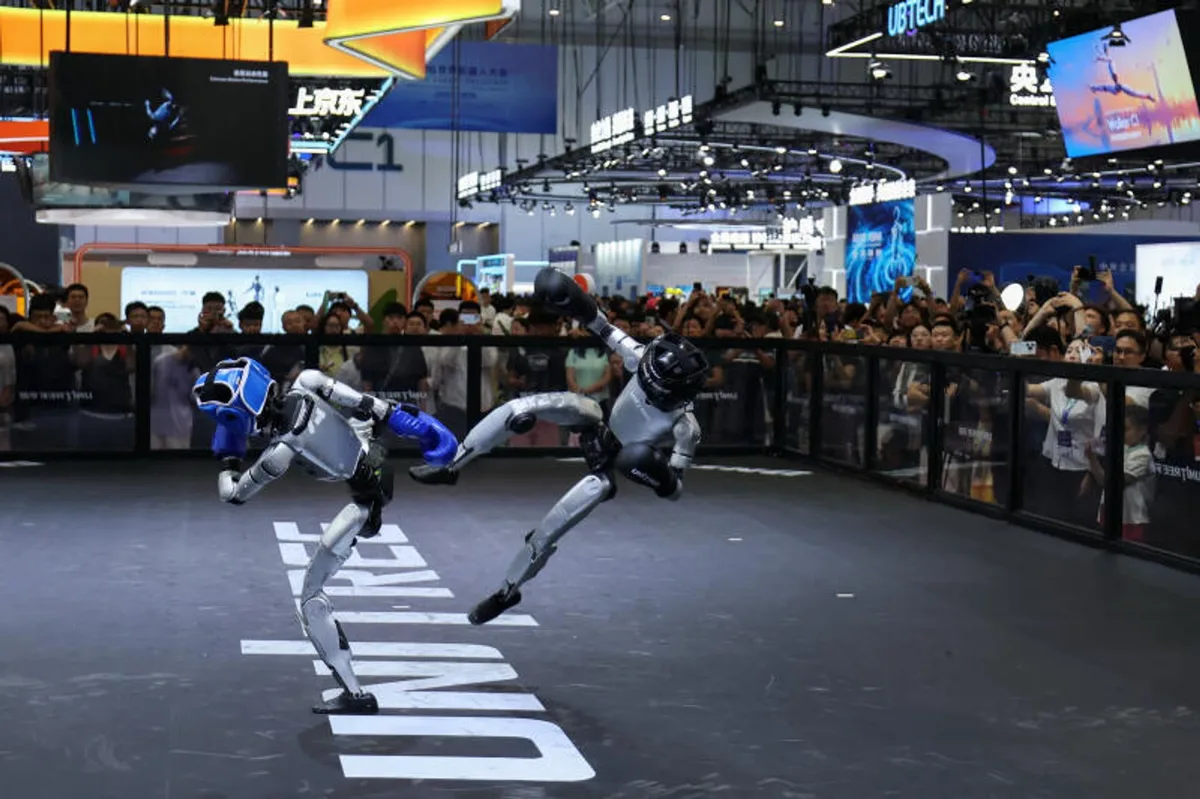
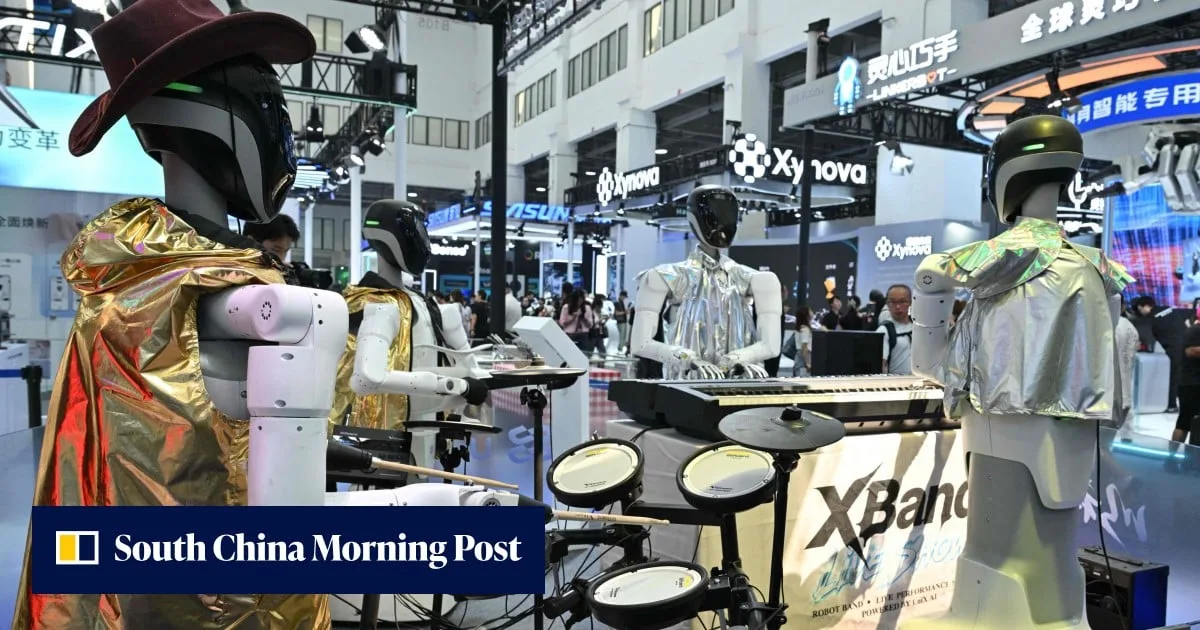
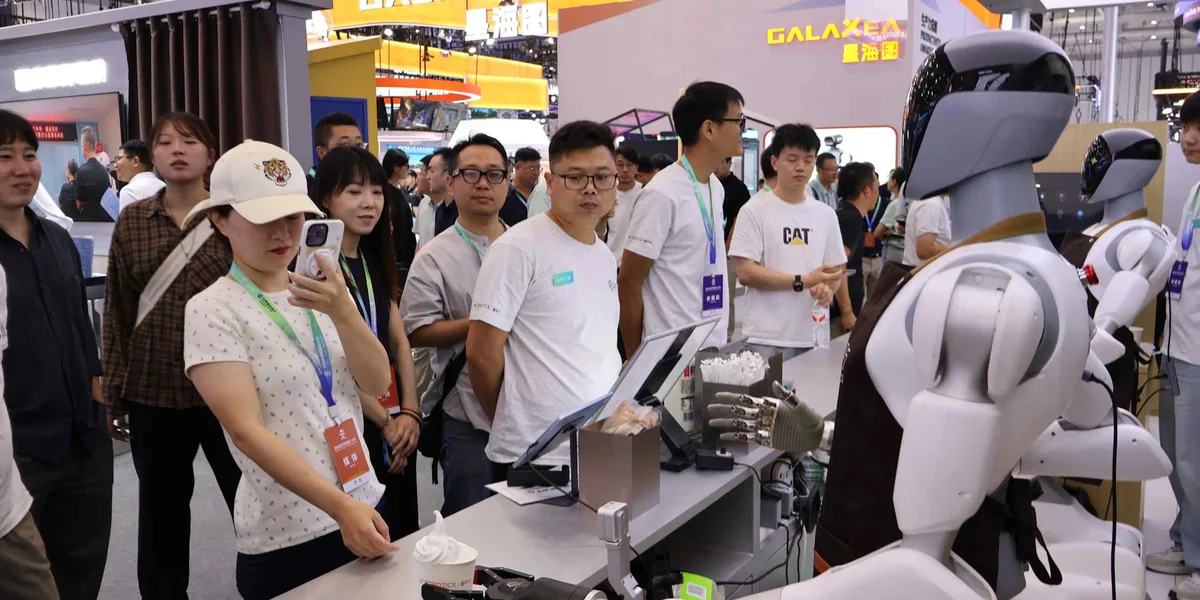
Global shipments of humanoid robots nearly quadrupled in the first half of 2026 to 19,100 units, with Chinese manufacturers dominating the market [1, 2, 3]. The conference included humanoid robots performing diverse skills such as serving ice cream and kickboxing, signaling the sector’s showcase of versatility [6, 5].
Industry leaders stressed the need to move beyond viral robotic demonstrations toward stable, large-scale commercial deployments that deliver clear economic value. Xu Xiaolan, president of the Chinese Institute of Electronics, said the industry is at a "critical juncture" focused on pushing applications into real-world use [5].
The World Robot Conference in Beijing will continue through August 23, with ongoing exhibits and product unveilings attracting broad participation from the robotics sector [1, 2, 3, 4].